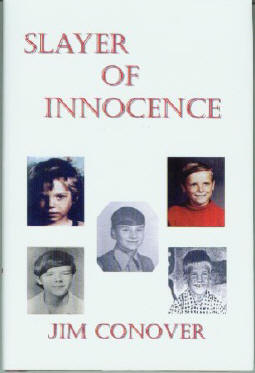
SLAYER OF INNOCENCE IS NOW AVAILABLE!
Slayer of Innocence - True crime in first person narrative of an investigation I spearheaded back in 1979 of a slayer of innocence - a predator pedophile serial killer of young boys.
The book details in first person narrative the true events of a lengthy investigation and nine day, twenty-four hour surveillance of a suspected pedophile serial killer at the State Fair in Springfield, Illinois. Over a period of seven years, from 1972 until 1979, sixteen (16) young boys who's ages ranged from seven to fourteen, disappeared.
fourteen were found murdered in much the same manner and type of locations. Two of the victims have never been found. In almost all the cases, a railroad track or switchyard was nearby and in many cases a county or state fair was in progress.
In July and August of 1979, in a joint effort led by Lieutenant Donald Benassi and I of the Pekin Illinois Police Department, city, county, and state, detectives from Lincoln, Nebraska, Omaha, Nebraska, Rock Island, Illinois, Normal, Illinois, Springfield, Illinois, Fort Madison, Iowa, Topeka, Kansas, Ottawa, Kansas, Chandler, Arizona and Santa Ana, California worked desperately to gather evidence and locate one suspect originally developed by a detective in Lincoln, Nebraska in 1976 before he could kill again. This suspect, a lifelong hobo, nicknamed "Freight Train" because of his ability to imitate the sounds of a freight train whistle, rode the rails, drank wine and worked at state and county fairs helping cattlemen clean up. Dubbed The Pied Piper of The Fair Grounds by Lt. Benassi, he was well liked among the cattlemen and children. However, his friendly personality could turn deadly in a flash. Especially, when someone called him a bum or tramp. While we searched desperately for this man, he was popping the anti-psychotic drug Thorazine and drinking cheap wine while riding the rails and enjoying life to the
fullest at state and county fairs and cattle shows all across America.
By writing this book, I hope to point out the extreme dangers that lurk among our children today and to encourage everybody to take an active role in reducing such abductions.
This book also talks about the number of missing children, about pedophiles and who they are, and about what steps you can take to reduce the odds of your child becoming a victim.
Excerpt
I was working second shift on June 20, 1979, when I received a teletype message from Sergeant Don Mogge of the Topeka, Kansas, Police Department requesting any information we had on William Guatney. His message stated that he was investigating the kidnapping and murder of a 12-year-old boy in his city.
I pulled out the information that Benassi had obtained on his visit to Lincoln, Nebraska, concerning Guatney and sent this to Mogge.
After a telephone conversation with Mogge, I began to see a connection between his case, our own case involving the Helmig boy, the Normal, Illinois, Lancaster case and the case in Lincoln, Nebraska. I pulled out what information we had on all known similar cases.
Helmig had been actually living across from a railroad track, and the 4-H Fair had been at the park just beyond the tracks. We had been able to place Guatney at the same location, at the same time the boy disappeared.
In the Topeka, Kansas, case, a young boy had disappeared from a bowling alley on May 20, 1979, and was found on June 1, 1979, in a creek bed 30 miles away. He had been beaten and stomped to death. The nearest railroad from the body was 10 miles away, but Guatney's hometown of Neosho Falls was only 55 miles from Topeka on the same country road that ran along the creek where the boy was found. Besides, Topeka police had stopped Guatney on June 16, 1979, in the railroad yards at Topeka - railroad yards that are near the bowling alley.
Then there was the 1975 deaths of two boys from Lincoln, Nebraska, a case that was very similar to our own. Plus we had the Normal, Illinois, victim who was found near the railroad switchyards.
I had also heard rumors that a young boy's body had been found floating in a creek near a railroad track in Sangamon County, Illinois.
I contacted John Bush of the Department of Criminal Investigations of the Illinois State Police and asked him if he knew anything about the Sangamon County case.
Bush said that he, DCI Agent Gary Anderton and Sangamon County Detective Sergeant Terry Castleman had worked on a case where a 12-year-old boy had disappeared from Riverton, Illinois, a small town just outside of Springfield, in 1977. He said the boy's body was found about a month later in a creek bed near a railroad track. He had been beaten or stomped to death.
According to Bush, they had suspected convicted serial killer John Gacy of killing the boy, but only because he had once lived in Riverton. However, when they confronted Gacy with it, even though he had already confessed to killing 33 young men, he denied killing this one. Bush said the Sangamon County Sheriff's Department was presently handling the case.
Because of Noah Van Butsel's information that Guatney had spent a lot of time in Veteran's Administration hospitals, I contacted the VA hospital in Danville, Illinois, to ask about Guatney.
The administrator, after checking Guatney's files, said he was last treated there twenty years ago. However, he advised that I contact the VA hospital in Marion, Illinois, because most records are kept there.
I called the VA hospital in Marion and spoke with another administrator who checked the files on Guatney. He told me that Guatney had been a patient there from March 2 until March 27, 1974. The administrator said Guatney had been admitted with facial cuts and a concussion. At that time, Guatney and all his records had been transferred to the VA hospital in Wadsworth, Kansas. This was all the information the administrator would give me and suggested I contact the regional manager in Chicago if I needed anything more. I sensed he was finished talking to me when he gave me the name of the chief attorney for VA hospitals.
Even with the warning from the administrator to call the attorney, I was on a roll with the VA hospitals and decided to call the one in Wadsworth, Kansas, too.
I was quickly informed they had had Guatney as a patient several times; however, my best bet would be to contact the VA hospital in Topeka, Kansas, because all his records had been transferred there in November 1978.
The administrator at the VA hospital in Topeka was very hesitant, but she did give me a few dates when Guatney was in the hospital or they had some record of him. The only dates she would give me were those I asked for, so I had to be precise.
I went down the list of dates that a boy disappeared. The only date on which she had any record of him being in the hospital when a boy disappeared was April 29, 1976, when the Omaha, Nebraska, victim disappeared.
The administrator said records showed he had checked in on March 4, 1976, and was discharged May 14, 1976, for being AWOL - away without leave.
I wasn't happy with that information, but if the records showed it, then perhaps he wasn't involved in that particular case. However, I was certain he was involved in the others.
Want to review or comment on this book?
Need a FREE Reader Membership?
Reviews for "Slayer Of Innocence"
Reviewed by Cayden Poe
1/11/2013
He killed my cousin. wow, I can actually see his face.
Reviewed by Michael Holliday
2/2/2008
I can tell you for a fact that William Guatney is a child rapist and killer. He seduced me into going with him when I was about 12 years old, raped me and was going to kill me. I broke away and ran away. I felt it was my fault since I went with him willingly, I didn't tell anyone. And I really don't feel any better even though Mr. Conover told me Guatney was dead now. I do believe he was insane, and don't care about that either, he was without remorse and the system kept letting him go.
Reviewed by Jerry Soucie
5/31/2005
I was one of the attorneys that represented William Guatney on the two counts of murder in Lincoln, NE. He was also charged with murder in Topeka, KS. In the Topeka murder the police had an eye witness who claimed to see Guatney leave the bowling alley with the child, Guatney failed a polygraph on this murder and then confessed., he failed a polygraph, and then confessed. The only problem for the prosecution was that the defense later determined that Guatney was in a mental hospital in Illinois at the time of the Topeka murder. The charges in Topeka were dismissed. The defense and prosecution psychiatrists all determined that Guatney's brain was so fried that he didn't know anything he was talking about. The charges in Lincoln were dismissed, and Guatney was released. The bottom line is that Guatney didn't kill anyone, regardless of what this author claims. No charges were filed in any of the other jurisdictions.
Reviewed by Kendahl
5/8/2003
One of the boys murdered was a freind of mine and my families, infact it was a neighbor, right next door to me. I was small when this took place and I have always been curious to what really happened and what kind of investigating was done and if they really did capture this creep. Thank you for shedding light on this that has always bothered me. And God bless all the victims and their families. Kendahl
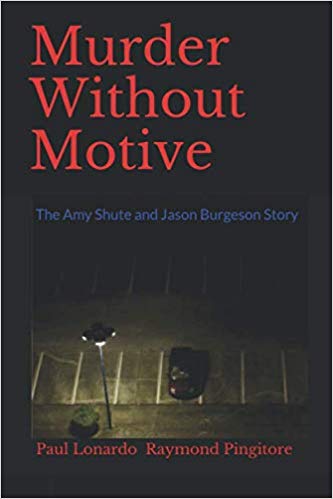
In June, 2000, two college students — Amy Shute and Jason Burgeson — were approached by a group of men. Forced into the backseat and driven to a remote location, they were murdered in cold blood.
Following this brutal double homicide, Johnston, RI D
PI novel set in Manhattan during the 1980s when art galleries and model agencies were the two most glamorous businesses in the world. Dangerously well written.
Read Chapter 1 here: https://www.lit4u.com/art-and-beauty-chapter-1/
Literary Titan