I kept a journal of my experiences registering black voters in rural South Carolina in 1965. I have written a non-fiction book based on this journal. It reads like a novel and has pictures and primary documents.
In You Came Here to Die, Didn't You, Sherie Labedis recounts history in the making. By turns terrifying, touching, and provoking, her experience as one of a handful of white college students registering black voters in rural South Carolina during the summer of 1965 is riveting. This memoir validates that committed people can make a difference.
Excerpt
“You came here to die, didn’t you.” It isn't a question. It's a challenge from a scrawny Negro teenager in faded bib overalls. His bare chest glistens in the hot Georgia sunshine; he reeks of body odor and my stomach lurches as I look up at his black eyes. I catch my breath while I lower my eyes to his unshod feet in the grass.
I'm standing on the sidewalk at Morris Brown, a Negro college in Atlanta, Georgia. The Civil Rights Movement is front-page news across the United States. As an eighteen-year-old white female voter-registration volunteer from California, I'd expected to be applauded upon arrival for a week of voter-registration training. Instead of a welcoming committee and pep rally, only this young man's almost angry dare welcomes me.
“I’m talkin’ to you,” he snaps. I force myself to meet his eyes. “If you didn't come here to die, it’s time you git back into that car and head back to New York, Chicago or wherever you come from.”
Professional Reviews
The Midwest Book Review
The right to vote is a key principle of American democracy. "You Came Here to Die, Didn't You: Registering Black Voters One Soul at a Time" is a memoir and look at cultural history from Sherie Holbrook Labedis as she tells her own participation in the civil rights movement as she dared to help black people register to vote in South Carolina in 1965, where racism was still a heavily institutionalized part of society. "You Came Here to Die, Didn't You" is a remarkable look at the war for basic American rights, recommended.
The Columbia Star
You Came Here to Die, Didn’t You
2011-03-18 / Front Page,
Columbia Star, Columbia, SC,
By Warner M. Montgomery.
A pretty blonde 18–year–old girl left her disapproving parents in California in June of 1965 to join the Civil Rights Movement in the South. After a week of training in Atlanta by the Southern Christian Leadership Conference (SCLC) led by Dr. Martin Luther King Jr., Andrew Young, Hosea Williams, and others, Sherie Holbrook arrived in Pineville, South Carolina, to assist the disenfranchised blacks of Berkeley County to register to vote. For three months her small band of “Freedom Fighters” encountered KKK brutality, uncooperative law enforcement, indifferent whites, and frightened blacks. They suffered from a diet of grits, collards, and pig brain stew; dirty and moldy clothing; sleepless nights; oppressive heat; and the constant threat of violence.
My mother grew up in Pineville. It was where I learned to hunt, fish, and eat oysters. To me Pineville was the Southern Way of Life in full bloom, where women were Southern Belles, men were gentle and brave, and history reigned supreme. Gen. Francis Marion, the Gamecock, lived and died in Pineville. The famous Santee Canal ran through my uncle’s land. After supper around the family hearth I heard again and again how Pineville’s homes were destroyed by the Yankees during the Civil War, rebuilt by my grandfather’s generation after Reconstruction, only to be flooded by Santee- Cooper in the late 1930s. That’s when my mother lost her land, married a man from Greeleyville, and moved to Columbia.
Sherie Holbrook Labedis My family always spent holidays and summer vacations in Pineville. I worshiped my uncles, aunts, cousins and, as they say, my ancestors. I loved the creaky homes—steamy in the summer, frigid in the winter, the cotton and corn fields and the blacks who worked in them, the pine forests home to deer and turkeys, beautiful swamps overrun with gators and mosquitoes, the mighty Santee River, and the lakes full of bream and mayflies. It was my dream to, one day, return to my ancestral home, but in 1962, I first had to save the world—a feeling I’m sure Sherie felt three years later.
I joined the Peace Corps where in Thailand I taught English and worked as a medical assistant in a leprosy hospital. It was not easy. I suffered estrangement, humiliation, and a night in jail. I learned that “World Peace” was of no concern to those who silently struggle to survive one day at a time. I realized the struggle is all around us if we only look, but most don’t look and very few ever see it.
While Sherie and her colleagues were fleeing beatings, burnings, and humiliation, I had returned from Thailand and was in Columbia teaching middle class white students the meaning of democracy and the lessons of history, and preparing to take the next step in my career, the doctoral program at the University of Michigan. As I packed up for the trip north, I was ignorant of what was going on in Pineville.
As Sherie passionately described in You came here to die, she survived Pineville, spent a quiet semester at Allen University, then returned to California where she got a degree at Berkeley, married, taught for 35 years, and retired. Looking through her trunk of memories, she discovered the notes she had taken in Pineville and turned them into a book. I am very glad she did for I gained a new perspective on the civil rights revolution in my own neighborhood.
Her memories of Pineville during the hectic days of voter registration and my memories of historic Pineville collided at several crossroads. Her Freedom House, where the civil rights workers lived, was next to J.K. Gourdin School, the school established by my grandfather in 1925 for the black children of Pineville. She witnessed the school being burned by the Klan. Her description of the tragic event is heartbreaking.
Another event she described also rang dear to me. When I was writing the series on Pineville for the Columbia Star (“Pineville, A Historic Refuge”), I visited all the churches in the village including the Redeemer Reformed Episcopal Church. She witnessed the arsonists burning down the church because the voter registration workers had met there. Members of the church only mentioned the burning in passing during my research. They focused on their noble and successful effort to rebuild it.
My memory path crossed again with Sherie’s at Allen University. She had been a student there in 1965. I taught there in 1970–71 when I returned to Columbia from two years teaching at Ohio University where I had gotten embroiled in the Anti- War Movement. She found Allen short on fundamentals and returned to Berkeley. I found Allen short on funds and long on expectations. I left after two very rewarding yet frustrating semesters.
Sherie discovered my Pineville series during her research and sent me a copy of her book. I appreciate her ability to put her civil rights work in Pineville so personally into writing. She showed a cultural side of the area I was unaware of in spite of my years in Pineville. I still love Pineville but I will look homeward differently from now on.
Because of Sherie’s book I better understand the relationships in Pineville between blacks and whites, outside agitators and Klan sympathizers, professionals and residents, old families and newcomers, and most importantly, that which has been whispered in private but never spoken in public. The Civil War, Reconstruction, Santee- Cooper, and Desegregation all damaged Pineville, the historic refuge between the Santee River and Lake Moultrie, yet the people, black and white, young and old, seem to go about their daily business as if nothing ever happened. Maybe I don’t see their real struggle.
Most people have heard of Freedom Summer, when a few hundred mostly white college students went to Mississippi in 1964 to try to break white opposition to local blacks becoming voters, to run freedom schools, and generally to defy Southern racial practices.
Few know that there was a second freedom summer in 1965. The first Freedom Summer was run by a confederation of civil rights organizations, though SNCC took the lead. The organizations went their separate ways in 1965, dividing up the states so they didn’t overlap or compete.
The Southern Christian Leadership Conference, best known as Dr. King’s organization, brought between three and four hundred young people to six Southern states for a project called SCOPE — Southern Community Organization for Political Education. Expecting the Voting Rights Act to pass in June, its purpose was to get local blacks registered to vote.
However, the VRA didn’t become law until August 6, so the young volunteers had to deal with numerous county boards of registrars, some more willing than others to process long lines of aspiring voters, and various state laws limiting who could register.
Sherie Holbrook was in her freshman year at Berkeley when the march on Selma caught her attention (and that of a lot of others). She signed up with SCOPE and in June went from Berkeley, California, to Berkeley County, South Carolina. Her book is about that summer, based on a journal she kept, her memories, interviews with people she worked with, and photographs.
It was like going to a foreign country. Local blacks spoke a Gullah dialect — a patois of English and West African languages handed down over time — which she didn’t understand. She hadn’t known any black people in the rural California town she was raised in and had never seen the poverty and sheer neglect of people’s needs that she saw in South Carolina.
There were lots of new experiences she had to adjust to: sharing a bed, eating fatback, being stared at as she walked down the street, children who wanted to feel her blond hair, watching a hog killed for dinner, and white Southern hostility.
Being a civil rights worker sounds glamorous, but it’s mostly drudgery punctuated by fear. Most days were rather routine – going door to door in oppressive heat and humidity talking to people "one soul at a time."
Many people were afraid to register; standing in line at the courthouse is a public act; a list of registered voters is a public list. A lot were apathetic; they’d been told so long that voting wasn’t for them that registering just didn’t seem like something they needed to do. Some were illiterate and couldn’t meet the minimal requirements to register.
Then there’s the fear. The black elementary school down the block from the Freedom House where Sherie and her project workers lived was set on fire; a fire truck came but no water was available to put out the flames. Less than two weeks later, a black church only a little farther away was firebombed by two white men in a truck. The message was clear: Get Out.
One day two different groups tried to integrate local eateries in the county seat. The one Sherie entered was immediately closed and everyone told to leave. As she drove off with her co-workers two cars followed and eventually ran her off of the road. The whites in those cars got out, smashed the windows of her car, dragged two black guys out of the project car and beat them up.
The other group at a different restaurant was ignored by the management when they occupied two tables, but not by the patrons, or one particular patron, who was big enough and strong enough to throw each of them out the door as they endeavored to stay non-violent. One white, female civil rights worker was thrown through the plate glass door, ripping open the skin of her thigh. At the local hospital the white doctor stitched her up, then yelled at her to get out and never come back.
It’s always easier to write about the causes of fear than every-day drudgery, and the author’s descriptions of these scares and others make her summer sound exciting — in both senses of the word. She does this as though she’s writing a novel; her account of these events is gripping. But in the long run it’s the drudge work that counts.
That drudge work produced some sweet moments. One that Sherie cherishes still was when Rebecca Crawford learned how to write her name. Another was taking 150 people to the courthouse to register to vote on the only registration day in July. Or when local blacks packed the courtroom to see that one of them got a fair trial, before being thrown out by the magistrate who didn’t want to be part of "a show."
There were also some comic moments, such as when the FBI showed up to investigate the church burning, and the South Carolina police asked the project workers what they did to cause someone to burn down a church and a school. Or when the sheriff arranged for them to be served in one of the restaurants they had been thrown out of to avoid a threatened lawsuit.
At the end of the summer she left wondering if she had accomplished anything. The obvious success of taking several hundred people to be registered that summer was outweighed by her guilt over the church and school burnings. That summer had left a permanent impact on her life; what had it done for the people she worked with? These questions were on her mind when she returned to South Carolina a few years ago to talk to the people she had worked with (some of whom she had stayed in touch with over the years) and find out what they had done with their lives.
Sherie Holbrook came away reassured that the summer project had made a difference. At the very least it gave local blacks a sense of hope, a feeling that others cared about them, and a belief that change was possible. "Once we got the votin’ fever" one said, things just had to change.
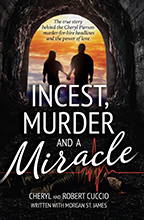
The true story of Cheryl Pierson Cuccio who made headlines in 1986 and her husband Rob Cuccio. Cheryl was abused sexually and physically and Rob died for 43 minutes on Cheryl's 43rd birthday.
On February 20, 2003, pyrotechnics at a rock club in West Warwick, RI set off a devastating fire that roared through the crowded club, killing 100 people and injuring hundreds more. Gina Russo was one of the survivors, and she retells her harrowing e
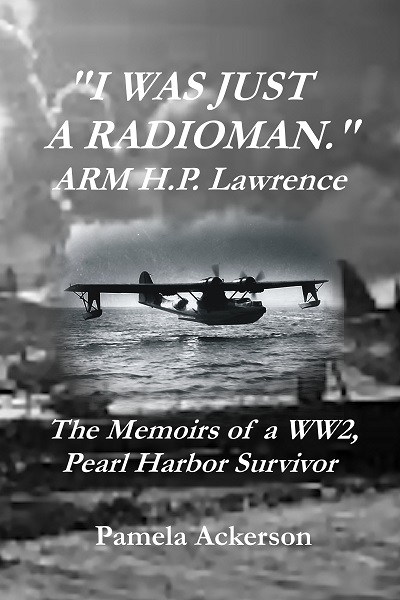
This is not a drill. The attack on Pearl. They were the ghost planes of the night, deadly, illusive, sharp-clawed Black Cats. The Memoirs of ARM H.P. Lawrence, a Pearl Harbor survivor, Black Cat, and decorated war veteran.