Kindle Edition
Amazon
baseball Coaching Tips
Category:
Sports/Recreation
Publisher: Second base Publishing
ISBN-10: 0998170909
Type: Non-Fiction
Pages: 312
Copyright: April 10,2017
ISBN-13: 9780998170909
Price: $9.99 (eBook)
Alternate title, How to not Suck at Youth Sports Coaching and Be the Role Model You set out to be
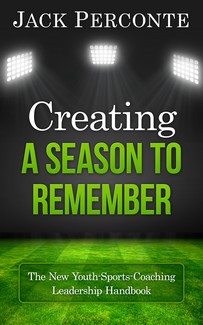
Young athletes are leaving the sports’ scene every day because coaches fail to motivate them. Furthermore, fewer and fewer youth sporting games occur without some sort of unfortunate scene occurring. Here’s why - coaches are not trained to deal with the modern athlete and parent. Most people get into youth sports coaching and soon begin to wonder why they volunteered and how to proceed. Jack Perconte became tired of hearing this, “His/her coach is an idiot,” so he wrote Creating a Season to Remember for all the well-meaning people who want to be the role model they set out to be.
Finally,
1. A coaching guide that helps the central figures in sports, the coaches, rise to the challenge and remake the games about the kids.
2. The coaching philosophy and teaching methods that inspire everyone.
3. The forward-thinking techniques that bring enjoyment back into the games for all – the kids, parents, and coaches.
“The time has come to put the sense and integrity back into youth sports.”
https://youtu.be/S0ncdFIOb4U
Excerpt
Creating the Mindset to Coach
People must examine their personal goals and life situations before making the commitment to coach. Self-introspection helps to know if you’re cut out for the job and can handle today’s parents and athletes.
Here is a letter I received from one of my former students, which relates to the impact coaches can have on athletes.
Dear Jack,
I read your article that you wrote about your Dad and wanted to let you know that the apple did not fall far from the tree. Speaking personally, you had an equal effect on my life as others were impacted by your Dad. Having the opportunity to learn from and work for you were some of the best times of my life. I remember as if it were only yesterday, opening up the place, watching you give lessons, taking swings in-between appointments, and having some great conversations. My kids are now beginning their sports careers, and I only hope that I can pass on the love of sports to them as it was passed on to me from my mentors growing up. I believe that we are the product of our environments and a culmination of the events in our lives and the influences which surround those events. I'm thankful every day for having mentors like you in my life.
MY COACHING LEGENDS
Besides my parents, wife, and kids, the biggest influences in my life were 3 of my sports coaches. They may not fall into as famous a category as many of the other coaches I’ll write about, but they were incredible role models for me. Each of them came along at different points in my career.
In high school, Coach Gordie Gillespie was there, in college, Coach Johnny Reagan, and in professional baseball, Coach Del Crandall. Each shaped my life for the better, and none did it with earth-shaking actions, but rather in simple ways.
The first thing that comes to mind about these men is they all had the same way of inspiring – with just a look. They looked me in the eyes, and their eyes shouted, “I believe in you.” To know and feel that someone believes in you as an athlete and as a person is a powerful experience. “The look” you give an athlete can be the best form of motivation possible.
Each of my mentors had different coaching personalities. Coach Gillespie was boisterous and made players believe they could move mountains. Coach Reagan was calm, but even with his quiet dignity, team members were aware of what he expected. Coach Crandall’s personality was between the two, easy-going and fiery, depending on the situation.
With a word or two at the appropriate time, coaches can change lives, often without even realizing it. Coach Gillespie, so powerful an individual, had a way of making someone feel like they were the most important person in the world. He would ask me, “What do you think we should do?” when con-fronted with a decision for the intramural program he put me in charge of running. The finest leader I had ever known was asking me, a high school student, what I thought we should do. The self-assurance I gained from that experience was immeasurable.
Coach Reagan was a communicator. He would walk up to players on the field and ask them what went wrong on a play. After the player would answer, he would respond with, “You know, we can go into any dormitory on cam-pus and find someone who can do the ordinary, we chose you for a reason.” It was his way to motivate players to be better than average. On my last day of my freshman year, he said, “Make sure you come back the next year, we have plans for you.” He went on to say they planned to move our best player off of second base the next year to make room for me, a walk-on player. That meant so much after having played little my freshman year. I had no plans to go else-where, but that statement was the best self-esteem builder I could have received, one that I rode to the major leagues. Letting players know where they stand is crucial, no matter how insignificant it may appear.
Coach Crandall was there for me at various times in my professional career. It felt comforting when he said, “Don’t worry, you are my second base-man,” after a struggling time in the major leagues. A coach’s trust is critical for athletes. After a disappointing career moment, he consoled me, “If that’s the worst thing that comes in your life, that’s not so bad.” Helping players maintain perspective is another crucial coaching task.
Lessons Learned from Coach Gordie Gillespie, Coach Johnny Reagan, and Coach Del Crandall.
1.A coach’s trust is empowering to athletes.
2.The best coaches allow communication to flow both ways.
3.Coaches motivate with a look of acceptance and belief.
4.Helping athletes through difficult times is a top leadership goal.
5.Effective leadership comes from various personality types.
|