Where the Willow Grows in Transylvania differs from many books on the market as it takes the reader to a different world yet encourages him/her in his own world to remember the value of love for one's family; friends; country. This book also encourages readers to hold onto . . . to never give up on their dream.
“I do not want to hear another word about your crazy American Dream!”
Words such as these from Rosa Alexander’s father during his frequent drunken rants often drove young Rosa to seek solace beneath her weeping willow tree. One day, however, her aunt Klara visits from America, giving Rosa hope for a brighter future. Rosa held on to her dream for years, waiting for the chance to leave her beloved homeland and find a home across the ocean. The time never comes, however, and eventually Rosa marries Alan and starts a family;believing that perhaps America is not part of her plan anymore.
As life becomes increasingly harder, in 1985, Rosa and Alan finally make plans to escape the cruel eye of the Romanian government and find freedom in America. They are forced, however, to leave their children—Julia, 8; and Peter, 4—behind. When Peter and Julia are not able to join her and Alan as hoped, Rosa struggles through enormous sorrow as she begins an almost four-year battle to reunite her family.
Where the Willow Grows in Transylvania,based on the emotional true story of Rosa Alexander’s American Dream, relates how Rosa’s dream eventually becomes a grown-up search for peace and a yearning for her family to be together. As Rosa begins to trust God, she not only hears His voice but also finds her own. Rosa’s story reminds readers that with faith, dreams can come true.
Excerpt
Chapter 1: In Transylvania
“Crying over spilt milk was not my father’s fashion…”
I hated having to beg Grandmother for milk.
As I walked barefoot down the dusty road to my paternal grandparents’ house, I dreaded hearing the questions I knew my grandmother would ask me. Grandmother did not seem to care that our family was destitute, that Mother and I needed the milk to help us survive. Each time I asked her for milk, my Hungarian grandmother would scowl and cut her angry, dark brown eyes toward me, demanding I answer questions I could not answer.
What? We just gave you milk yesterday. You need milk again, Rosa? Why are your eyes all red?” she would ask. “Why do you have those black circles under your eyes again? What happened to you that you look like you did not sleep all night? Why did you not comb your hair and pull it back into your plaits so that it does not keep falling in your eyes?”
In 1961, even as an eight-year-old girl growing up in Auld River Village—a small, rural community of approximately nine hundred people in Transylvania, Romania—I knew that Grandmother would never admit she knew the answer to the barrage of questions she regularly bombarded me with. One day, I sometimes imagined, I might just blurt out the truth—the torrid, terrible truth the entire village knew.
“Grandmother,” I just might say to her one day, “I do not get any sleep most nights because your son, the village drunkard, gets drunk and beats my mother. He curses and yells so much that even when I hide in my room and hold my hands over my ears, I cannot sleep. Your son is the reason Mother and I seldom get a good night’s sleep. He is the reason my eyes are all red; that I have black circles under them. Your son is the reason I have to beg you for milk.” One day I prayed I would have the courage to say those words, not only to Grandmother, but her son as well.
That hot, summer day, my stomach knotted up once again as I thought of the reception Grandmother would give me when I asked her for milk. Right before I stepped into the yard, I pushed back a wisp of my dark brown hair from my face. I wet my fingers with spit and wiped under my eyes and brushed off my faded, worn, blue-gray jumper that last year actually fit me. Suddenly, I felt my bare right foot sink into a pile of fresh, black, mushy cow manure.
Drats, I thought as I meticulously stepped over to a patch of grass on the side of the dirt road and wiped off the manure. As I took a stray twig to clean between my toes, I remembered Grandfather’s the first time I stepped in cow manure. “A little cow poo never hurt nobody,” he laughed and told me. “Never let it bother you, Rosa. When life lands you in a pile of poo– just clean yourself up and keep on living.”
Grandfather was right. Stepping in cow manure did not upset me anymore. Nor did it bother me to ask my giant of a grandfather for anything. Although weathered from years of farm work in the sun and somewhat gruff in appearance, if Grandfather could, he would share anything he had with me.
My Hungarian grandfather made a point to embrace me with a warm hug and encouraging smile each time he saw me, no matter the reason for my visit. “How is my beautiful Rosa this day?” he would ask, kissing me first on my forehead and then playfully pinching me on the cheek.
I hated, however, having to ask my short-statured, short-tempered grandmother for anything. No matter what I asked her, Grandmother made it clear she resented me asking.
Usually, I lowered my own coffee-colored eyes to avert Grandmother’s piercing gaze, determined not to let her see the shame I hid in my heart because I had to beg. Another time, I might defiantly match her stubborn gaze, knowing better; nevertheless, than to answer with the fiery retort I felt in my spirit.
Begging did not come naturally for me. At that time in our village, we did not have electricity in our homes. There were no TVs or radios. Located near the Küküllő River, Auld River Village did not even have a library; however, we did have a church where my grandparents attended services each Sunday. As Mother and I were usually up all Saturday night due to Father’s drunken rants, we did not attend church during that time. Sometimes, due to our physical and mental exhaustion, we all slept until noon.
Yet despite our struggles and poverty, the simple life we lived reflected a rich beauty that I treasure even today. Those of us who lived in Auld River Village knew how to stick together. We knew how to help each other through those hard times.
When someone built a house, for instance, the relatives, along with friends and others who lived on the same street, gathered together to help. Some would manually make bricks from clay and bake them. Women would cook together and prepare enough food to feed the entire construction group and their families. Usually, the women would hack the necks off a few chickens, pluck the feathers, remove the guts, and then wash and cut the chickens into pieces and cook them. Mother knew I could not kill a chicken because I felt sorry for them. I did realize, however, that because we had to eat, somebody had to do this job.
Despite my aversion to killing chickens, I did not have any problem eating the moist, tender chicken with my relatives and our neighbors.
The women in the village would also bake a number of Hungarian pastries. About once a month, when we had sugar, Mother made my favorite pastry - doughnuts. Sometimes I would fill the inside of my doughnut with plum jelly.
Children too young to help with the house-building process would play together in the green field near the forest. Across from the forest, in the clay field, the men kept watch of the children while they molded batch after batch after batch of bricks from the rust-colored clay. As soon as one batch of bricks had air-dried, the men would put them in a huge, outside brick oven to bake.
In addition to working hard and helping each other, those in our village knew how to have fun. In the evening, after working together during the day, the neighbors would sometimes drink pálinka (moonshine) or homemade grape wine. After a few glasses of these drinks, someone would start singing loudly. Usually, the songs focused on our lives and loves, our river, and the love for our beloved Transylvania. Each time Grandfather sang, “Ó, Erdély szép hazám,” I would see the tears well in his soft, brown eyes.
At that time, I did not understand the meaning of the words friends and family members sang from their hearts. I did not yet realize the beauty of the words in the song, “Oh, Transylvania, My Beautiful Country.”
Once, I lived in Transylvania,
But tore myself away,
My destiny took me far from home.
I hoped my new country would give me a fresh heart;
Yet, my heart remained and will always belong
To my beloved Transylvania.
Oh, my beautiful Transylvania
Perhaps, if I could see you one more time,
I would never leave you again…
The somber mood the songs about Transylvania evoked usually lightened after the first glasses of wine. The singing would shift from somber songs of the heart to laughing and joking. Sometimes the day ended with dancing the csardas (Hungarian folk dance). Of course, my father never joined the neighborhood celebrations. Instead, he would be drinking at his usual place—the taverna. Despite my father’s drinking, those times in Transylvania branded warm memories into my heart. I loved those simple yet so incredibly wonderful times.
Those tender moments too soon faded into those times I loathed; like the times I had to beg my grandmother for milk. Milk, our primary food substance, helped ensure our survival. Milk helped nurture my mother so she would have enough strength to work in the community-owned cornfields twelve or more hours; six days a week. We also needed milk to make the porridge, which we called mush, that Mother cooked most days of the week.
Mother would usually hum as she cooked. After she brought three or so cups of water to a medium boil on our wood-burning stove, Mother would add one cup of cornmeal made from the corn we grew and a little dash of salt. She would then stir the mixture constantly for about five minutes. When the mush had solidified, she would serve the steaming, hot dish with cold milk for our dinner. Sometimes we even had scrambled eggs with our corn mush. On a good day, if Grandmother had given us some, we even had a little piece of sausage.
If I could have written a letter to my grandmother during that hot, humid summer of 1961, it would have read:
Dear Grandmother,
If you had not raised your son to be such a drunkard, perhaps then I would not have to beg for milk. We do not have money to buy milk because your son spends all the money he earns from working at the factory on booze.
You have four cows and more than enough milk to share with us after you sell milk to your customers. You have more milk than you need. We have no cows or milk. Since you are the one who raised your son to be such a drunkard, you should gladly give my mother and me enough milk to make our corn mush without me having to beg.
Your Granddaughter,
Rosa
Of course, I would never have dared to write such a letter to Grandmother, just as I would have never referred to my biological father, the drunkard my grandmother raised, with any semblance of affection. I choose not to speak to Father unless absolutely necessary. I often wished he were not my father as I dreamed of one day being free from his alcohol-engendered rages; of being free from the fear I felt each time he stumbled home. Sometimes, as he neared our modest home, he would be singing some silly song. More times than not, he would be yelling out obscenities I dared not repeat. Often, he would be so drunk he could scarcely stand up straight.
When my father came home sober because he did not have money to buy the pálinka that transformed him into the tyrant who terrorized us, my mother and I did not have to bite our tongues or cower in fear. Mother did not have to try so hard not to say the wrong thing to make her husband even angrier. I did not have to hide in my room and peer out the door to be sure that this time my father would not hurt my mother.
My father never drank alone. More nights than I care to remember, my father came home drunk from the village taverna where he would drink with his friends. When he drank with his friends and had money, my father paid for their drinks. I often prayed that he would die. Sometimes, when he would finally pass out, even though I never planned to actually do so, I felt so angry that I thought if I only had the chance, I just might kill him.
In Transylvania, children did not freely verbalize such thoughts. Although children grew up learning to care for themselves at an early age, most of the adults in our village helped watch after one another’s children. Any complaint against my father, even though valid, would have been deemed disrespectful. Not only did children not verbalize their concerns or complaints; a woman did not divorce her husband, even if he was, like my father, a man who abused his wife and daughter. To even admit that one would think of such a thing as divorce in Romania was considered shameful.
Located in Central Romania, surrounded by the arc of the Carpathian mountain chain , Transylvania, from Latin, means “the land beyond the forest.” To me, Transylvania means so much more. During the spring, the trees that shed their leaves for the winter begin to sprout signs of the birth of a new season. In the summer, fields of flowers smile up at a dramatically blue sky filled with fluffy, white, billowy clouds. Plum trees yield their fruit to the touch and fill one’s mouth with succulent, liquid nectar. The autumn brings a bounty of walnuts and onions as well as the final harvest of the corn. By the time the first snow of the winter started to fall, we welcomed it; yet marveled that something could be so fresh, soft, and inviting at one moment and so stiff, sinister, and coldat another time.
As a child, I did not realize just how hard some of those times I lived in Transylvanian actually were. My family, my grandparents, and family members, who had lived and died in my native village, rarely had any contact with the world outside our area.
Unlike this time in America, those in our Transylvanian village seldom became wealthy or realized their dreams. A person could own a successful business yet subsist just above the poverty level. Due to Romania’s Communist regime, few ever rose above the working-class status. Getting out of Transylvania to travel to such places as America proved to be almost impossible. Only a few villagers managed to give up the farming life for the chance to live free and prosperous in America.
Although most people in our village were basically hardworking Hungarians who cared for and looked out for one another, adults and children in every country, I learned, might intentionally or inadvertently say things to hurt each other. Even though they did not do so to my face, some people in our village regularly referred to me as “that drunkard’s daughter.” Sometimes, when they were not so careful, I would overhear, “Poor little Rosa…” Usually, when I sensed someone felt sorry for me, I would hang my head in shame and disappear. Often during my childhood—usually after my father had kept Mother and me up most of the night, yelling and cursing at us—I felt solace beneath the branches of the willow tree that Mother and I planted near the river.
One late afternoon during that summer of 1961, I began to leisurely walk the mile down the dusty dirt road to my grandparents’ farm to again beg for milk. I knew I should hurry, because Mother would be home from working in the fields soon. However, because I knew I would walk fast on the way back home, I took my time. Headed home, I would dash past the houses of my friends from school, hiding the clay pottery milk pot behind my back, hoping those who saw me would not know we were too poor to buy milk.
I cannot let them see me, I usually thought.
If my classmates saw me bringing milk from my grandparents, some of them, especially Kata, my best and only friend besides Rebecca, her younger sister, would feel sorry for me. I could not afford to spill a drop of milk. Without milk, my mother, I, and the man I could not call Father would not have enough food.
When I arrived at my grandparent’s house right before the summer sun set, I wondered why Grandfather and Grandmother were not working as usual. Instead of being outside in their weathered, wooden barn, I noticed that they, along with Uncle Peti and Aunt Ráhel, were sitting around their long, handmade kitchen table, engaged in what appeared to be some sort of serious discussion.
I hesitated at the open door and then shyly approached the adults and said,
“Good evening.”
Instead of Grandfather warmly welcoming me as usual or Grandmother cutting me a cold, warning glance, neither appeared to even notice me. For a few moments, I stood meekly in the corner of the kitchen, watching and listening. My grandparentsas well as my aunt and uncle focused intently on a plain piece of white paper. My curiosity peaked as I the paper was a telegram. What’s going on? I wondered.
After a few minutes, Grandfather glanced toward me. With a wide grin, he asked, “Have you come for milk, my little girl?”
I nodded.
“Go, Rosa,” Grandfather said. “Take as much milk as you want.”
For a moment, I dared not move; not sure if I could believe what I had just heard. Only when Grandmother concurred by nodding at me did I dare believe my good fortune.
Go and fill my pot? What might have happened to them? I wondered.
In the past, I seldom ever received a full pot of milk, let alone any milk without having to first beg for it. Any time in the past, when I came to my grandparents for milk, my grandmother meticulously weighed out the milk with shaky hands, as if she feared she might pour a drop more than necessary into my pot.
Suddenly, as I found myself facing the prospect of obtaining a whole bucket of milk, I wished I had brought a bigger pot. I started toward the summer kitchen (a separate, smaller work kitchen adjoined to the back of many Transylvanian houses) to fill my pot. But then, I froze in place.
I will find out what is going on, I decided. Outside, I stepped up to the open window to eavesdrop. But then I suddenly remembered the offer of unmeasured milk. What if Grandmother changes her mind and refuses to let me fill the pot with milk? My heart hung between the mystery conversation transpiring inside the house and the promise of a full pot of milk in the summer kitchen. I started walking away from the window but then turned back to see if I could learn more. Knowing I really needed to retrieve the milk, I forced myself to walk toward the summer kitchen. After I hurriedly filled my pot with milk, I tiptoed back to the window.
The only thing I cared about at that moment was the news in the mysterious telegram my grandparents and relatives were discussing. I inched even closer to the window so I could hear what was being said. Grandmother read aloud, “My Dear Brother…”
Grandmother abruptly stopped reading. “If this telegram says what I think it does, your sister is to arrive here from America in two days.”
The note, I later learned, had been written partially in English and in Hungarian. Grandmother could only read the Hungarian words.
“We will take this note to the little teacher tomorrow,” she said, “and have it properly translated.”
“Good heavens,” I murmured. “Are they talking about Aunt Klara, my aunt from America?”
I had never met her; yet in a way, I felt I knew Aunt Klara from the details Grandfather had told me about her. I once heard Grandfather say that he did not imagine he would ever see Aunt Klara again. He had not seen her in over forty years.
Did I hear right? I questioned. Is Aunt Klara still alive and coming to see Grandfather? I listened more intently as my heart raced with excitement. Grandmother continued to speak to Grandfather.
“Now it is time for you to start the preparations. In two days, your sister will be here.”
Thinking I had heard enough to put the pieces of information together, I grabbed the pot of milk, completely forgetting how full I had filled it, and ran all the way home to tell Mother the good news. After all, we also needed to begin to prepare for Aunt Klara’s visit.
For a brief moment, when I arrived home, my excitement started to dissipate as I realized much of the milk had spilled out; that only half remained in the pot. I frowned; certain I would never again receive a whole pot of milk. But then jubilation from the exciting news that Aunt Klara was coming from America transcended my moment of concern about spilling the milk.
“Mother! Mother!” I cried, gasping for breath as I rushed into the kitchen.
Mother’s warm, dark eyes narrowed as she studied me. “Rosa, dear, what has happened to you?” Mother asked. “How did you spill milk all over yourself?”
“Mother, you will not believe the news. Aunt Klara from America, she is alive. Aunt Klara will be coming here in two days.”
“How do you know that?” Mother asked. “Do you mean Aunt Klara is coming for a visit here, to our village, here in Transylvania?”
“Yes! Grandfather has received a telegram.”
“Did your grandfather tell you all this?”
“Well, no, he did not tell me. But I overheard the conversation below the kitchen window. Grandmother read the telegram from Aunt Klara. When Grandfather told me I could have a full container of milk, I knew something was going on. Neither Grandfather nor Grandmother showed any interest in me. I could have taken all the milk I wanted and they would not have noticed.”
“You little imp,” Mother playfully berated me. She walked over and hugged me and lovingly stroked my long, chestnut hair. I smiled when she brought out my one other dress so I could change out of my milk-soaked one.
That day, the thought of America stirred magical feelings inside me. Even though I did not know much about the faraway land of opportunities, I would dream about America for hours as I imagined what it must be like. The only things I knew about America were from other villagers who had family members who moved there. Those who immigrated to America would usually write letters to family members who remained in our village for a few years, but then the letters would stop and the relatives would never hear from them again. That night, as I lay in bed, thinking about Aunt Klara’s visit, I tried to imagine how my American aunt would look. I wondered, Does Aunt Klara still speak Hungarian? Will she notice me among our large family? What will Kata say when she hears we are going to have an American guest?
That night, as I relived my day in my mind, I did not fret about spilling half the milk but dreamed of both Aunt Klara and about being carefree in America. I wondered if Aunt Klara might bring me presents and what those presents might be.
Will the whole village gather to meet Aunt Klara? I wondered.
Usually, a visitor from America would bring those they visited some sort of colored handkerchief—the kind girls could wear when they went dancing. Anyone who had received such a treasure would be admired by the rest.
What I wanted more than any present; however, was for Aunt Klara to notice me.
What if she cannot speak Hungarian anymore? I worried. How will we communicate? As I lay in bed, I regretted that I could not speak English. If I could only speak English, then Aunt Klara would only talk to me and I would translate what she said for everybody else.
I finally fell asleep and dreamed about America. My peaceful dream, however, quickly turned into a wide-awake nightmare as soon as I heard a familiar ruckus coming down the street. Tonight, he sounded happy. Nevertheless, I cringed as I heard him singing and dancing. As happened so often, I held my breath as Father approached the house and yelled out for Mother.
“Where are you, Woman? Get up right now! Put the food on the stove! If not, I will throw it on your head!”
Father suddenly included me in his obnoxious ranting. “Get up, both of you b…”
I jumped down from the bed and ran to stand next to Mother in the kitchen, ready to defend her. My heart ached as Mother cried while she heated dinner for Father.
Trying to hide the fear she felt, Mother hugged me close to her side and urged me, “Go back to your room, my dear Rosa. Do not worry. I will be all right.”
Father, now seated at the head of the kitchen table, pushed the chipped, cream-colored plate filled with yellow-brown corn porridge away and grumbled under his breath.
I hardly moved at all, studying each little gesture Mother made, trying to save herself from any physical harm my father might inflict upon her. Maybe I should act more subdued like Mother, I thought, just in case he turns on me.
Each time Mother urged him to go to bed, my father blasted out another round of obscenities toward her. Finally, the obscenities lessened, with only a few foul words coming out of my father’s mouth in between him eating a few bites of mush. Eventually, he shoved the plate of half-eaten food off the table and onto the floor and stumbled into their bedroom.
I could not help but despise my father at this moment. I especially hated the sickening, sweet smell of the pálinka, a traditional Hungarian fruit brandy. I hated the way he treated me; but even more so, I hated the way he treated Mother.
Obviously, I thought, he does not yet know about Aunt Klara’s upcoming visit. What if he gets drunk and disgraces us while Aunt Klara is here? I worried. I would rather see him swine drunk, so drunk that he cannot even form words, than the way he is tonight.
Mother did not complain as she tolerated the abuse. She never uttered one rude word; no protests ever came from her mouth in her own defense.
That night, after Father’s harsh voice interrupted my dream about America and Aunt Klara’s visit, I lay in bed and questioned God. Why don’t you help us? Why do you not save Mother from my father’s drunken rages?
God did not answer the way I had hoped that night. Finally, when I could hear my father’s loud snoring from the next room, I faded into a fitful, broken sleep.
The next morning, my eyes popped open even before the first day’s light crept though my window. Mother had already left to work in the communal fields, while my father still slept, snoring loudly. I hurriedly dressed and brushed wisps of my hair away from my face. I wanted to be the first to hear the latest news about Aunt Klara’s visit.
At my grandparents’ house, I found Grandmother whitewashing the summer kitchen with lime. Grandmother, like other people in our village, would mix lime, similar to plaster, with water to a make a solution a little thicker than milk and paint the kitchen walls. They would add blue tint to the lime mixture and paint the other rooms in the house that color.
“Good morning, Grandma!” I called as I neared her.
Grandmother quickly spun around. “Rosa, why are you up so early?” she asked.
“I want to hear the latest news on Aunt Klara’s visit. Where is Grandfather?”
“He has gone to have Aunt Klara’s note translated.”
The people from the village went to the little teacher—a tall, lanky, gray-haired Hungarian—anytime they needed something translated. Similar to a notary public, he helped people complete official documents and witnessed their signatures.
Those in the village did not refer to this man as “the little teacher” because he was small-statured. Some jokingly gave him this nickname because his feet, which were much smaller than normal and did not match his oversized frame, would have been the perfect size for a “little teacher.”
I practically flew out the door before Grandmother completed her last sentence. The news of an outsider visiting our village made the monotony of our everyday, daily tasks seem miniscule. I would meet Grandfather at the little teacher’s house, I decided, so I would be the first to know about Aunt Klara.
As I exited through the backdoor, however, I bumped right into Grandfather, almost knocking him over. My grandfather, a serious man with a kind soul, beamed with delight as he saw my face. I saw unconditional love in his eyes—the kind of love only a grandfather has for his granddaughter. He scooped me up and gave me a welcoming hug.
“Grandfather, what did the little teacher say?” I asked.
“I can’t say how happy I am,” Grandfather said with a broad grin. “Tomorrow, my sister is coming from America. I will meet her at Bachnea. At long last, we will meet again. I will leave tonight to be sure I am there on time.”
“But, Grandfather, how will you go there?” I asked.
“I will go by wagon, my dear Rosa. I will harness two of the cows to the wagon.”
I immediately pictured myself seated beside Grandfather, accompanying him on the wagon ride. “Will you take me along, Grandfather?” I asked. “I would like to be the first to meet Aunt Klara.”
Grandfather’s eyes twinkled as he said softly, “I am sorry, little Rosa; but there is no way to take you along. I would rather you go home now. You also need to tell your father not to drink while your aunt Klara visits. I do not want him to make me ashamed.”
Grandfather’s refusal to take me along with him to meet Aunt Klara stung like the bite from one of the huge flies that bit his milk cows. My eyes started to water; but then I remembered that I, just as my father, did not cry over spilt milk or things that I could not change. I determined that rather than seething and staying sad because I could not go with Grandfather, I would focus only on Aunt Klara’s upcoming visit. As my bare feet kicked up puffs of dirt behind my steps, walking the dry, dusty road back home, despite my resolve to think only good things, I once began to fume. Besides being upset that I could not be the first to meet Aunt Klara, I felt it was not my duty to warn my father to stay sober.
As I kicked up a clot of the crusty, cream-colored dust on the road back home, I thought, Grandfather and Grandmother should have taught their son not to drink so much. Then Grandfather would not have to worry about him, the village drunkard, ruining Aunt Klara’s visit.
Want to review or comment on this book?
Need a FREE Reader Membership?
Reviews for "Where the Willow Grows in Transylvania"
Reviewed by Alex Profit
1/23/2012
As I read the book(where the willow grows ) I pull myself in understanding and giving in to accepting the fact that failure make a broadway for success. And I thank the author for making it clear and understandable.
Reviewed by melissa moore
1/1/2012
Reviewed by jeanette Donald
12/20/2011
I ENJOYED READING THIS BOOK. I KNOW GOD IS GOOD. I LOVED THIS REVIEW ABOUT HOW THIS WOMAN NEVER GAVE UP. SHE HELD ON TO HER DREAMS OF 50 YRS AND WITH LOVE OF FAMILY AND FRIENDS HER LIFE HAS CHANGED FOR THE BETTER. I BLEIVE SHE WILL HELP OTHERS AS GOD WILL LEAD HER, HE HAS LEAD HER TO WRITE THIS BOOK AND HE WILL LEAD HER LIFE THE REST OF THE WAY.
Rosa made endless efforts to break free of all the restraints which made her more determined to become who she is today. This story is very powerful, irreistible facts about one woman's hardship and journey of life."
I read the book Where the Willow Grows in Transylvania. It made my heart feel all the emotions as I traveled through each page along the side of Rosa and her conflicting life." With a journey of emotions like a roller coaster ride. It gave me hope that dreams still can come true.
I would like to know the rest of this story. I grew up during the depression in America and I know all about suffering. In fact, my story is much like yours. I am interested in th Willow Tree you mention as I was given a gift of two sisters and there a story about the weeping willow tree connected to it and I believe you might be the author. I am looking into it to find some leads as to it's mystery. 'lil flower
These timeless quotations culled from the celebrated corpus of writings by W.E.B. Du Bois are presented with illuminating introductory essays by Aberjhani. Narration of the Audible book performed by Catherine Byers.
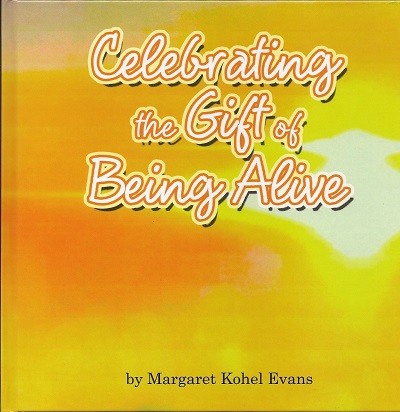
This exceptional book, Celebrating the Gift of Being Alive, has the perfect thoughts and words for birthdays, graduations, engagements, marriages, and any life celebration or family tradition.