|

Click here to buy this book!
Kindle Edition
Download to your Nook (eBook)
Download from Apple iTunes (eBook)
Download from Smashwords (eBook)
Amazon
Lulu
Barnes & Noble.com
Novels by William Walling
Novels by William Walling
Category:
Science Fiction
Publisher: Virtualbookworm.com, Inc. Publishing, Inc.
ISBN-10: 1602642826
Type: Fiction
Pages: 363
Copyright: Copyright 2008 William Walling
ISBN-13: 9781602642829
Price: $7.95 (eBook)
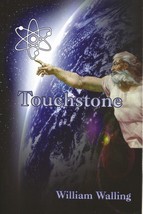
"The Stockholder," a trillionaire and industrial magnate, funds the development of controlled nuclear fusion power generation, and fends off threats to hinder his efforts by a leading member of the fossil fuel cartel
A more immediate threat than climate change, the mid-21st Century energy dilemma inspires reclusive trillionaire Lyman Dysart — called “The Stockholder” by his privately owned megacompany’s employees — to finance the research and development of humanity’s ultimate energy panacea: controlled nuclear fusion. Viable plasma constituents of the patented “Omega Pinch” process are relatively plentiful deuterium, or “heavy hydrogen,” and an ultra-scarce, fusible helium-three isotope available in sufficient quantity only on the Moon, which necessitates expensively strip-mining it from the the lunardust blanket, the regolith. Semi-panic ensues affecting the minds and wallets of the OPEC conventional energy cartel led by Vones Chairman Belkin Reichert, who thrives by brandishing behind-the-scenes political influence to suborn fusion’s advent by promoting solar energy, and eventually nationalization of the newborn fusion industry. The battle of wills and tactics between Reicher and “The Stockholder” when Dysart attempts to defeat nationalization by propagandizing the innovative fusion system as, “. . . a plasma containment shell surrounded by huge power cables, monstrous electromagnets and sophisticated ancillary equipments, at its heart a dervish of semi-vacuum excited to a furious temperature that emulates the center of the Sun, yet gives forth no light, but presumes to light the world in a beneficent, utopian glow.”
Excerpt
Touchstone
William Walling
What thou would’st learn I shall make clear to thee,
Not weaving subtleties, but simple sooth
Unfolding as the mouth should speak to friends.
I am Prometheus, giver of fire to mortals.
Aeschylus
Prometheus Bound
1 Harvest Moon
The slow-paced lunar day was waning, and so was Myron Cromwell.
Wearied by two solid weeks of harvesting, his last chore as project operations manager had been a shutdown inspection of all surface equipment. He parked the low-slung electric jitney, depowered, swung the articulated legs of his pressure-suit around in the seat and planted his protective overboots in the Sea of Tranquillity’s well-trampled dust. Kilometers beyond the curved, too-close horizon, a storied event had taken place when Astronaut Neil Armstrong jumped down from the Lunar Module ladder and laid a pristine set of boot prints in this same, ageless regolith. There were thousands of boot prints now, many laid by he himself.
Too many, Myron thought wryly.
Having again slightly exceeded the arbitrary hours of surface exposure, he would again be forced to verbally duel the medic over his dosimeter readout. Calibrated to gauge the efficacy of a pressure-suit’s integral radiation shielding, the instrument recorded a wearer’s cumulative exposure. Knowing himself competitive, at times obnoxiously prone to argument for its own sake, he would nevertheless plead no contest. The doctor quashed all pleas related to marginal surface worker overexposure by reciting a litany of radiation hazards: nausea, fatigue, central nervous system debility, cataracts, hair loss, general physiological deterioration, and a latent pre-cancerous condition.
Myron paused at the walled ramp leading down to the habitat airlock for a parting survey of the stark, surrounding desolation. Unleavened by atmosphere, sun dazzle all but touching the knife-edge horizon lit the moonscape obliquely, turning the visible portion of the mare’s three hundred thousand square kilometers into a sterile, grayscale panorama dappled with inky, elongated shadows, the uninviting vista broken only by the prototype strip-miner’s silhouette, and upper curve of the distant solar mirror.
Nicknamed “Selene’s Chariot,” the tracked, telerobotic harvester had been shipped piecemeal and reassembled here in vacuum. Grinding along at six or seven meters-per-hour, depending on regolith depth and composition, the size and frequency of obstructions, the ponderous vehicle dedicated to first-processing regolith into varieties of placid and volatile pay dirt left in its back and forth wake kilometers-long swaths remindful of a sterile plowed field while raising dust plumes of ejected waste that fell swiftly to rest in Luna’s airless, low-gravity.
Off to the south atop a semi-portable pylon, its concave face now turned downward, the huge metal mirror programmed to follow the Sun with computer-driven precision reflected concentrated solar energy to the furnace receptor dish atop the Chariot. Mirror and harvester would remain somnolent during the ensuing two weeks of lunar darkness.
Turning away from the blinding, horizontal sunlight, he reduced the polarization in his faceplate lens. Bathed in sunset flame, the upper Palus Somni escarpment loomed above the intervening horizon. U.S. Aerospace Forces had installed the mass-driver spacecraft launch system on the scarp’s sheer face. A linear, shining caesura, it gleamed in the last sunlight, angling sharply up the palisade’s flank. At sunrise if all went well, a space-to-space drone loaded to less than one-tenth of its capacity with ultra-precious helium isotope would slingshot up the mass-driver’s rails and be injected into unpowered orbit above Mare Crisium. After circling three-quarters of Luna’s crater-raddled farside, thrusters would ignite, sending the drone on an automated, three-day trajectory to its destination, low-earth-orbit about the energy-hungry world.
Again if all went well, the drone would rendezvous with a co-orbiting transatmospheric freighter, be taken into the stub-winged carrier’s cargo bay and flown to the ground. The less-than-hoped-for quantity of helium-three harvested since the first skimpy deliveries would net Dysart Technologies, Ltd. upward of eighty-eight million new dollars, depending on how far the price would be driven up by a handful of fusion community investors bidding fiercely for product, minus a few kilograms allocated to fuel Dysart’s prototype nuclear fusion system in Nevada. Despite a booming seller’s market in the ultra-rare isotope, the remuneration would amount to a pittance compared to the mammoth, multi-gigabuck expenditures DT had poured into the Selene Pilot Project, but only if all went well. It was this recurring uncertainty that never failed to generate a twinge of anxiety in Myron. To date, all had not gone exactly as scripted, although a turn for better or worse soon might be in the offing, depending upon what sort of fallout fell out in the wake of an imminent visit by three “fact-finding experts” due to arrive from the cloud-draped blue marble decorating Luna’s jet black, unfriendly sky.
He grinned, reflecting with mordant sarcasm on the cynical observation of a crewman who had defined an expert as, “Anyone from out of town.”
As often happened, the drab moonscape triggered a flashback to his formative years in Wales, where the moribund coal industry had finally succumbed, and miners were being pink-slipped in droves, a dismal footnote to County Dyfed mine closures. He pictured his younger self picking through slag heaps with the other ragamuffins, hoping to scavenge a few usable coals with which to battle the endless cold in his parents’ company-owned clapboard house. Cold and hungry months spotted with power brownouts and blackouts had elapsed while his father schemed and planned, cajoled, threatened, and eventually finagled a family migration to Calgary.
In that bygone era Canada’s Northwest Mining Association had boasted a whimsical bumper-sticker invented to combat the bad name coal had earned due to it’s inescapable carbon-dioxide footprint: IF IT CAN’T BE GROWN, IT’S GOTTA BE MINED! One fond memory hinged on the elation of his father and older brother at the prospect of working in a deep open-pit mine instead of facing the daily hazards of being crushed deep underground, victimized by an explosion and fire, drowned, asphyxiated, or succumbing to Black Lung and a premature exit from an extremely hard existence. Then as now, a miner’s routine consisted of monotonous drudgery peppered with spells of abject terror, a regimen compounded himself and his crew of novice lunar strip-miners by the added threats of explosive decompression and radiation exposure.
A flicker of light high in the jet sky caught his eye. Craning, he pressed his head back against the quilted padding of his suit’s headpiece. The flare died, and sun glare instantly blotted out the descending ship’s glint. Seconds later a quadrate of exhaust plumes erupted brightly, winked out, and then burned steadily. The blunt space-to-space vehicle irreverently nicknamed a “boxcar” by USAF personnel slowed its rump-first plunge, slowed further balanced on outboard-cantilevered thrusters, and disappeared beneath the sharply curved, foreshortened lunar horizon.
Myron nudged his chin control, opening the Selene safety channel also monitored by the Palus Somni USAF Command Center. He spoke into the throat mike. “Cromwell, here, habitat. Open your ears and come in, habitat.”
Punctuated by a faint dit of static, a lightly accented voice crackled from the headpiece speaker. “Myron, don’t tell me you’ve invented another problem for me to solve?” The voice belonged to Dr. Alois Francke, once a tenured University of Munich physics professor. He and Cromwell never tired of batting back and forth jovial insults and malapropisms.
“Not on this shutdown watch, Doc. Unless I’m hallucinating the high ‘n mighty bean-counters Jean-Marie’s been sweating out just hit the deck.”
“One of your rare true statements,” replied Francke. “I’m to be the designated meeter-greeter out to the landing site. Yet even for someone so insufferable, calling to our distinguished visitors ‘bean-counters’ exceeds all bounds of understatement.”
“Nothing,” quipped Myron, “exceeds like excess. They may count humongous, king-sized beans, but they’re still just beans.”
“Curb thy salty tongue,” admonished Dr. Francke, “and get thee hence. Jean-Marie tells me he wants a word with you before welcoming our guests.”
Cromwell grinned. “Say I’ll get back to him soon’s I check my appointment book.”
“Myron!”
“Easy, Doc. Tell our esteemed director his favorite whipping boy is looking forward to another dull séance. Cromwell, out.”
Descending the shallow-pitched ramp, Myron punched an oversized switch panel with the heel of his gauntlet. The airlock hatch cycled open, admitting him into the evacuated chamber, where he stood patiently, legs apart, arms akimbo, awaiting electrostatic removal of regolith dust clinging to the suit’s buffer garment and insulated overboots. If inhaled within the habitat, sharp-edged, micron-sized particles posed only minor health problems — mainly “hay fever” symptoms — while nanoparticles could lodge in the lungs and induce fibrosis, or occasionally migrate into the bloodstream, where long-term aftereffects could prove serious.
Pressure came up slowly in the lock chamber. When the light winked green, indicating barometric equivalence in chamber and habitat, he punched in a command, and the inner hatch cycled open. Enteromg the airlock service compartment’s warm, oxy-nitrogen environment, he undogged and opened the faceplate lens, wrinkling his nose at the pressure-suit’s legacy: a ghostly whiff of machine oil tainted with a hint of his own perspiration. He unsealed, wriggled with practiced dexterity to doff the cumbersome vacuum gear he had lived in for the better part of two weeks. Divesting the suit of its buffering outer garment and the protective overboots, he hung the ancillary items separately to await more thorough cleaning and a mandatory safety inspection.
* * *
The watercolor poster gracing the honeycomb-sandwich partition behind the director’s utilitarian plastic desk depicted a stylized version of the Selene Project logo. Clad in filmy, rippling gossamer, the Moon Goddess reared defiantly erect in a golden chariot, long blonde hair streaming in the wind, a curling whip held high in one dainty hand, the other clutching the reins of a matched pair of galloping white Arabians.
|