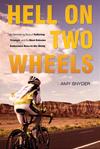
HELL ON TWO WHEELS tells an epic tale of adventure and survival, offers a first-ever book-length narrative from inside the toughest race in the world, and follows a handful of racers who test the limits of human endurance.
3,000 miles. Racing nonstop. If you sleep you lose.
Contestants have died, been maimed, and spiraled down into the nightmarish realm of the mad. Half don’t finish this epic race that Outside magazine called “the toughest test of endurance in the world.” Despite this, each year the world's greatest ultra-distance cyclists gather in California, hoping to be the first to reach the East Coast victorious. Along the way, they'll test themselves, each other, and the limits of human endurance. This is their story.
One winner who also climbed the world’s highest mountain said, “Everest is more dangerous but RAAM is harder.” RAAM—the Race Across America—is a bicycle race like no other. It’s nothing like its more famous cousin, the Tour de France. RAAM is much crazier, more gothic, and even savage. Once the gun goes off on the Pacific Coast, the clock doesn’t stop, so if you sleep, you lose. The first rider to complete the prescribed 3,000-mile route—nine days later at the Atlantic—is the victor. Most racers manage two or three hours of sleep each day while the leaders get by on an hour and a half—or less. Sleep deprivation leads them to hallucinate, often for hours on end. This epic race is the most brutal organized sporting event you’ve never heard of and one of the best kept secrets in the sports world.
With clarity and compassion, HELL ON TWO WHEELS follows a handful of athletes before, during and after the 2009 event—the closest and most controversial in history. HELL ON TWO WHEELS is a thrilling and remarkably detailed account of their ups and downs, triumphs and tragedies. While the action is riveting, the real story involves the racers. Readers get to know them and become invested in their life histories. As we come to know them we watch with ghoulish fascination as RAAM exacts its vicious toll, hour by hour, day after day. We hope for the best but the opposite is equally compelling.
Who are these people? What drives them to persevere in the face of such staggering punishment? Where is this place they go to where misery and transcendence are so closely intertwined? Contestants may be brutalized by this race, but through it they discover their essential humanity and with this, joy and completeness.
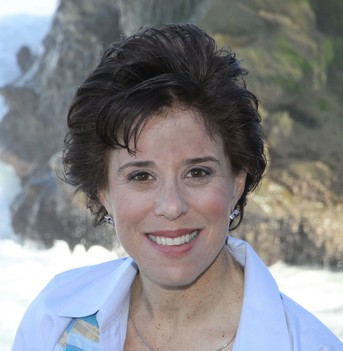
As three-time Ironman finisher and lifelong cyclist, Snyder was able to embed herself into the obscure, eccentric world of ultra-distance cycling. The author enjoyed unprecedented access to the racers before, during, and after the 2009 event, and emerged with a truly unique and astonishing story.
As she chronicles the race from the starting line on the beach in Oceanside to the finish at the picturesque Annapolis harbor, readers witness the closest and most dramatic race in RAAM history. Readers live with the racers 24/7 throughout the two-week non-stop race, experiencing their ups and downs, triumphs and tragedies, motivations and eccentricities, competitive rivalries, and race tactics. They observe the physical and mental toll this race takes, and watch controversies and surprises play out.
By experiencing the race and its aftermath from the perspective of the racers themselves, HELL ON TWO WHEELS breaks new ground in helping us appreciate how such a grueling effort can be so cleansing and self-revelatory.
Readers will be forever changed by the story of this race and its contestants. As with the racers themselves, everyone who encounters RAAM says it changes their relationship to their own limiting thoughts and feelings. This is more than just a race—it’s a monster, a crucible, an unforgettable allegory about overcoming personal limitations, self-discovery, and the power of the human spirit… and a story that needs to be told.
Excerpt
Prologue – Dawn on Day Nine
La Vale, Maryland, June 25, 5:30 a.m.
His legs were churning the pedals like massive pistons, pushing him along a quiet country road as the sun began to rise. His puffy, sun-scorched face was expressionless, and his lips were cracked and bleeding. He simply stared down at the road, barely able to turn his head as the pavement curved before him. There was nothing left physically. He was driving himself forward on sheer willpower. His crew chief radioed navigation instructions to him along with words of encouragement.
Left at the stop. Looking good.
He was digging so deeply he could taste his own bile. He’d been racing for almost eight days and nights with barely a couple of hours of sleep since leaving the Pacific coast on his transcontinental odyssey. Despite his staggering exhaustion, he was managing a steady pace over rolling terrain approaching the exurbs of Baltimore-Washington. He’d covered 2,800 miles. Only 230 to go. He’d see the finish line in less than 15 hours. He was leading the race but he was being hunted by a determined adversary, and his lead was shrinking.
A small climb ahead. Stay focused.
It was impossible to know what he was thinking. Was he present in the moment or was his mind blank? Maybe he was somewhere else—perhaps in the mountains near his home, or playing a game with his young son? He turned a huge gear, and his slow cadence seemed poorly matched to the frantic mood out on the course. Through his radio came one more command, the only one that mattered now.
Go, go, go.
Professional Reviews
Dr. Richard Farson
Amy Snyder has given us not only an intimate and fascinating account of the most demanding endurance race ever conceived, but opens us to a world of experiences well beyond our imaginations, in which we discover ways of being that transcend anything most of us have ever known. Indeed, in this book we are asked to set aside our normal, rational ways of viewing life.
The ultra cyclists, racing across the entire United States, both seek and endure a range of experiences unavailable to any but people like themselves. Snyder describes those amazing feelings in a most believable and compelling way, giving us entry into a world of supreme effort, excruciating agony and super obsessed mental states that simply go beyond our ordinary understanding. Reading their experiences, we are asked to embrace the paradoxical concepts that at these outer reaches of human ability, joy and suffering coexist simultaneously, that pain, rather than comfort or pleasure, is a motivator, that bodily damage that would send any of us to the emergency room is to be endured, embraced and overcome as an impediment to finishing the race. Words we use often, such as exhausting, excruciating and extraordinary, cannot begin to describe the enormity of the ordeal these cyclists face and survive.
Over the past few decades, society has seen the growth of organized physical and emotional challenges that go well beyond the previous standard of the Olympic marathon, a race that has stood as the imagined outside limit of human endurance for thousands of years. Now the Race Across America not only raises the bar much higher, it raises the possibility that there is no limit to human endurance, or indeed to other human potentialities. It certainly makes it very clear that most of us are only scratching the surface of what our capabilities may be.
-- Dr. Richard Farson,Psychologist and author, is president of the Western Behavioral Sciences Institute (WBSI), an independent, nonprofit organization he helped found in 1958, devoted to research, education and advanced study in human affairs. He heads the WBSI’s pioneering International Leadership Forum (ILF), a think tank composed of influential leaders from business, government, academia, science, journalism, literature and the arts, addressing the great policy issues of our time. He authored several critically-acclaimed books, including "Management of the Absurd: Paradoxes in Leadership," which is published in twelve languages. His book "Whoever Makes the Most Mistakes Wins: The Paradox of Innovation," written with co-author Ralph Keyes, was excerpted in the Harvard Business Review, winning the McKinsey award for the best article published in 2002, the one "most likely to have a major influence on managers worldwide." From 1973-1975 Farson was president of Esalen Institute, an innovative educational organization located in Big Sur and San Francisco, California. In 1975 he joined the faculty of the Saybrook Graduate School and Research Institute in San Francisco, formed by the Association for Humanistic Psychology, where he supervised the doctoral research of advanced graduate students.
Dr. Timothy Noakes
Hell on Two Wheels is true.
The Race across America (RAAM) does not belong on this Earth. There is no tougher sporting event in the known Universe.
Which explains why fewer than 200 athletes have ever completed the race - fewer than the number who complete the Olympic marathons every 4 years.
In researching her book Amy Snyder enters, for a brief time, the lives of 28 of the world's most unusual athletes. She shows that their desire to complete the RAAM has less to do with the physical challenge than with their need to discover that part of their spiritual being that remains otherwise hidden.
--Dr. Timothy Noakes is a professor of exercise and sports science at the University of Cape Town and a director at the Sports Science Institute of South Africa. He wrote the seminal Lore of Running, now in its fourth edition. He is perhaps best known for being the first to publish a scientific paper on the condition now known as exercise associated hyponatremia. He is a veteran of more than 70 marathons and ultramarathons. He is an editorial board member for many international sport science journals and a former president of the South African Sports Medicine Association. In 1999, he was elected as one of 22 founding members of the International Olympic Committee's Olympic Science Academy. Noakes is also a fellow of the American College of Sports Medicine.
James M. Tabor
Amy Snyder's Hell On Two Wheels accomplishes the first great challenge facing contemporary writers: discovering something of real consequence that none of us have heard of. But her book's much greater achievement is its relentless depiction of the exotic, agony-drenched world of ultradistance cycling, where mere survival may be the ultimate victory.
-- James M. Tabor’s latest book is Blind Descent, a true story of the last great terrestrial discovery: the Mt. Everest of caves. It was selected as the Amazon Best Book of the Month and has earned wide praise. The writer and on-camera host of the acclaimed national PBS series The Great Outdoors, Tabor was also co-creator and executive producer for the 2007 History Channel special Journey to the Center of the World. Tabor is a former contributing editor to Outside magazine and Ski Magazine; his writing has also appeared in Time, Smithsonian, Barron’s, U.S. News & World Report, The Wall Street Journal, The Washington Post, and many other national publications.
Is Justice Finally Overcoming the Ford Valley Corruption?
Judge Sherman Ford, the patriarch of the Ford family is continuing to control and corrupt Ford County. The newly elected sheriff, Todd Mercer, and friends are slowly taking control
“We’re going to use nine megaton warheads in space and we’re not sure they’re large enough to be effective. Why would you even consider using kiloton-range surface-to-air warheads as back-up?” The answer was succinct. “Because they’re all we have.”
Her grandma always said she had “the blessing”, and to always use it for good, but sometimes there is shame in fame if a person can’t handle it. Don’t let the Boo Hag ride ya