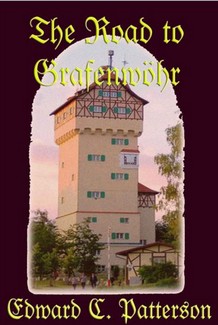

Kindle Edition
Amazon
Carol Louise Wilde
Category:
Fantasy
Publisher: Cor Corvorum Books
ISBN-10: 1944492011
Type: Fiction
Pages: 450
Copyright: Nov 21 2016
ISBN-13: 9871944492014
Price: $2.99 (eBook)
Introducing Nagaro, a young man who has had his memories magically stolen and is trying to build a new life as a humble fisherman, until he is captured and enslaved by enemy sea raiders - an act they will come to regret. Come into a world of swords and sailing ships where honor and altruism still have some use.
Gift of Chance begins the saga of Nagaro - "Nameless Man". Not quite eighteen at the beginning of the story, he awakens in the home of a family of fisher-folk after having his memories mysteriously taken. As he seeks to rediscover his world and find a place in it, he soon realizes that something bad was done to him, something it might be better not to remember. And by the time he does remember, he has other problems: He has been captured by sea raiders and chained to the oar of a war galley. Now he must find a way to regain his freedom while keeping his past a secret, because those who hurt him must surely think him dead and he means to keep it that way.
Excerpt
Chapter 1: The Memory Thief
A youth was running through the dark forest, all around him the black and silver harlequin patterns of tree-shadow and moonlight. Branches whipped at him as he ran. Brambles caught at his clothing. He laughed aloud—a wild, exultant, manic laugh.
He was free! Finally free!
He felt as if he could run forever, reveling in the power of his pumping limbs, heedless of muscles on fire from exertion and lungs that burned with each indrawn breath. He slid down a bank, splashed through the stream that lay at the bottom, and flung himself up the slope on the other side, scrambling over rocks that rose before him in a pool of moonlight.
So far... so far already, but he must go farther still...
The change was so gradual that he was unaware of it, but more and more the tree trunks began to reel and waver as they passed. The shapes of rocks and bushes leaped weirdly out of the darkness and danced erratically around him until the world seemed to be turning like a wheel. He felt as if he were floating. The forest was becoming indistinct, shades of darker and lighter gray instead of black and silver. He staggered, his feet stumbling—and then he was falling—falling among ferns, where he lay gasping, his head spinning, too dizzy and spent to move.
Face down... damp fern leaves... finally able to breathe... the smell of musty earth... the world turning, turning...
A wave of nausea swept over him. Sweat sprang from his already drenched body, and a chill came, racking him, rattling his teeth together in his head. He lay shivering and shuddering among the fern leaves.
Time passed and with it the chill. A delicious warmth stole over him, wrapping him in its blanket. Feebly, then, he tried to move, but his muscles were as weak as water and his head was full of warm fog so that at first he didn't notice his memories being tugged away.
Names were among the first things to be taken; his own was gone before he knew it. When he became aware that things were slipping away, he struggled against the loss. “No...” he murmured, “No... Don’ do that...” But the memory-thief paid him no heed.
Shapes floated in his vision—faces of shadowy figures, bending over him. There was a girl with honey-colored hair and an expression that was kind and sad and poignantly disappointed. There were men—four men—blond or red-haired, all nameless. And a final face—as nameless as the others—sallow, with short-cropped black hair and a nose like a hawk's beak. This face had hard black eyes that glittered coldly, chilling him, evoking an intense desire to escape. He struggled, twisting, uttering a wordless cry... Then he felt as if he were falling... falling into darkness... as if the ground had dissolved beneath him...
Hands were grasping him... turning him over... lifting him... He struggled to open his eyes...
Too much light!
He closed them again—tried to speak, but all that came out was a moan. A hand was laid on his forehead and from somewhere, a very long way off, he seemed to hear someone say, “He’s burning...” But the words conveyed no meaning to his fevered brain.
Enveloped in darkness and warm, gentle fog, he was wandering in fevered dreams. The troubling faces came and went, intermingled with running and the sensation of falling. Now and again the memory-thief came, slipping into his mind, taking away memories that troubled him, pulling them behind a curtain of forgetfulness. Such a relief to let those things go...
But other things were being taken as well, things he wanted to keep. Weakly he sought again to resist the intangible hands of the unseen thief, but he didn't know how, and the memories kept slipping through his helpless mental fingers until all sense of the need for resistance slipped away, and he yielded.
Chapter 2: Awakening
There was a room now, sometimes—emerging as if from a fog or mist. It was a small room with rough walls and a low ceiling of hewn timbers. He saw mostly the timbers because he was lying on a bed, looking up at them. There were faces, too—broad, brown faces with dark eyes, framed by dark hair. Safe faces...
When he finally made his mind focus on one of the faces, he found it belonged to a woman. She was of middle years, with lines on her forehead and at the corners of her eyes, and her dark hair pulled back into a single long braid.
Then he saw that she was smiling and holding a cup of something for him to drink.
He sat up a little and took the cup in his hands. It was made of earthenware and it felt smooth and solid under his fingers. Easy to hold... He frowned briefly, puzzled by the thought, but then he drank from the cup and the liquid it contained was warm and tasted good. The woman took the cup then and told him to rest, and he lay back down and slept.
After that he wandered less.
The brown faces had become people to him. There were three of them. There was the woman, and a man of about the same age with a weathered face and a close-trimmed beard, peppered with gray. He did not come often. The third was a youth of seventeen or eighteen years with a cheerful face and quick, bright eyes. He seemed to be trying to grow a beard like the older man’s.
The room had become more real to him as well. Its walls were of wood above and stone below, rough but solid. There was one door and a single window that was covered with oiled skin. It allowed light to pass but no image of what lay beyond. Besides the bed in which he lay, the only furniture was a small table, two stools, and three assorted chests.
There came a time when he awoke to find the woman there, smiling kindly at him. “Would ye like some more broth?” she asked.
He nodded, then found his voice and said, “Yes, please.”
“Rest then, while I fetch ye some,” she answered, and went out through the door, pulling it shut behind her.
His mind seemed fuzzy, as if his head were full of fog, but that didn't really bother him—at least not yet. He pulled himself up into a sitting position and noticed that he was quite naked under the sheets. Vaguely he wondered who had undressed him.
He noticed also that there was an object hanging around his neck. He examined it. It was a large bronze ring with no stone, but with a design cut into its square, flat top. The design depicted a half sun disk with rays—either setting or rising—encircled by leafy sprigs bearing trumpet-shaped flowers. The ring was threaded onto a silver chain with a clasp. Both the ring and the chain felt familiar in his hands. It was right they should be there.
He examined himself then. His skin was pale, not brown like that of the three people who seemed to inhabit this house. He found he had marks on the inner sides of both arms in lines running from his elbows down to his wrists. There were some bruises and tiny red spots that looked as if something sharp had been poked through the skin, and also faded scars of older marks. Looking at them made him feel uncomfortable. There was something wrong about them and he didn't want to think about it, so he turned his attention to the sounds of voices coming through the rough wooden door.
“Aye, he does seem t’ be truly awake this time.” That was the woman.
Then the voice of the young man: “Can I go in with ye then, Mother?”
“Oh, aye, it won’t do any harm I suppose.”
They both came in then, and he pulled the sheet hastily up around his waist. The woman sat down on one of the stools and handed him the cup again.
“Here’s your broth then, dearie. Ye drink that right up, now.”
He was very glad to do so. When he handed the cup back to her, he said reflexively, “Thank you, Zirdyn.”
Immediately she shook her head at him. “What’s that ye’re calling me? Zirdyn? I don’t need any such title.”
“But it’s not a title,” he objected. “It’s just being polite. I was taught to speak that way.” Somehow he knew that.
She made a dismissive gesture. “Well, ye can just call me Olomi,” she said. “That’s quite good enough for me. And my husband’s name is Jomo. If ye go calling him Zirda, he’ll likely choke.”
The other youth had seated himself on the second stool and was leaning forward, studying him with great interest. “I’m Taru,” he interjected. “What’s your name?”
“I... don’t know.” He frowned, and the frown deepened. The fog in his head was getting in the way, but still it seemed he ought to know. He felt confusion and the first note of alarm was sounding weakly in his head. “Why can’t I remember my name?”
His two visitors exchanged glances. “Ye’ve had a fever,” the woman said gently. “A very bad one. It’s been three days and nights. I’ve heard that sometimes a fever can affect the mind. Most likely it’ll pass in a day or two,” she added reassuringly.
“Father was afraid ye were going t’ die,” put in Taru. “He was afraid we’d catch a net-full o' trouble then, when someone came lookin’ for ye. Instead of a reward—”
“Taru!” Olomi gave her son a stern glance, then turned back to her patient. “Perhaps ye should rest now.”
But he didn't feel like resting. A half-formed fear was fluttering in the back of his mind. “How did I come to be here?” he asked. In fact, he realized he had no idea where "here" was.
|