|
Kindle Edition
Amazon
Barnes & Noble
Stanford University Press
Category:
Philosophy
Publisher: Stanford University Press
ISBN-10: 0804775389
Pages: 248
Copyright: October 19, 2011
ISBN-13: 9780804775380
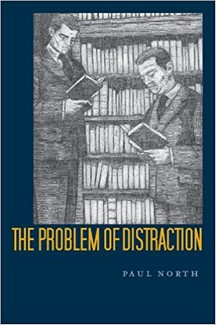
This thought-provoking book inquires into the effects of distraction, defined not as the opposite of attention, but as truly discontinuous intellect. Human being has to be reconceived, according to this argument, not as quintessentially thought-bearing, but as subject to repeated, causeless blackouts of mind.
We live in an age of distraction. Contemporary analyses of culture, politics, techno-science, and psychology insist on this. They often suggest remedies for it, or ways to capitalize on it. Yet they almost never investigate the meaning and history of distraction itself. This book corrects this lack of attention. It inquires into the effects of distraction, defined not as the opposite of attention, but as truly discontinuous intellect. Human being has to be reconceived, according to this argument, not as quintessentially thought-bearing, but as subject to repeated, causeless blackouts of mind.
The Problem of Distraction presents the first genealogy of the concept from Aristotle to the largely forgotten, early twentieth-century efforts by Kafka, Heidegger, and Benjamin to revolutionize the humanities by means of distraction. Further, the book makes the case that our present troubles cannot be solved by recovering or enhancing attention. Not-always-thinking beings are beset by radical breaks in their experience, but in this way they are also receptive to what has not and cannot yet be called experience.
Excerpt
There is no distraction today, even though one often hears thee are too many distractions. Yes, this is the age of distraction; many have called it that. For a hundred years or more (in actuality fifteen hundred, since Augustine), the disintegration of attention has been lamented, and every new decade and discipline seems to offer a new explanation and remedy for the loss. Education calls out the attention brigades to fight the shifty figure that steals away our focus. Have we won the war on distraction? A more primary question would be: have we found the enemy we are hunting? Commerce wrestles over the splinters of awareness that technology has shattered. Psychology struggles to get a hold on concentration, mainly against children, even though these same children will soon be required to "multi-task" and are already clicking and scanning and surfing. Why cure them of what is surely a timely habit? Statistics and politicians battle drivers' lapses; new media gather up the shards of culture from the broken cult. Drugged up, warned off, lured in, and made to swallow theories about society in distraction, few have the presence of mind left to ask: what is this pervasive evil? What is the meaning of the word, the truth of the phenomenon, and moreover, who will tell the story of its arrival in this history and its fetishization in reasonable discourse?
Who can say they understand distraction?
...This furtive and destructive force, a distraction not only equal to but possibly also stronger than attention, is not the subject of this book....
How would distraction appear if it were released from its subordinate to attention, to perception, to the subject? Few ask, and those who do often cannot abide the peculiar conclusions to which the inquiry leads....
...Where philosophy, criticism, and art theory are traditionally concerned with principles for the formation of things, distraction is concerned with their deformation, disintegration, and ceasing to be. It posits a tendency toward not-thinking and a release from being.
|