Kindle Edition
Amazon
Shadows of Tockland - The Website
Amazon Kindle
Author Website
Category:
Science Fiction
Publisher: Book Baby
ISBN-10: 1514858061
Type: Fiction
Pages: 468
Copyright: 2013
ISBN-13: 9781514858066
Price: $2.99 (eBook)
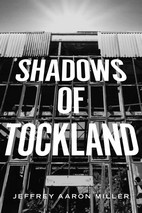
A post-apocalyptic adventure novel.
David Morr runs away from an unhappy home to join a small traveling circus. Here he meets a quirky assortment of characters--the beautiful and mischievous Annabelle, the clever and manipulative Telly, the brutish Karl, the brooding and troubled Gooty, and the enigmatic and possibly psychotic Cakey. Each one of them will test and challenge David, as he struggles to come out of his shell and embrace his new life on the stage.
But the world is full of sickness, and life on the road is fraught with peril. A plague sweeps across the land, turning ordinary people into mindless monsters, transforming friendly audiences into rampaging hordes. Soon, the performers find themselves fighting for their lives against crazed mobs. All the while, the Empire of Tockland is on the rise, the cruel tyrant, Joseph Mattock, conquering one city after another, and the black and silver flag will soon fly over every nation.
Unwittingly, David and his fellow performers find themselves traveling deeper and deeper into the very heart of darkness, where plague and madness and tyranny collide in a brutal struggle for survival.
Excerpt
Hickory Road followed a winding course from the edge of the clearing through a stand of trees and into the small, decaying town of Mountainburg. Gas lamps atop bronze poles lit the way. A few stragglers meandered here and there or crouched in the bushes, sipping whatever drink was on hand, but for the most part, David was alone all the way back to town. He didn’t mind. He hated gaslight, he hated drunks, and he hated empty places, but he felt no worries tonight. He scarcely felt the ground beneath his feet.
Mountainburg was comprised of three dozen ramshackle buildings in a vale beneath a high limestone wall. The bluish glow of gaslight hovered over the town like incandescent fog. Some had gathered on the broad porch of the general store, still energized by the show, and chatted away, laughing, drinking and smoking. It would go on long into the night, David knew, and probably end in arguing, vomiting, fighting. It didn’t take much to get this sad lot going. He avoided the crowd by moving around behind the houses and slinking through yards. There were people in some of the yards, but they paid no attention to him.
His own home—if one could call it a home—was a two-story shack of aluminum sheets and scrap lumber tucked behind a fence on the edge of town. He smelled it before he saw it, the rotten stink of the garbage that filled the trench in the backyard, a cloud of odor wafting through the surrounding area like a warning to potential trespassers. Neighbors had complained more times that David could recall about the smell, but nobody was willing to take action. Nobody wanted to cross mean old Vern. Light burned in a single window, not the harsh glare of gaslight but the flicker of candles. Ma was awake.
David crept around the garbage trench and up to the back door. Yes, he did imagine, in his euphoric state, that he could somehow open the door, a rusty aluminum sheet hanging on crooked hinges, without making noise. Instead, it made possibly the loudest sound in the world the moment he pulled the handle.
“Davey?” came the voice from the living room, a nasally voice with an edge as sharp as a blade. “Davey, is that you?”
David sighed and opened the door the rest of the way.
“It’s me,” he said.
“Took you long enough to get home,” Ma said. “Get up to bed. You got work tomorrow, helping Vern unclog the drain pipe.”
David stepped through the door and pulled it shut behind him. He was in the kitchen, or what passed for a kitchen. Two plastic chairs, a broken table lying at an angle in the corner, a gas stove that didn’t work and an icebox with no ice and no door. Mice scattered out of his way as he crossed the room.
“You hear me?” Ma said. Her chair squeaked, as if she meant to get up and come after him. He knew she would do no such thing. Ma had melted into a great big blob in that old chair. She did not get up for much these days.
“I heard you,” David said. “I’m going right up to bed. I swear.”
“Good.”
David peeked into the living room. Ma, in her old gray house dress, had a drink in one hand, the stub of a cigar in the other. She looked at him over her shoulder, two narrow eyes set beneath a high forehead as pale and pasty as bread dough.
“Was it worth it?” she said.
David didn’t know what she meant, so he just stared.
“The clown show, Davey. Was it worth it? It took up the whole evening and cost you two months’ earnings. Was it worth it just to see some jackasses prance around on a stage?” She did not wait for his answer but took a long sip of the amber-colored liquid in her glass and turned away.
“Good night, Ma,” he said, after a moment.
“Get to bed,” she replied, waving the unlit cigar at him. “And keep quiet. Vern’s already asleep. You wake him up, you’ll regret it.”
“I know.”
He made his way up the narrow staircase. Each step shrieked in protest, no matter how gently he tried to walk. His was the only room upstairs. Ma and Vern slept in the downstairs bedroom on a real bed with a brass frame. David had a bare mattress in a corner beneath an open window. He didn’t complain. It was more than some people had. He sat on the edge of the mattress and considered his predicament. Rounding up some clothes and personal effects was not the problem. Getting out of the house was the problem. Still, if it came down to it, he supposed he could just make a run for it.
He had a big wooden crate that served as a dresser. He picked up his pillow, a burlap sack stuffed with rags, and tore the stitching out of one end. He dumped the guts onto the floor, tattered bits of old shirts and socks, rags and blankets, and swept them into the corner. Then he crammed some clothes from the crate into the sack, an extra pair of shoes and his most cherished possession—Introduction to Gymnastics, the title faded to gray on the tattered cover. Vern had gotten rid of all of his other books, selling a few and using the others to kindle fires. With the sack mostly full, he twisted the end shut and flung it over his shoulder.
Out the window or down the stairs? That was the big question. Down the stairs was treacherous because of the noise. Out the window was a ten foot drop onto hard-packed dirt. Ma would hear him either way, he fully expected that, but the window gave him a greater head start, if he could avoid twisting an ankle or breaking a leg in the fall.
He rose and turned to the window, brushing back the plastic curtain with his free hand. The view beyond was of the lifeless yard and the crumbling fence that outlined the property. David sat on the windowsill, dangled his feet over the side, and braced himself for the drop. In the distance, he heard the cackle of drunks, the barking of dogs, and it occurred to him that this might be his last night to hear any of it. The smell of garbage from the trench, the whistle of wind through cracks in the wall, the scampering of mice, the grinding snores of Vern, all of it gone from his life forever. It was almost too wonderful to believe.
He jumped. His plan was to tuck and roll as soon as he hit, hop to his feet and take off running. Perhaps Ma and Vern wouldn’t find him missing until sunrise, and, by then, he would be long gone. But he landed on his heels, and the weight of the sack over his shoulder tipped him backward. He slammed into the side of the house with a crash that shook the whole building to its foundation. As he picked himself up, he lost his grip on the burlap sack. It fell, flopped open and gushed clothes into the dirt.
“Vern! Vern, what was that?” Ma shouted, her voice warbling with terror. No doubt she assumed crazy drunks had attacked the house. “Vern! Get up and go see!”
Cursing under his breath, David stuffed clothes back into the sack, twisted the end shut again and slung it back over his shoulder. Vern, rising from the depths of his bedroom, unleashed a string of profanities that put David’s cursing to shame.
“Go and see,” Ma shouted again. “Go and see!”
David dashed across the yard, dodging debris, most of it trash blown out of the trench. He tossed the sack over the fence and proceeded to climb. Behind him, the back door flew open with a shriek. David grabbed the top of the fence and pulled himself up.
“What’s goin’ on out there?” Vern’s voice was like a nail raked over glass, a high-pitched howl quite in contrast to the bloated mass of flesh that was the rest of him. “Who is that?”
David did not bother looking back. He dragged his legs over the fence and dropped down on the other side, landing on his hands and knees and smashing the burlap sack. Again, his clothes burst out onto the dirt.
“Ma, I seen him,” Vern called. “It’s Davey! I seen him jump the fence!”
“Go after him,” came the distant response. “Drag him back here, black and blue!”
David clawed frantically at the clothes, cramming them into the sack, but they had scattered far and wide, and it was hard to see them all in the darkness. Finally, he gave up, grabbed the sack between his arms and took off running. The space beyond the fence was a hilly patch of high grass that caught at his pant legs as he ran. He heard Vern start after him, bare feet slapping the ground, and then a great crash as he slammed into the fence. The fence was made of scrap lumber held together with scavenged nails and bits of wire. It shattered like dry twigs under the force of Vern’s considerable weight.
“Run from me, will you?” Vern said, out of breath. “Run from me?”
David dared a glance over his shoulder and saw Vern closing the gap, moving with surprising speed for one so enormous and unhealthy.
“You gonna scare your mama like that, Davey?” Vern said. “I’ll give you a beating you won’t never forget.”
When David turned back around, he saw the shadow of the neighbor’s fence looming up in front of him. He tried to stop, but one foot came down wrong, and he fell. He managed to turn the fall into a somersault, but this brought him right up against the fence. He caught himself, sprang to his feet and turned. Vern was like a vast wall of darkness bearing down on him.
“Vern, wait,” David said. “Vern, I got a job.”
“A job?” Vern snarled. “Your job is helping me take care of your mama.”
“A paying job!”
“I’m gonna…knock you…through that fence,” Vern said, through gasps for breath.
He took a swing at David, his fat fist moving up and over his head in a great arc, blotting out the stars. David dropped into a crouch and flung himself out of the way, and Vern’s fist smashed into the fence. He cursed so loud, it echoed in the distance. Dogs ceased barking, and some of the drunks in town got quiet. David turned toward the line of trees at the edge of town, a maze of shadows and looming trunks. He saw his best hope of escape in that direction and took off running.
“Davey, I swear to God…you make me chase you into them trees…you’ll never leave the house again.”
David heard Vern take another couple of steps, but apparently he’d expended whatever little reserve of energy he had. He gave a last heaving gasp for air and collapsed.
“You gotta come home eventually,” Vern shouted. “And when you do…” He paused to take another gulp of air. “When you do…it’s gonna be worse for you, you brat. The beating of your life! You hear me? The beating…of your life!”
David passed into the shadows, low-lying branches whipping at his hair, scratching his cheeks, clawing at his clothes. The forest seemed to close in behind him, like a curtain at the end of an act, and Vern disappeared, the house disappeared, David’s whole life disappeared. He moved farther into the darkness, his hands thrust out in front of him, the half-empty burlap sack flopping about. He didn’t know if Vern would get a second wind or not—he hadn’t really expected Vern to get a first wind—but he wouldn’t risk it. There was no going home now. Vern would never forget. David knew that all too well. When the old man threatened a beating, he always came through. David ran until his lungs burned and finally stumbled to a stop. Bent over, his hands pressed to his thighs, he struggled to catch his breath.
He stood in the shadows for a long time and felt, if only fleetingly, a sick sense of regret. The thought of escaping had seemed wonderful, but now the realization hit him—he had no home. No home, no family, only the promise of a job with people he did not know. Madness. It was absolute madness. He couldn’t even remember now why he’d done it. Seeing people performing on stage, hearing the cheers and applause, somehow it had all gotten to him.
One fateful decision and everything was different. David rose, hoisted the sack onto his shoulder and trudged back across town. He had made his choice, madness or not, and there was no going back.
|