
Kindle Edition
Amazon
Category:
Travel
Price: $4.99 (eBook)
A very unique kind of travel book: a travel book with much, much more than just travel in it: the outdoor life, geography and history, ethnic conflict and racism, international relations and political power, family hopes and expectations, psychology and mental health; it even has a ghost story - or perhaps two - hidden away within it!
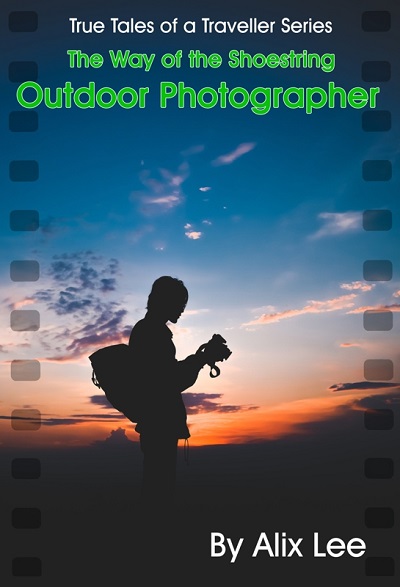
The Way of the Shoestring Outdoor Photographer is a travel story with a lot more than just travel in it: the outdoor life, geography and history, ethnic conflict and racism, international relations and political power, family hopes and expectations, psychology and mental health; it even has a ghost story - or perhaps two - hidden away within it.
Any one of these aspects of the story would be worthy of tackling alone as the subject of an entire book. For example, the ghost story is something that I reflected upon often in the months and years after it happened. I couldn't come to any definite conclusions on this, so I'll leave this part for readers to decide for themselves.
Ethnic conflict and racism, within the travel experience context, are things I've written about before, particularly in the book Overlanding, and here, as in that book, this is not limited to academic research - although it also includes some of that - but also includes first-hand experience.
International relations and political power are things I've written about before, in The Taiwan Experience for example, and here again the difference from many political commentaries is that while admittedly in no way involved in politics, I was stuck in the midst of where it was all happening, and to some extent unable to avoid all the political turbulence that marked the era of transition from British rule to Chinese rule in Hong Kong.
What The Way of the Outdoor Photographer doesn't provide is detailed information on the low-budget photographic hardware that a shoestring outdoor photographer may need for his or her hobby or way of life; this is not a technical treatise but rather a first-hand account of the experiences of one particular low-budget outdoor photographer: me. It also does not offer guidebook-type information on the locations where the story takes place, although like all the accounts in the True Tales of a Traveller series, it does provide sufficiently detailed information on the places concerned for the stories to not only make sense but also to be appreciated, enjoyed, and perhaps even re-read by those readers wishing to deepen their understanding of a particular place. Some of this location-specific information is peculiar to the time the events related took place, but most remains relevant at the time of publication.
Excerpt
The coast of Northern Ireland was exceptionally clear; I felt I had to take a shot of it. But first, I took a photo of the drop down the rugged slope to the sea, which was not sheer, but very steep at about 65 or 70 degrees in places, partially rocky and partially grassy. I even noticed my own shadow in the viewfinder the moment I clicked the shutter, but the next moment both my shadow and its owner were tumbling roughly down the slope.
I came to a very painful stop about 15 or 20 metres down the slope, belly hugging the slope, the camera still hanging from my neck but now resting behind me, on my daypack. After ascertaining that camera and daypack were still with me and that I didn't seem to have broken any bones, I instinctively tried to rise and scramble back up the slope. But the surface I was trying to climb up, which appeared to be a grassy slope from a distance, was in fact not solid and secure, but rather made up mostly of rocks and scree held together only loosely with grass, bramble and other small and hardy plants. My right foot slipped as soon as I tried to rise and put weight on it; the small rocks it had made contact with bounced and rolled down towards the sea, and I immediately tumbled and slid a further five metres or so down the slope.
I tried to hug the slope to slow myself down and this seemed to work. This new position seemed to be even
worse than that of a few moments before; even steeper and less stable. As I now lay spreadeagled on the rough and rocky slope, I realised the gravity of my situation. And gravity was the right word. It seemed that any attempt to climb back up the slope would only result in me sliding further down.
|