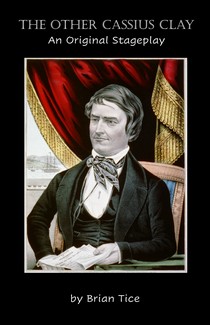
The Other Cassius Clay chronicles the political life of Kentucky Emancipationist Cassius Marcellus Clay (1810-1903). Cassius Clay was the son of the wealthiest slave-owner in the state of Kentucky, inheriting many slaves from his father's estate and subsequently freeing them all, including an ancestor of American professional boxer Muhammad Ali (orig. Cassius Clay).
The life of controversial Emancipationist Cassius Marcellus Clay, son of the wealthiest slave-owner in 19th-century Kentucky and founder of the nation's first integrated college (Berea College, Kentucky), who granted freedom to his inherited slaves and to many others and spoke out openly against the "evil institution of slavery," making him countless enemies throughout the slave-owning South. The play was originally performed in Kalamazoo, Michigan by the Rockhill Free Theatre Players in February 2003.
Professional Reviews
Crystal Sheen Miller | Excellent Play
A genuine story of struggle and justice, this story tells of the heart of Cassius Clay and his fight for the freedom of those he knew to be precious. This play is a story both soft as a heartbeat and strong as a war song and is told beautifully by author Brian Tice.
Want to review or comment on this book?
Need a FREE Reader Membership?
Reviews for "The Other Cassius Clay: An Original Stageplay"
Like Hamilton, plays like this help illustrate our history for those that do not know it very well. I did not know that Cassius Clay was a real man who really stood up for his belief and did the right thing back when the right thing was thought to be like everyone else, a slaveowner.
With an esteemed name like that, I wonder why anyone named Cassius Clay's name would wish to become a Muslim and become Mohammed Ali, instead. I believe that young man, seeking protection from his tormentors, found help in Malcolm X, and that's why he changed his name, but defied the draft, like the original Cassius Clay would have done.
The heroic story of how a small group of people, few of them TB experts, found the cure for the greatest killer in human history. But the battle needed to be extended to all sufferers. Why have we failed to take the miracle to the developing world?