|
Amazon
Category:
Literary Fiction
Publisher: iUniverse
ISBN-10: 0595267734
Pages: 234
Copyright: Jan 1 2003
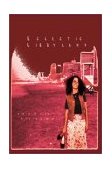
Is he a delusional coward, or the remnant of an exiled visionary? At times, Walton Friendly can seem like any number of things; from an obsessive-compulsive Mormon who stalks an astonishing woman named Libby Hendricks (and keeps notes on her activities in the margins of his Mormon Bible), to an artist vanquished from the core of his beliefs, and forced to adopt drugs and hallucination as his reality. He wanders through a dreamscape of emotions, and enlists on his quest to gain Libby’s affections the most unlikely of helpers: William “Crazy Bill” Capresci, self-proclaimed kingpin of the subway derelicts, yet once an honest man. Walton and Bill connect on a level which sees them sharing their contempt for commercialized society, and they are each radically revolting (pun intended).
Walton thinks he deserted the United States Army during Operation Desert Storm—as well as three wives in Utah who found him to be largely impotent. Bill has deserted people, preferring the regularity of trains to the disparity of human kindness. They agree to unite in the quest for Libby, for it will surely be their last attempt to find some redeeming element in a world which has swiftly abandoned them.
Serving as a trump to this situation is the possibility that Walton Friendly may actually be the deposed President of the United States, made to disappear in an elaborate and conjoining plot between the CIA, FBI, NSA, Pentagon, and Joint Chiefs. He had radical ideas which were beginning to shake the infrastructure of the old power system.
Could Libby be nothing more than a willing, paid participant in the deadening and reprogramming of a revolutionary political mind who is still too potentially useful to kill? Or is Libby the true heart and source of the project?
To run from what is ahead in the road, for it is the end of the road—or to embrace it, and
rush forward like the spewage from a busted dam, washing over the frantic clicking of wooden
shoes on cobblestone. No more to taste the sweet simmering carrots from the pot on the stove,
and relish their last defiant crunch before becoming utterly cooked. Tulip bulbs producing green
spears then flowers, falling victim to the prankster weather before falling literally to the ground,
the season erasing evidence that tulips ever existed. And who will collect the wooden shoes, large
and small, and pry them off dead Dutch feet, and fill the shoes with soil and sprinkle the shoes
with seeds, and leave them on a windowsill which faces toward the sun? Then waiting, then
caring, then labor–labor spent with the dogged hope that people will again sprout from those
wooden shoes, for then you could successfully argue in their courts that you were their god.
“Recognize my honor Your Honor. Your Honor was once a seedling in my palm.” Yet who
made the shoes? Would anyone remember? Would there be a great line of lollygaggers blocking
the banks which fund the cobblers? The cobblers to abandon their trade and purchase orchards,
to make apple trees bloom so that they may wistfully think of themselves as apple cobblers. The
cobblers to grow demented and scoop vanilla ice cream on their heads at three in the morning
while the coffee is brewing...sometimes with a slice of cheese, sometimes not.
“And here is a pretty place,” they will tell you. “Sit here, on this Persian rug, and stare at the
wall.” The rug is ancient. The wall is freshly painted. And somehow you will see within the
combination a metaphor for the world.
Excerpt

|