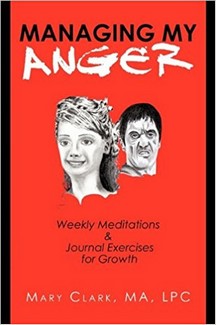
Weekly Meditations and Journal Exercises for Growth, around issues with anger and control.
2009 edition of original 2006 published book. Covers areas such as: resentments, controlling, polarized thinking, blame, blaming self, etc. Also contains Appendices for valuable web sites, books on topic, as well as detailed information on coping skills and relaxation exercises.
Excerpt
CHAOS VS. QUIET
When the mind withdraws into itself and dispenses with facts it makes only chaos.
—Edith Hamilton
When anger ruled my emotions, I was often in a state of chaos and discontent. Being calm felt boring to me. Staying quiet felt as if I were accomplishing nothing. I would inevitably look for trouble, cause it, and then place the blame elsewhere.
When I first started practicing being quiet and meditating, I felt anxious and nervous. It felt wrong to stay still. But with each time, I noticed that during these quiet times, nothing inappropriate happened. I didn’t hurt anyone. I felt better with each passing day, more in control of myself. I thought clearer. In fact, over time, I craved this time to myself to think about important events in my life, and began to like feeling calm. As weeks of practicing turned into months, and months into a year or two, I began to defend this time, and even defend my right to continue it throughout entire days and weeks. I began to abhor chaos and confusion. My quiet time became my refuge when I was feeling confused and discontent, because it brought my life back into simple clarity.
Meditation
This week, I will look at how much time I spend being quiet and reflective. If I find I do not do this, I will make a commitment to practice this for the next thirty days. I will be aware of the changes practicing quiet time brings, and make choices around the change in my feelings and daily activity as a result of it.
Journal Suggestion: A good start at taking time to reflect is to journal thoughts on paper for a set time each evening or morning. Journaling isn’t about perfection in punctuation and wording. It is about writing your thoughts as they come to you. Journal for fifteen minutes every day, making a commitment to simply write your thoughts and feelings down on paper. Share what you learned about yourself with your group or therapist.
Professional Reviews
Donald E. Sloat Ph.D., author
Ever get tired of being told you are the problem and no one ever listens to you? And no matter how many times you tell them off, they still don’t get it? “And now I am the one on probation?” Mary gets it. She’s been there. There’s no finger in your face. With a gentle strength she steps right into your world and sits beside you, looking ahead with you, not at you. Your world does not scare her. She sees the crap that you see and feels the lonely desperation you feel. And she has words to describe the inner rumblings that confuse you. Her no nonsense words circulate in the background of your brain, slowly sinking in, and gradually the confusing mist starts to lift. “So this is how life is supposed to work! I wish I had known this a long time ago!”
Personal journals are full of potential, waiting for you to add the color! Pages for you to fill in the blanks with tidbits and trivia about New York. Over 30 states to choose from including Canada and Washington, DC
My Georgia Journal helps readers spark their interest with historical trivia and tidbits about Georgia. It’s an interactive journal designed to nurture creativity and self-motivation.
The second portion features one side for drawings, sketches, o