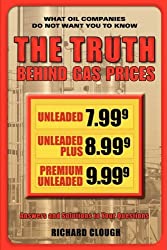
Richard Clough, the ultimate insider will expose how US energy and foreign policy affects our national security, and why the path we’re currently on will continue to lead to higher prices, more “blood for oil” conflicts and empower terrorists.
Oil & Gas Prices - How American Consumers and US Policy Fuel Terrorism
Richard Clough, the ultimate insider will expose how US energy and foreign policy affects our national security, and why the path we’re currently on will continue to lead to higher prices, more “blood for oil” conflicts and empower terrorists. Richard reveals:
* Which oil companies do business with countries that support terrorists?
* Who are the real terrorists holding Americans hostage at the pump?
* How the US foreign policy affects energy policy and the price you pay for oil and gasoline.
* Is more drilling the answer?
* A plan for energy independence that would cut our reliance on foreign oil and bring down prices.
It’s one of the only industries in the world that controls the marketplace by fear and panic. It loves wars (especially in the Middle East), instability and shortages. For years, big oil has controlled Americans’ lives and pocketbooks like no other industry in the history of the country. And Richard Clough, the man who actually sued a subsidiary of Shell Oil says it has gone on long enough.
Excerpt
Part of the oil companies’ strategy to eliminate competition
involves the way integrated oil companies distribute fuel using
three different pricing tiers. In the first tier, the oil company raises
the wholesale price of fuel (DTW) to the retailers so they cannot
compete with company-owned stations. The difference in price
can be as much as 18 cents per gallon.1 This price variation is not
supported by transportation or any other costs including overhead
and is an amazing spread since most dealers operate on a 2-8 cent
margin. The second tier strategy is designed so that the integrated oil
company/refiner sells to consumers through its owned and operated
stations. And at what price do you suppose they are buying their
fuel? The third tier of distribution is through jobbers. Jobbers can
be considered middlemen, and in some markets they fill a need
for the oil company. Jobbers buy at the rack price. They can also operate their own stations and in this scenario cannot be considered
middlemen. Jobbers are also reportedly complaining about pricing
issues and not being able to compete with company owned stations.
Their belief is that oil companies will do to jobbers what they have
done to lessee and open dealers—eradicate this class of trade in
certain markets. And they’re right! In some locations, this process
of elimination has already begun.
The bottom line is that oil companies/refiners became greedy and
wanted more control of the price, the marketplace, and the profits
that were going to the dealers. A typical franchise-supply agreement
states that the dealer will only buy his gas from the oil company/
refiner. With oil companies/refiners supplying their own company
owned stores at discounted prices, it became impossible for dealers
to compete.
Eliminating lessee owners by raising their leases is another way
the small business owners/dealers are becoming extinct. When the
lease was once $3500 a month and then becomes $7000 a month,
there goes the dealer’s personal paycheck, his income and his way
of life. One action Shell Oil took to put their dealers out of the fuel
business was to separate the fuel part of the business from the other
revenue-generating parts of the station. As reported by Convenience
Store News, Shell Oil Products U.S. and Motiva Enterprises looked
to shift direct responsibility of non-fuel assets to their dealers and
take full control of fuel operations. In this arrangement, Shell will
manage and control the gasoline sales and the Shell operator will
manage and make a living from the c-store, car wash, etc. Shell
has decided to have multi-site operators that manage between 10-20
stations. One reason, and perhaps the main reason, Shell wants this
type of operation is to control the retail price, even at the expense
of manipulating Shell and Motiva dealers right out of business. This
action of course eliminates retail competition. The result of taking
the dealer out of the picture is the oil company can gain control of
the market and raise the price as it sees fit, thus charging you, the
consumer, higher prices.
Warriors is your essential guide to reigniting your spiritual fire, deepening your connection with God, and breaking down the barriers that separate your loved ones from His divine purpose.
If you long to discover your spiritual gifts, understand your calling, and become more effective in God's Kingdom, this book will provide a solid biblical foundation for your journey.