A nostalgic look back at growing up Jamaican and the weird and wonderful people and events along the way.
Jamaican author George Graham takes a nostalgic journey to his native island, and recalls the often eccentric characters who peopled his strange childhood. He visits with the snowball man, rides a runaway horse and a raunchy donkey, and travels the gravel roads in a car named Doobin. He recalls the smell of the docks and the aroma of mango time, the taste of dip-an-fall-back and the fellowship of the rum shop.
In "Jamaica Remembered," you experience the sunset from Lover's Leap and daybreak in the bird bush. You share the joy of carving your first gig and learning to roll a hoop or make a kite from bamboo and crepe paper. You cower in the flickering light from a wood fire as ghostly tales make your hair stand on end. And you live through a hurricane and survey the damage in a Model A Ford.
Excerpt
When we lived at Stanmore, near Malvern, we had two horses, Silver King and Jigs. Silver King was a dark bay, a retired race horse that had come second at Knutsford Park once. Jigs was gray.
It was during World War II, and there was no gas to be had, so my father put his Model C Ford up on blocks, and bought a small two-wheel buggy and the horses to pull it. When the family went out together, we used the buggy — which he said was really a "parry-cart" because a proper buggy had four wheels. Whatever it was called, he rode off to work in it every day...
I can see him now, in his Sherlock Holmes hat (a "deerstalker," he called it), straight-backed in the parry-cart, wielding his buggy-whip like a fishing rod, and one or other of the horses trotting smartly down the driveway. The folks 'round and about laughed at him, of course, but what did he care? The hat had belonged to his youngest brother, Wilmot, who died at twenty-four of tuberculosis, and he wore it in Wilmot's memory. As for the buggy, well... what else was he to do? Walk?
On shorter trips, he often rode, and sometimes I rode with him. I always rode Jigs, because if you weren't careful, Silver King would take the bit in his mouth and gallop off.
Jigs was too lazy to do anything like that. You had to smack him a couple of times with a switch to get him moving, and when he had to go up or down a hill, he would grunt in protest.
Usually, when we went anywhere on the horses, my father rode in front on Silver King, and I dawdled behind on Jigs. I could hear the children (some grown-ups, too) snickering as Jigs went uh-uh-uh up the hill, or uh-uh-uh down the hill.
Still it was better than riding a mule, as I had to when we lived in the mountains in Portland, several years later. The slippery hillsides were sometimes too dangerous for horses. Mules are much more sure-footed. But they jog along with short, choppy steps and by the end of the day you are so sore you can hardly walk.
Suddenly, for no reason, they stop. And nothing can move them, not pulling, or pushing, or beating them. There was a joke about some man painting a mule's behind with turpentine, then having to do the same thing to himself so he could run fast enough to catch it. But I was always too soft-hearted to try turpentine.
Of course, a mule is a lot better than a jackass, which I did ride once in a while.
Riding a donkey can be a humiliating experience. You sit way back on the donkey's rump, with only a folded burlap bag to absorb the shocks as the donkey jolts along on its stumpy legs.
A jenny is bad enough, but Lord help you if you get a jack! Jacks stop and bray whenever they sense a female in their neighborhood, and they don't care whether they're in full stride (if you call those little steps strides) when they do it. Then they extend that long thing they have hanging under their bellies until it almost touches the ground.
To make you feel even more degraded, the jackass passes wind loudly as it runs. You can imagine how people laugh when you pass by!
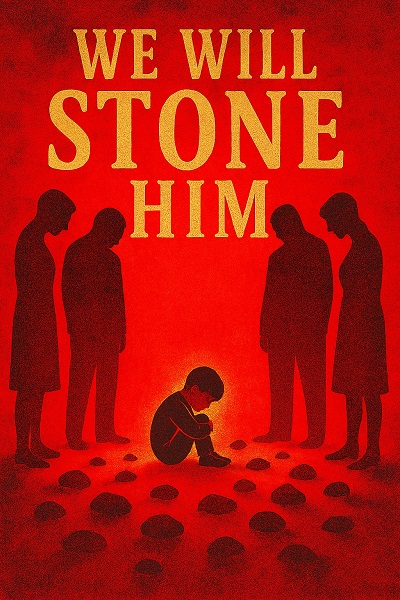
We Will Stone Him is a raw, unfiltered trauma memoir about surviving childhood abuse, emotional manipulation, and the lifelong wounds that follow. This true story marks the beginning of the Rising From The Ashes Trilogy, John Gambacorta and his survi
Jamie was a healthy, active 12-year old who loved to skate and played hockey as well as any boy. Then one afternoon during a game, she suffered a stroke that changed her world. Her memoir takes the reader through her ordeal and her journey out of the