Kindle Edition
Audiobook
Amazon
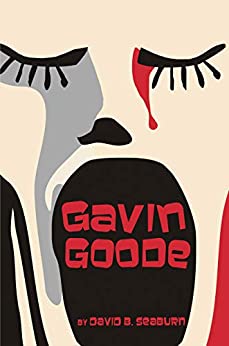
Gavin Goode
Category:
Mainstream
Publisher: Black Rose Writing
ISBN-10: 1684332982
Type: Fiction
Pages: 242
Copyright: 2019
ISBN-13: 9781684332984
Price: $4.99 (eBook)
"I don't know how and I don't know why, but I think I died today." For Gavin, the adventure begins.
“I don’t know how and I don’t know why, but I think I died today.” So begins the complex and mysterious journey of Gavin Goode and his family. What happened to Gavin and why? What secrets will emerge along the way? Frankie, his wife and a dress store owner, feels guilty, but why? His son, Ryan, who owns an ice cream parlor, and daughter-in-law, Jenna, who is a bank manager, are expecting their first baby. How will this trauma affect them? And what of Rosemary, Frankie’s best friend? Or Ben Hillman and eleven-year-old, Christopher? How are they implicated in the events that unfold around Gavin’s misfortune? This is a story of despair and hope, dreams and reality, uncertainty and faith, humor, secrecy, forgiveness and beginnings.
Excerpt
Part One
Chapter 1
Gavin Goode
“I don’t know why and I don’t know how, but I think I died today.”
Gavin is a perceptive guy. He looks at this problem from every angle. Where is his body, for instance? Why doesn’t he see anything or feel anything? Hear? Smell? Where has the world gone? He doesn’t have a clue what happened. He doesn’t remember anything. Surely there would have been a warning sign, something that cried out, “Mayday, mayday! Brace yourself!” But there was nothing.
He traces his final hours as best he can. Last night he watched some TV; then sat on his deck for a while, hoping to see a deer that had been roaming the neighborhood. Drank a Rohrbach’s Scotch Ale. When the grandfather clock struck nine, he went upstairs, took a bath and was in bed by ten. Read until he couldn’t see the words anymore. Was asleep by 11, 11:15 at the latest. Woke up at 3 to take a leak. Stood at the bathroom window for several minutes watching the full moon appear and disappear behind thin clouds. Slipped back into bed without disturbing Frankie. He listened for a while to her raspy breathing, her mouth open a crease, her hair mussed around her face. Smiled and went back to sleep.
His iPhone alarm went off at 6; he woke up alert, refreshed and ready for the day. He stood in front of the mirror assessing his face, his rounded cheeks and small chin, his narrowly set eyes and high forehead, thinning brown hair. Each morning he hoped he would see something different, but alas. He shaved, got dressed in tan Dockers, a checked shirt and work casual shoes.
As he reviews the previous twelve hours, he tries to remember if there was anything odd that he might be overlooking. Unexpected indigestion or dizziness or breathlessness that had come and gone? But there wasn’t anything. For breakfast, he had an English muffin, dry, and then a cup of coffee, black. By then Frankie was up, sitting at her makeup table putting her face on. She was humming something. What was it? He leaned over and kissed the nape of her neck; she shivered.
“Goodbye, Gavin.”
“Goodbye, sweetheart.”
He drove the Infiniti this morning. He turned on Morning Edition and eased onto the expressway heading east to the city. Traffic was traffic, but it didn’t bother him, even when a Mini-Cooper almost nudged him off the road. He was busy whistling, nothing in particular, just practicing how high he could go. He got off at the usual exit and took the usual shortcut through Highland Park, enjoying the proud elms. Stopped for another coffee at the corner café (“What the heck?”). He was feeling good because the barista, maybe twenty years old, complimented his shirt. “You just made my…well, month.” He got to the lot forty minutes early.
He plunked down in his cubicle before anyone else arrived. Placed his coffee on the blotter. Pulled up the blinds to get a full dose of the rising sun. Booted his computer, took a few files from the cabinet beside his desk and dove into some insurance claims.
He shrugs, or imagines he shrugs, as he considers his morning. Ordinary is the one word he can think to describe it. Something must have gone terribly wrong, because he isn’t in his office. He isn’t even in his body. He isn’t anywhere at all. By the same token, he isn’t gone either. He’s bewildered. “Where the heck am I? What’s going on?”
He thinks back a little further, searching for clues. Last Tuesday he saw Dr. Nguyen for his annual. Blood test, prostate exam (not a fan), ticker check, everything was normal. “You are in good shape for your age, Mr. Goode,” said the doctor. “What does that mean?” thought Gavin. “Someone my age? I’m fifty-two, which isn’t young, I’ll grant you that, but it’s not old, not these days. Maybe in my old man’s time, but not today. Fifty has to be ‘the new’…something younger.”
Dr. Nguyen’s comments worried him more than he wanted to admit. When he got home, he told Frankie. “What if she had said that to you? ‘Hey, Frankie, you’re in good shape for your age?’”
Frankie brushed hair back from her face as her temple creased. “I wouldn’t have thought anything of it. People see their doctors all the time and are told they’re in good shape for their age and they drop dead almost the next minute. Other times, doctors warn patients that if they don’t do whatever, then they may not live to see their grandkids. And those people eventually change doctors because they’ve outlived the one that told them the clock was running out.” She closed with a tilted head and a matter-of-fact “No one knows when they’re going to go; so why worry.” Then she added: “Of course, I don’t have issues; you’ve got issues.”
She was right. He’d been afraid of death for as long as he could remember. Every lump or bump was cancer. And every odd looking crap was also cancer. He always assumed the Big C was sneaking around his insides, like ISIS metastasizing, calling up reinforcements, slinking around in his cracks and crevices, waiting for the right time to attack. It happens. Let’s say you feel great but you’re due for your flu shot, so you go to the doctor’s and just as you are leaving, you say, “By the way, doc, before I go, could you take a look at this thing on my leg?” And your doctor’s eyes narrow as she studies the tiny black bruise. She excuses herself and returns with a senior colleague who takes his glasses off the top of his head so he can get a better look, only to remove them again and shake his head. Your doctor shakes her head, too, and says, “Should have come in months ago.” You know the rest.
Yep, Frankie is right. Gavin has issues. It all started with his grandfather, his Papa, who lived with them when he was a boy. He was close to Papa, who played catch with him, explored the woods near their house with him, read books with him, made bird houses with him, did just about everything with the young Gavin. As Gavin grew up and Papa got older, things changed. They didn’t hang together as much. Papa stayed home watching TV most of the time.
One day Gavin comes home from school and Papa is sitting in his recliner, Days of Our Lives blaring on the TV. Gavin calls to him, “Hey Papa, how’s it going?” When he doesn’t answer, Gavin figures he can’t hear, so he cranks it up, “PAPA, HOW’S IT GOING?” Nothing. So he walks over to Papa’s chair and taps him on the shoulder, at which point, Papa slumps over to one side. Totally scares the shit out of young Gavin. He thinks of doing CPR, but he can’t bring himself to get that involved with his grandfather’s mouth. The creepiness factor is too high. Anyway, as far as Gavin can tell Papa is long gone.
So he calls his mother who totally freaks at the news. She drops the phone and dashes home as fast as she can. But no matter what she does, it still takes at least twenty minutes for her to get there. Twenty minutes alone with dead Papa. What to do, right? Watch the show with him? Talk to him? Close his mouth? Prop him up and comb his hair so he looks more like himself when Gavin’s mother gets home? In the end, Gavin can’t touch his grandfather.
It had been a long day at school. Gavin missed lunch because of a meeting with his school counselor and he’s starving. So he goes to the kitchen to make himself a sandwich. He thinks of going back into the living room, but it seems disrespectful to eat in front of Papa, considering the condition he’s in, so Gavin stays in the kitchen.
That’s where he is when his mother gets home. Let’s just say she isn’t pleased and she doesn’t understand Gavin’s reasoning. “He’s your last grandparent! At least sit with him! God knows he sat with you often enough!” Gavin wants to say, “Hey, I’m, like, I came home and there’s Papa sitting in front of the TV, all dead, and no one’s around and it totally scared the crap out of me. At least I stayed in the house. I didn’t run out into the street screaming like a crazy person, which is what I wanted to do. Shouldn’t I get points for that? It may not have been ‘A’ work on my part, but it wasn’t an ‘F’ either; it was at least a ‘C’ or ‘C-’.” But in a moment of rare wisdom he doesn’t say anything. He realizes that basically she is right, though he still feels that eating a peanut butter and sweet pickle sandwich in front of his dead grandfather would not have been in good taste.
Anyway, after this debacle, he can’t get his grandfather out of his mind. Adding to that, everyone died over the next few years, aunts, uncles, a young cousin, a close neighbor, a friend even. What was going on? He ignored it as best he could. He didn’t look at the deceased when he went to the funeral home. He hummed quietly to himself during the eulogies. He didn’t talk about it with friends or his parents. He found that denial was an amazing gift. It was denial that enabled him to get up every day, ignoring the fact that death was waiting for him around every corner. If it weren’t for denial, how could he do anything? How could he eat a pizza or brush his teeth or, when he was older, go to work, pay the bills, wash his car?
In recent years (probably even yesterday morning), Gavin read the obits every day.
He always celebrated the fact that his name wasn’t there. Then he’d check the ages of everyone who had died to see what the over/under was, how many people were older than him and how many were younger. If there were more ‘overs’ than ‘unders’, he breathed a sigh of relief. If there were more ‘unders’ than ‘overs’ he figured there was something unusually wrong with those people, something (of course) that wasn’t wrong with him. But this didn’t always work. In many an unguarded moment, like when he was sitting on the toilet or mowing the lawn, he’d be chilled by the realization that Death could sneak up on him at any time, sickle in hand.
When Gavin looked at the pictures accompanying the obits, he could see denial in their eyes. They were smiling and sometimes laughing, maybe hugging a dog, or sitting beside a super-hot car, or holding up a great big fish they caught once, like they were saying, “Yep, I died, but look at this giant carp!” Gavin thought horror would be a more appropriate expression. When he died, he wanted his picture to look like that Edvard Munch painting, “The Scream”; he’d be standing on a bridge, holding the sides of his head with both hands, mouth open in a menacingly fearful ‘O.’ That would tell the real story.
But he is beyond denial now. He’s been taken without warning. Despite his confusion, there’s no denying what’s happened, only why it’s happened.
“Has Frankie picked a photo for the paper yet?” he wonders. He hates to think of her scrolling through a gazillion pictures on her phone to find the right one. He thinks of her going to Walmart to print out a picture of her dead husband. Her standing at the kiosk, people pushing their carts past her, announcements blaring— “Good morning Walmart shoprs! This is a sad day for Frankie Goode…” The cashiers always comment on the photos. “Someone had a special birthday!” or “What beautiful clouds!” Just being friendly. What will they say to Frankie? What will she say to them? Gavin hates to think of her standing at the checkout with pictures of him in her hands.
He should have gotten their printer fixed.
|