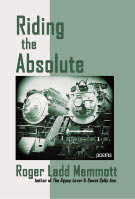
"A deeply philosophical collection of poems, assaying the ultimate questions with élan and music."
(-- Writer's Digest)
Excerpt
DANGERS OF THE PROFESSION
I determined long ago never
to publish anything I write. There
is always the danger it may be
read, or worse, overlooked.
There are other real & present dangers,
to name a few: the danger I may be
recognized, or noticed, at least;
the danger of accountability, too.
Say, for instance, I write
a poem about love & the women
are unable to contain themselves.
They go mad & rent their clothes in the street.
I have imagined it like that,
devoid of sleep in the night.
There is the danger of having to defend
the indefensible…say I jot a treatise on the
virtues of exterminating the Spotted Owl
or re-engineering the Dodo’s DNA.
This could disenchant entire throngs,
& lead to flights of fancy.
…say I write from a theological point of view
& the clergy questions my syntax, a misplaced
period, a question mark in spite of the quote.
Shall I petition the Almighty for relief?
Each word I place is rent with fear, entire
paragraphs stoked with guilt. A hostage phrase,
a misspent clause, may undo the best of minds
& leave me ranting in the dark—wretched
and ill-cast!
Professional Reviews
Citation - Writer's Digest National Book Award
This is a deeply philosophical collection of poems, assaying the ultimate questions, but doing so with élan and music. The title poem points the way into this book, and into the central problems of meaning-making in our time. “Riding the Absolute” opens with the speaker chanting how we are not the words we use, nor are we even the images that register on the retina and brain of the one who observes us. We are all memories of each other within each other’s head, says the poet, and like castaways we “ride the absolute” into the emptiness and absence of existence. This is not a comforting thought, but it has a bracing shock of recognition and considerable truth.
That emptiness, that abyss of being, is palpable throughout this book. And hovering at the edges of it is something else: our capacity to sing in praise, to lament in our sorrows. As serious and existentially bleak as the philosophical core of this book is, there is also an emotional allegiance to the fragments and tendons of meaning we can preserve and nourish. This book celebrates our capacity to “solve the riddles of love & pain” or at least to attempt such. We live our lives “in ashes,” says this poet, and are “firebirds rising anew/holding fast to the syntax of faith.”
To put the matter another way, this is a book that dramatizes the dialectic of meaning and non-meaning, faith and despair, wholeness and fragmentary nothingness. This is without doubt the inescapable conundrum of our own time, and the poems in this book attempt to chart a path between, or among, these various dualities. Thus there are love poems that lean or tilt one way or another, but always they seem to find some kind of meaning in the face of what would take it away. One example that comes to mind is an elegy for the poet’s dog, “Sissel in Heaven.” One would think this might be more or less a spoof, but it is not. It is beautiful and tender, even as it is realistic and honest about the dog just being a dog. Love can tilt toward romance or lust, but these poems are intent on finding the path or line of the authentic in our innermost affairs of the heart. Probably one of the finest poems in the collection is “Keeping Diaries in Code”—a poem possessed by a desire for naming the existentially authentic in love.
In short, these are poems that are uncompromising in the desire to find or create at least one solid thing that human beings can count on in a universe of potential nothingness. That solid thing is the individual human capacity to sing, to connect with others, to understand the actual conditions of existence, and not only to understand it, but to name it as “riding the absolute.”
To speak of poetry is perhaps the most subjective literary critiques possible - but I will dare. I speak, then, on instinct. Memmott's poetry snaps my instincts to alert. It has that clean sense of rhythm that my pulse responds to in like; it has that turn of phrase that gives a sense of firecracker burst; it has that satisfying sit in the gut of a full meal, satiation, nourishment. This is poetry.
Each person is but a grain of sand resting beside the sea. This thought sets the tone for Jill Eisnaugle’s latest poetry collection, Beside Still Waters.
Perhaps "..Quiet Storm" will help rekindle old flames buried and long forgotten or express the love so deeply locked inside of your soul longing to be released.
Regardless of where you may be found in love this beautiful masterpiece can be