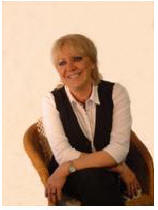
The experience of your lover walking out is devastating. It creates a situation where the abandoned partner is left to their own devices, in order to find out:
• Why this has occurred
• What they could have done to prevent it
• How to retrieve it
• How to ‘move on.’
This book clearly identifies the thoughts and feelings that emerge during this time, and offers options, suggestions and ideas on how to cope with these destructive emotions.
The emptiness, despair and fears experienced are openly discussed. This process is an essential element in moving on from a negative emotional experience to a positive emotional outcome. Any person, from whatever background, age or culture, who has been ‘unceremoniously’ dumped, will experience negative thought processes. The book reveals that these are not unique to you but are universal activities.
The book can be read in less than two hours. It is deliberately written in a short, condensed style, in order to provide immediate support and direction. This book searches the core of the problem, no stone is left unturned. It supports and directs the abandoned partner to a satisfactory, practical and emotional conclusion.
Falling Apart/Shock
Your lover has walked out! What you have feared for yourself has come to pass. You are left alone. Your friend, your lover, your companion for many years, has just walked out of your home and out of your life.
• You feel numb.
• Your feel helpless.
• You feel alone.
• Questions fly around in your head.
• How has this happened?
• Why have you come to this?
• Could you have prevented it?
• What can you do to get him/her back!!!
“What can I do to get him/her back?”
This is the first thought most of us have when someone leaves us.
• You can’t bear the loss of your loved one.
• You can’t see a future without this person.
• You are desperate and will do anything to mend the relationship.
• You frantically try to contact your now-ex, phoning, writing, asking mutual friends to intervene on your behalf so you can talk with each other, to ‘make your beloved see sense’.
• You feel you cannot function without your partner. You are astounded when it actually happens. You might have known for some time that it was going to happen but when the time comes you are shocked, dazed, and disoriented. It’s dif-ficult to take in what’s happening to you.
When partners leave, initially, you might heave a sigh of re-lief but, if you believe you are still in love with that person, then you are shattered; emotionally drained; stuck on the path of your life; empty. The life you spent with your partner swims be-fore your eyes and fills your mind, remembering only the good times. You search frantically in your mind to remember bad things, but search as you will, it is difficult to remember any-thing that couldn’t have been dealt with successfully—now that you look back. So, why didn’t you handle things differently?
Family and friends try to help – to no avail. It seems that you are locked inside your head and no-one can enter your mind to disentangle the thoughts that are drowning you. Everything you see, touch, and feel is second rate to your yearning for the past. You are alone! You may be surrounded by well meaning family and friends but nothing stops the ache and emptiness. You be-lieve you are doomed to be unhappy forever!
This is the worst stage in the process of grieving for your partner, in my opinion. You cease to function on a ‘normal’ level. You hear people around you saying that ‘you will get over it,’ ‘there are plenty more fish in the sea.’ But to you there is only one ‘goldfish’ and s/he just left you.
You find it difficult to concentrate and take in information. You look to the people who are close to you to provide you with the answers that you need to survive, i.e., “He’ll be back!’ or, al-ternatively, “It’s for the best,” but you don’t want to, and can’t, think of that!
Excerpt
• You want to be happy
• You want your children to be happy
• You want to own your own home (if you don’t al-ready)
• You want to take time out for yourself
• You want to have a good social life
• You want to learn something new
• You want to get a satisfying job
• You want to own who you are, and be proud of your accomplishments
• You want to learn to ask questions, without making accusations in those questions
• You want to learn to say NO
This is an exciting time! You are re-establishing and re-inventing yourself. The sky’s the limit!
When you embark on a new relationship, without realizing it, you become someone else. You slowly change to become someone you intuitively feel will meet your new lover’s wants. On a subconscious level you take on board the things your new lover says, and on an unconscious level you adapt accordingly to meet this new person’s needs and wants. I believe that this happens more to women than to men. Women are generally more flexible and can more easily adapt to new situations. Of course, this does not happen to everyone, but it certainly hap-pened to me! We do this without knowing it. A few months or years into the relationship, you find that you do not recognize yourself anymore. What have you become? Who are you? The person you once were wouldn’t tolerate what you are experienc-ing in this relationship, and yet here you are putting up with stuff and you can’t remember when or how you changed!
This new situation you are in is an opportunity to reclaim who you once were. Or, it is the path to becoming the person you want to be.
You are now in control of you life. You can, and should, put into place how you want yourself and your life to be. You have choices to make, e.g.:
• How to spend your time
• Value what you are doing
• Decide not to be a slave to household tasks or the job
• Find a job that you will enjoy
• Search for the right Educational/ Re-training Course/ part-time job
• Be in mutually respectful relationships
• Acknowledge that you will need support
• Be emotionally independent (not needing someone else to make you and your life happy)
• Learn to prioritize (and accept that you can’ do every-thing)
• See the funny side of life and go with the flow
• Don’t look back—look to the future.
“Life After Your Lover Walks Out” is a practical guide to help you find life after the break up of a long term relationship. Lynda Bevan takes the reader through the emotional shock of the first two days after a break up, and through the questions of guilt and self worth. She addresses fear of the future, offers suggestions for financial crisis, and walks the reader through the grieving process. Lynda guides the reader through ten steps in this journey of self acceptance and recovery.
The author offers innovative, creative methods of coping and developing strategies to help the reader with finding answers to coping with diverse situations.
Within the text Ms Bevan includes lists of negative steps to avoid and positive steps to take as you work through each process. These suggestions are in an easy to read forma which makes them easy to read, review, and assimilate.
Step ten helps you change your mindset to become a new you. The process is defined, explained, and action steps are given for finding new relationships and for letting go of the past.
Lynda Bevan has a long and successful career in the Social Services and National Health Services in the UK. She is well qualified to author this treatise. This is Book I in the 10 Step Empowerment Series, published by Loving Healing Press and is edited by Robert Rich, Ph.D.
A Hands On Guide
The dissolution of relationships, especially of the romantic variety,
>leaves the abandoned partner dazzled, depleted, and traumatized. In
>such a state of mind, one gropes for concise, hands-on no-nonsense
>guidance. Regrettably, most self-help literature is bloated,
>narcissistic, and off-topic. If you know someone who has just been
>painfully dumped by their significant otherbuy them this booklet.”
>Sam Vaknin, Malignant Self Love: Narcissism Revisited.
>
>“Lynda Bevan delivers what she promises in the title of the book: it
>is a practical guide and a no-nonsense approach. Her descriptions of
>the experiences are palpable.”
>Chin Tao, LMFT
>
>“This is a well thought out, useful little book that is an excellent
>guide for those recovering from a broken long-term relationship.”
> Robert Rich, MSc, PhD, M.A.P.S.,
>
>“Nowadays there are too many books about adult loving relationships,
>but they usually are generic and abstract descriptions. This book is
>different because it moves to specificity and provides concrete steps
>to overcome a disrupting episode in our lives.”
>Carlos J. Sanchez, MA, Family Therapist
>
>“A hands-on guide, Bevan leads us through the stages of loss and
>mourning, then foster movement towards integration and the creation of
>healthy new relationships.”
>Carolyn Crimmins, Psy.D
>
No Nonsense approach
Life After Your Lover Walks Out by Lynda Bevan is a no-nonsense
>approach in collecting what's left of your diminished self-esteem, and
>getting on with your life. I recommend this practical guide to
>everyone and anyone who's been ditched and felt smaller than
>Thumbelina, and wanted to 'get back in the saddle of love' again.
>Five thumbs up!”
>Lillian Cauldwell, Internet Voices Radio
Want to review or comment on this book?
Need a FREE Reader Membership?
Reviews for "Life After Your Lover Walks Out: A Practical Guide"
I hope you like the taste bite I have chosen for you to sample. All my books (3 published so far) are not only based on my professional training but, more importantly, on my own life experiences.
Lined and Unlined
Fun Tidbits and Trivia about each state.
Journaling can help improve mental health and happiness, provide a creative outlet, and give a perfect place to record life's precious events. Grab your journal today. Perfect for everyon
Former employment recruiter Anastasia Zoldak has written Get Hired! A Recruiter's Inside Guide to Getting a Job to help people obtain a competitive edge in today's job market.