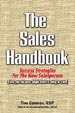
This is a short course on successful selling. It covers all of the basics required for a successful sales career.
Welcome to the exciting and rewarding profession of selling.
Will the continuous advances in technology replace the profession of selling in the foreseeable future? I am not a fortune teller or a mystic, but I do believe that we will see dramatic changes in the roles salespeople play in their organizations and the economy in general.
During the next several years and stretching into the next few decades there will be a dramatic and all encompassing change in every industry, field and profession. No one will go untouched by the swath that will cut across every age group and discipline.
We are rapidly becoming a society that no longer talks to each other. We communicate by fax machine, computer, e-mail, answering machines and voice mail. We are losing the human touch. There are a number of reasons why the sales profession is alive and well and will continue to be so for years.
Here are ten reasons why salespeople will play a vital role in any economy. Salespeople are charged with any or all of the following roles and responsibilities:
One. They present new ideas, concepts, products, services to present clients and customers and to potential clients and customers.
Two. They assess the marketplace, customer satisfaction levels and perceptions, general market attitudes, competitor strengths and weaknesses and consumer interest trends.
Three. They witness and report on the emergence of grass root market shifts and interests.
Four. They soothe ruffled egos of disappointed, frustrated and angry customers.
Five. They provide bottom-up feedback to the management of their organization on any number of opportunities, problems and issues.
Six. They are the front line of attack for any number of corporate marketing strategies and programs.
Seven. They work the trade show booths (a grueling task, if you have never done it) in thousands of trade shows each year.
Eight. They are on the look-out for new product or service opportunities that a "corporate" employee might never see.
Nine. They solve customer problems caused by poor: product design, production, distribution and billing practices.
Ten. They are ambassadors for management, building positive on-going relationships that can increase or improve customer perceptions, sales results, market acceptance and profits.
I challenge you to find a computer, fax machine, software program, customer service representative, or marketing person who can do all of this with the; courage of a mountain climber, patience of Job, sacrifice of Mother Teresa, energy of a two year old, creativity of Frank Lloyd Wright, dedication of a mother, wisdom of Confucius, enthusiasm of a cheerleader, commitment of a Olympic athlete, and the persistence of a toddler.
Successful selling today and for the foreseeable future is about the ability to; control your attitudes, continuously develop and refine your skills and abilities, create long-term win-win relationships with your customers and prospects and persevere regardless of what may be going on in your world or personal relationships. This book was written to help get your new career off to a flying start. There is no fluff here, just practical ideas and techniques you can put to use now.
Excerpt
What is a sales professional -
For years, I have been hearing people use the word “professional” – especially when they are referring to salespeople. This doesn’t mean that it doesn’t apply to other professions.
How would you define a professional person? I have been asking salespeople for years how they would define this word or concept as it applies to this profession, and I consistently get a variety of answers, such as:
· Well groomed
· Punctual
· Well dressed
· Honest
· Knowledgeable
· Good attitude
· Doesn’t bad-mouth the competition
· Customer focused
· Dependable
· Caring
· Creative problem solver
· Good at sales follow-up
This list could go on for several pages. Again, I ask you, how would you define being a professional? To me, being a professional is not what you sell, but how you sell what you sell. Let me explain. Many people selling Amway, Tupperware, and Mary Kay cosmetics may think of themselves as less than professional because they sell soap, bowls or lipstick. By the same token, many salespeople selling for IBM, Hewlett Packard, Lear Jet or Mercedes Benz may tend to think of themselves as the cream of the professional crop. Well, I have news for you folks. I have met some pretty sleazy salespeople selling very expensive products or services, and I have had the pleasure of doing business with some really great salespeople selling low cost business and personal-use consumables.
Selling is not what you sell, but how you sell what you sell. How are you doing when it comes to being a professional? How do your clients or customers think you are doing? How do you think your competitors think you are doing? How does the marketplace think you are doing? Don’t wait for the results to come in from these sources. If something needs fixing, fix it now.
Selling is a process -
One of the biggest problems for many salespeople is not understanding that selling is a process, not a transaction or an event. Effective selling is not just closing the sale, better prospecting or more effective sales presentations – although, all of these are important in their own way. Effective selling today is blending each of these together for a successful outcome for you, your organization and your customer.
For many years, traditional sales training has focused on the “close of the sale” as the most important element in the sales process. Then the 70’s and 80’s rolled around and the hot topics were prospecting, qualifying and getting to the key decision-makers. Then it was the 90’s and consultative selling. What will this current decade bring? Who knows for sure? What we do know, that to sell successfully is only half of the task – the other half is keeping the business once it has been sold. Organizations expend millions of dollars annually to attract and sell new business only to lose it for any number of negative reasons and then have to replace it. And, so the saga continues.
Selling is about finding good potential prospects who can benefit from your products or services, persuading them to buy from you, and then maintaining positive ongoing relationships with them to ensure repeat and referral business as well as the ability to have positive references from them.
Each element of the sales process is related in some way to all of the other elements. For example, let’s consider prospecting. If you have a poor prospect, it will be difficult to give a positive sales presentation. It will be virtually impossible to overcome their sales objections, and closing the sale – forget it.
How about the attitude issues in the sales process? Let’s say you lack confidence in the quality of your products or services. This will affect your willingness to find new prospects. If you do find some, it will negatively impact your ability to give a confident sales presentation.
How about one more? Let’s say you have a fear of rejection. This will impact your willingness to ask questions, to qualify your prospects and ask for the business.
I am sure you see my point. If you are going to sell successfully, you can’t just improve one aspect of the sales process. You can’t make up for poor prospecting with a tricky close. You can’t make up for poor product knowledge with fancy footwork. You can’t make up for a poor attitude with more activity. You can’t make up for poor closing skills with better presentations.
Successful sales professionals know that in order to have consistent success no matter whether they sell $10 million dollar jet aircraft or a $50.00 wigit - success is not about perfecting just one aspect of the process but all of them.
Maintain control -
One of the biggest mistakes poor salespeople make is that they lose control of the sales process. There are many ways they accomplish this feat. Here are a few for your consideration:
· They quote price – just because the prospect has asked (before they have had a chance to build value).
· They don’t ask enough questions early in the sales process. They just ramble on.
· They send out literature when asked, without first qualifying the prospect.
· They deliver proposals to the prospect’s door and wait patiently for an answer.
· They fail to set appointments that are convenient to them – always bowing to the customer’s desires.
· They lug heavy equipment or samples around all day to demonstrate in the prospect’s office rather than getting the prospect to visit their office.
· They don’t get deposits or acceptable terms and hope the prospect will pay someday.
· They leave ‘will calls’ when telephoning a prospect.
· They use e – mail as their primary contact method.
I could go on but I am sure you get my drift.
Control is one of the key elements for success in sales. Successful salespeople understand that control is not manipulation, but it is in the ultimate best interests of the prospect or client.
I will bet you have a prospect right now, as you are reading this, with whom you have lost control. You are waiting for this prospect to respond to your offer, appeal or whatever. I know because I teach this stuff and I am guilty from time to time of making the same mistakes. How do you get and keep control? It is simple, but not easy. The best time to get control of the sales process with a new prospect is in the early stages of the relationship. It is very difficult, if not impossible, to get it back later if you don’t get it early. One of the best strategies is: get information before you give it. Questions always come before your presentation, pricing and literature. You must also learn to pay attention to the early signals you get from the prospect. I’ll bet you have a customer you wish you didn’t have – because they are difficult to work with and no matter what you do it is never enough or right.
Successful salespeople determine not only the buying habits and payment philosophy of the prospects and clients they have, but also the respect they receive and the manner in which they are treated by these prospects or clients. I have some great clients. Their behavior makes me want to do an even better job for them. I also have a few difficult clients. Guess what? They told me indirectly they were going to be difficult in the beginning, as well as in the early stages of the relationship. It is your responsibility to keep control of the buying and selling process.
Sales myths -
For years, sales managers and sales trainers have been saying that sales is a ‘numbers’ game. I can recall my first sales manager telling me over thirty-five years ago, “If you will see enough people, you will make enough sales.” First of all what’s enough sales? Second of all, how many is enough people? Thirdly, is this the best approach to take to prospect for new business? When I wrote Soft Sell in 1981 it was the result of trying to figure out what was the best sales approach. After years of doing what I was told and wasting a lot of time and ultimately failing in the process I had an interesting revelation. This is why I hate clichés and managers and sales trainers who quote them because they only repeat what they have heard for years regardless of whether they are true or not.
Back to my discovery. If you see enough ‘qualified’ people you will make enough sales. It isn’t just the number folks, it is focusing on prospects who qualify – need or want - your product or service. Now, with this concept I am not giving you permission to see fewer prospects. I am only suggesting that to just focus on the numbers alone will guarantee failure – sooner or later. Why? The more people you see, the more you will tend to see those who are poor prospects, thus, more rejection. The average salesperson can’t handle the amount of rejection that comes with this philosophy. This is why so many salespeople become discouraged, fail or quit.
Think about it for just a minute. You see or call twenty-five prospects a week. You close one in five that means you wasted time on twenty poor prospects. What if you took the time you spent with the twenty poor prospects and spent it with more good prospects – or even cultivating the five sales you made for repeat and referral business. See where I am going with this? Maybe your closing ratio could be one in three even one in two.
Why are so many managers and trainers still teaching this garbage? I am not sure, but I can guess it is because they don’t know how to teach more effective prospecting so they want you to make up for poor prospecting skills with more calls. Now, here is a real winner for success. Do both. See or call more prospects and make sure they are qualified before you give them too much of your time and energy. This philosophy may not make me very popular with a few of my fellow sales trainers and possibly not even a few of my clients. So be it. It is what I believe. Take it for what it is worth.
There are many other clichés and myths that just don’t cut it anymore. Actually they never did, but who was going to question them? A new sales rep? A failing sales rep?
I’ll leave you with a couple to think about.
· Myth: People buy from people they like.
Truth: people buy from people they trust.
· Myth: People will buy because of your enthusiasm.
Truth: People will buy because of their enthusiasm.
· Myth: People buy what they need.
Truth: People buy what they want.
Are you buying in to any of the above? Can you add some other myths or clichés you have heard that just don’t make sense in the real world of selling?
Former employment recruiter Anastasia Zoldak has written Get Hired! A Recruiter's Inside Guide to Getting a Job to help people obtain a competitive edge in today's job market.
Learn how to know if you are about to enter an abusive relationship. If you are already in an abusive relationship, learn how God wants you to get out of it. If you are an abuser, learn how you can become free of your abusive behavior. If you know so
This is a book to help readers plow through the enormous overload of the 95% nonsense to find the 5% common sense that is hidden away, which is needed to sustain long-term success in solving today's problems.