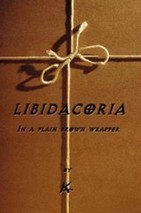
Libidacoria: In a Plain Brown Wrapper chronicles an independent woman’s sexual journey in the modern world. Far more than a work of eroticism, this book examines an independent woman’s struggle to find love in a world consumed by sex.
Libidacoria: In a Plain Brown Wrapper chronicles the author’s sexual journey from using men to satisfy her own “beast” to finding that one special man who obsesses her and ultimately opens her up for the possibility of love … again. Her graphic use of language and raw directness are intermingled with a subtle desire for romance and connectivity giving this book a unique insight into the feminine psyche. ** WARNING: Strong language and mature content. **
Excerpt
I write these odes,
Tributes to men
Who never care
As much as
I allow myself to.
I'm the fuckgirl.
Fulfillment for an hour-
Never longer,
Sometimes shorter.
I end up empowered
But always unfulfilled.
Quite an empty existence
For someone
With so much to give.
I hold out hope
That one day,
One will hold the power
To stop me in my tracks
Before I ruin
The future
With my tainted past.
But as of yet,
They never last.
So, I am left
To my locust-like nature
To destroy the hope of life
To feed my own.
K--
******************
You lie before me
And lie to me
At night
In dimmed light.
Talking in future tenses
While acting in the present.
The weight of your words
I carry
Into the daylight
Where they dissipate
Too fast
For me to catch them.
I could bear the load
If you could
Anchor their value.
But you don't
Remember my name
When the lights come on.
K--
Professional Reviews
The Pedestal Magazine, Kristina Marie Darling
In her recent collection of poems, Libidacoria, Kristie LeVangie explores the complex subject of female sexuality, which she depicts as a source of both liberation and subjugation. Presented as an interconnected book-length sequence, the poems in LeVangie’s edgy new work treat the narrator’s relationships and trysts as a process of self-discovery, which often encompasses broader questions about the society she inhabits. Recurrently questioning aspects of both traditional gender roles and contemporary feminism, Libidacoria adeptly negotiates social criticism with stylistic innovation, proving a finely crafted and thought-provoking read.
Throughout the book, the narrator presents readers with a mixed assessment of both traditional gender roles and the sexual freedom experienced by contemporary women. Although, in many of the poems, such trysts are depicted in a positive light, offering both gratification and empowerment, the narrator continually refers to the more conventional idea of a stable and committed relationship, suggesting nostalgia for tradition. As a result, the book is characterized by a recurrent tension between outmoded ideas about gender and new ones, suggesting that both have positive and negative points for the narrator. She writes, for example, in a poem entitled, “A sour aching pit,”
I devour more men
Than I’d like to admit.
Fed a lot of lies
And some harsh bullshit.
I pick my teeth
With their limp bones.
I stand it as much
As my conscience condones.
My sanity saved
By the promise I gave
That one day I’d quit
When my match was made.
In this passage, LeVangie presents an embittered speaker, yet one who still retains a great deal of agency. As the woman in the poem “devours more men/Than [she’d] like to admit” and “picks her teeth/With their limp bones,” she reacts against the constraints women have faced in the past when pursuing relationships, evoking a thoroughly modern and unencumbered vision of female sexuality. While doing so, LeVangie’s speaker still harkens back to the more traditional idea of committed relationships, particularly as she portrays “devouring men” as merely a means of ultimately finding a stable relationship. Calling into question both of the competing doctrines available to women, namely tradition and the reaction against it, LeVangie depicts both as being finally incomplete, as her speaker rejects each in its entirety, striving instead to negotiate a balance of the two.
In conveying these themes, Kristie LeVangie uses uncompromising language while parodying the tropes of more conventional love poetry, suggesting that the traditional gender roles depicted within such works remain neither attainable nor desirable for her narrator. By invoking such literary devices as the direct rhymes that appear near the end of most of her works, the author revisits the conventions of love poetry in a darkly ironic manner, implying that her narrator, like many other contemporary women, struggles to negotiate the old with the new. This trend is exemplified by LeVangie’s poem, “A cyber slut waiting,” in which she writes,
But I ride the line to giving in.
First, the phone call.
Then, the hotel room.
Then, our world is broken.
I’ll adore you as long as you are my token.
In this excerpt, LeVangie combines the conventions of nineteenth century love poetry with the modern motif of online dating, suggesting that the two remain incompatible. Invoking end rhymes and high diction, the poem highlights the incongruity between the speaker’s experience and the idealized vision of romance that these tropes represent. For the narrator of Libidacoria, who continually seeks out a new ideal for which to strive in her relationships, the models available to women often prove limited and inapplicable to a changing social landscape.
While revisiting the tropes of conventional love poetry, LeVangie continually explores the impact of technology on idealized notions of romance, suggesting that women today inhabit a transformed and fundamentally different social environment. Although her narrator attempts to negotiate traditional gender roles with contemporary ideas about feminism, LeVangie continually presents this process as a highly individual one, prompting modern women to ponder such questions for themselves. She writes, for example, in “Great things we have ending here,”
Then, you said the “L” word
Changing everything.
That’s the one thing I’m unable to give.
An inadequacy of mine.
It’ll work out fine.
You’ll go on to marry a nice girl,
And I’ll continue to starve.
That’s what I call home.
In this passage, LeVangie suggests that, although technology and feminism have transformed women’s roles in society, men often find themselves swayed by traditional ideas about gender and marriage. For the speaker in this poem, this fact remains insufficient to persuade her to adhere to this definition of womanhood, yet its presence still remains a source of suffering in her life. “Great things we have ending here,” like other works in the book, uses the narrator’s experience as a vehicle to further address larger questions regarding societal norms, gender roles, and relationships.
Libidacoria is a carefully crafted and stylistically inventive read. Ideal for readers who enjoy poetry and feminist writing alike, Kristie LeVangie’s new book is highly recommended.
Erotica Readers & Writers Association, Ashley Lister
Poetry, according to Coleridge, is the best words in the best order. By extension, this might suggest that ‘erotic poetry’ is the best erotic words in their sauciest order.
It’s disconcerting to accept that poetry is only words. When we consider the effect and the impact that well-written poetry can have on our lives, the knowledge that it is only produced through using words—the same tools that we use for blogs, shopping lists and the fuck-you-notes that we pin to the refrigerator—can be a revelation this is shocking and eerie.
Or maybe I’m overstating the situation. I’m a huge lover of poetry. Being honest, I’ve been described as a huge lover in several contexts that don’t include poetry, but I’m running the danger of digressing if I follow that particular line of thought. What I’m trying to say is that poetry, when it’s done right, is a medium that has an impact far beyond the force that we should expect from mere words on paper.
Libidacoria – in a plain brown wrapper, is the first in a proposed series of four titles from the author K~~. This first title explores the persona’s adventures with sex in a frank and uncompromising style that is perfectly suited to the honest medium of poetry. The author’s style is direct and accessible. The story being told is unique and, at the same time, heartbreakingly familiar.
Last night, you alluded to the “L” word-
An 18-year-old schoolboy mentality.
Because we fuck,
Does not mean we love.
Although I find things about you I love-
That rush comes before we cum,
That glint in your eye spying our next victim,
Your never-relenting, all-consuming want of me…
But I will never love you.
So take our fun and move on.
Remember me often
And think of me more.
I wish I could be your everything,
But I am just a whore.
At first glance Libidacoria is an examination of lust. The title, a neologistic blend of libido and acoria (the medical suffix indicating a voracious appetite) lends itself to this interpretation. K~~’s persona is driven by an insatiable sexual greed. The pleasure of experiencing this through K~~’s poetry is the joy that one experiences wallowing in an orgy of undiluted lust.
Except that there’s more than that happening within these pages. Female promiscuity remains a social taboo—even if it is a receding one. K~~’s persona, driven by her personified libido, constantly speaks to us in a language that echoes societal disapproval despite her enthusiastic embrace of a hedonistic lifestyle. It’s accepted that female sexuality is a complex issue. But a reading and a re-reading of Libidacoria serves as a reminder that the complexities can often be internalised.
I’m in danger of going to deep into the psychological elements of literary theory—which would make this review dull and uninteresting. It’s enough to say here that Libidacoria is intelligent poetry about female sexuality and demands an intelligent reader response.
One of the things we need to remember about poetry is that the experience of reading each poem is different for every reader. If you enjoy contemporary poetry that deals honestly with erotica then you’ll adore Libidacoria.
Synchronized Chaos Magazine
“Why buy the cow if the milk is free?”
At first glance, Kristie LeVangie’s poem collection Libidacoria: In a Plain Brown Wrapper seems to portray a self-satisfied, empowered woman content to successfully live out this attitude. However, through subtle, telling hints, LeVangie (or K- as she is often known) reveals her speaker’s growing desire for emotional connection and romantic love. And the author’s ability to subtly illustrate gradual emotional development through metaphorical interactions among various parts of the speaker’s psyche becomes the piece’s greatest strength.
*This review concerns a piece with graphic depictions of intimacy that is intended for mature readers. You may feel free to read further or skip to the next featured work as you wish. *
In Libidacoria’s preface, the speaker refers to sexuality as simultaneously her ‘greatest adventure’ and her ‘abhorrent curse’ and describes a process of embracing its ‘unrelenting’ nature. She expands upon this complex relationship to her physical and emotional drives by separating herself into multiple ‘selves’ throughout the work. We see a ‘beast’ who seems primarily concerned with physical gratification, who at times wields control over the rest of the speaker’s psyche. There is also a ‘little girl’ who hides, sobs, and must be sheltered, who fears relationships and appreciates reassurance that no particular man plans (or will be allowed to) stay very long. The poetry itself cycles through the voices and emotions of these varied characters. Some pieces show liberated female sexuality as a source of empowerment: ‘loyal to myself/I will remain,’ while others convey violation and pain: “gang bang style, vultures entering without permission/feasting on the innocence.”
And, there is the speaker herself, the sole user of the first person, who consciously attempts to mediate among the various surface and hidden desires. In the second poem she wishes to ‘find a way to sate’ her inner beast for ‘only a few hours’ so she can focus on other matters. Later on she strives occasionally to protect the ‘little girl’ while going back and forth concerning romance and commitment.
About a third of the way through Libidacoria, she criticizes a man for bringing feelings into their series of sexual encounters. If his ‘eyes, still cloudy/want more than that,/I am simply incapable to give.’ In the very next poem, she laments another man’s inability to remember her name with the lights on. She seeks human connection while still consciously denying a desire for anything but short term encounters on her own terms.
Will romantic love remove the control the speaker asserts over her own destiny, the empowerment she repeatedly celebrates? Perhaps…but living without love, denying her own increasingly real desire for connection, confining herself simply to casual encounters, seems limiting in its own way. She reflects how sex with one man ‘turned her back to whore/the only type she knew how to be’ and on how she ‘longs to be dominated/although she seems to dominate.’ Her nostalgia for some kind of idealized romance increases throughout the work, as she writes of a long-ago prostitute/milliner who whispers to her clients and blows them kisses as they leave, and remembers her own youthful wish to be whisked away by a man to faraway places. As time passed, she laments, it became too scary to dream and men and women ‘forgot how/as they grew old.’
This internal struggle/journey motif has a long history within Western literature, harking back to Sir Gawain’s legendary battle with the Green Knight. The color green represented unredeemed, uneducated, and uncivilized nature and wilderness, the difficult-to-control and not always socially presentable aspects of societal and individual nature. The very idea of conveying these themes through a cycle of rhymed poems also harkens back to medieval and Romantic tradition. Through expressing direct, physical action and un-prettified words and concepts (cum, pheromones, grinding, etc) in short rhyming couplets and verses, K- at once parodies traditional and commercial greeting-card love poetry while aligning herself with, reinventing, and perhaps expressing some subtle nostalgia for certain aspects of the past.
K-‘s speaker communicates with a definite rhythm, stressing the syllables at the end of her poetic lines. The writing becomes memorable and belies its complexity at first glance. The rhyme occasionally varies from an exact match of sounds (dead/instead, need/plead) to a slant rhyme with similar vowel sounds and intonations (object/deposit, release/please) to add interest and color to the work while suggesting the difficulty of conveying mixed sentiments in brief pop-style lyrics. In a sophisticated manner LeVangie appropriates and critiques the poetic forms we use to communicate love. Romantic poetry becomes at once timeless and meaningful, and limiting because of the difficulty of getting across so many conflicting thoughts in a few simple couplets.
The concept of maturing female sexuality (and the social constraints to which it has been subjected) also goes back many years in literature. Christina Rossetti’s long poem The Goblin Men is a tale of two sisters where one rescues another from the grip of sensual pleasures which excite but ultimately become an addiction and drain her energy for other aspects of life. Rossetti stresses the need for women to resist and protect themselves from the temptations represented by the demonic male fruit hawkers, in keeping with her era’s Victorian morality. Yet she acknowledges female physical desire to a much greater extent than other writers of the day – women lie awake yearning for ‘fruit’ – and allows the ‘fallen’ sister to get rescued and return to her hometown and family without apparent permanent damage to her reputation.
The Goblin Men also emphasizes the value of female friendship, which is noticeably absent from Libidacoria. While Rossetti’s sisters exist in a world of perpetual sexual innocence seemingly without normal, healthy physical relationships (Joyce Carol Oates has remarked upon the absence of any mention of the women’s husbands although both eventually have children) K-‘s speaker seems to exist in a world full of sexual opportunity and explicitly detailed desire but without any female friends, parents, or role models. What she learns from life, she observes from her own complex desires and experiences and from the men with whom she becomes involved. This could be due to the brevity of Libidacoria (100 pages of very short poems) or perhaps a reflection on the greater anonymity and isolation of our modern society. While K-‘s speaker finds empowerment through selecting and seducing a variety of men, she remains alone, without even a platonic friend.
My personal experiences watching myself and friends grow from teenagers to young women, several decades since the sexual revolution and with technology creating both a larger and a more anonymous dating pool, kept coming to mind while reading K-‘s poetry. Despite major changes in terms of gender roles and what is and is not considered acceptable dating behavior, we (both men and women) faced the same perennial issues of heartbreak, loneliness, insecurity, jealousy, searching for lasting love, wondering if we were ready for it or would recognize it, etc.
Libidacoria, and the four-book series of which it will soon become a part, explores and illustrates the emotional complexity of the feminine psyche and suggests that some aspects of human nature may not have changed. ‘Free love’ may have brought a degree of gratification in some ways, but it has not replaced or eliminated our need for meaningful human connection.
For the May Queen, another book recently reviewed in Synchronized Chaos, also chronicled a modern, independent woman’s emotional and sexual maturation. Its author, Kate Evans, presented a heroine working to reconcile various personal and socially suggested desires: personal independence/adventure and committed love, the idealized romanticism of wedding ceremonies and casual fun and freedom. Evans integrated Walt Whitman’s poetry throughout the novel, particularly his use of the word ‘and,’ to suggest the possibility of the heroine discovering happiness through accepting the different parts of herself and finding a healthy balance among the different ideals rather than viewing them necessarily as mutually contradictory.
Along the same lines, Libidacoria’s speaker contemplates both traditional romance and new models of female sexual freedom and works towards a balance. Near the end, she suggests the possibility of a relationship where she can find rest for and make peace with her physical drives (described as her ‘special gift/and curse) and where the romantic connection helps her understand herself better rather than disempowering her. The very last poems in Libidacoria celebrate the physical and emotional passion in this relationship, and the speaker finally openly, consciously trusts the readers enough to acknowledge her own vulnerability, past emotional pain, and desires as herself rather than relying on indirect alter egos. Her ‘sanity is saved/by the promise she gave/that one day she’d quit/when her match was made.’ And it is that journey towards wholeness, towards self-acceptance, healing, and meaningful connection with others that draws readers in and makes Libidacoria relevant to a wider set of readers.
This book represents a thirty-day period of my poetry journal. Each poem addresses
the dominant thoughts occupying my mind during the early morning hours of a given
day.
Selected poems from previous & forthcoming collections together with Q&R apps on each page to enable audio rendition simultaneously with the written text
Selected poems from previous & forthcoming collections together with Q&R apps on each page to enable audio rendition simultaneously with the written text