The problem of Biblical authority would probably be less bothersome if we were able to approach the Bible unbiasly. Unfortunately, this is not possible.
Hermeneutics is the science and art of the interpretive process which begins by determining the original meaning of the Biblical text and leads to elucidation of its sense for the body of Christ today. It is concerned with the presuppositions that are brought to the interpretation of texts because it consciously or unconsciously influences conclusions drawn.
Presuppositions are the philosophical or theological starting points of reference which are usually shared by someone else. It differs from prejudice in that prejudice includes more personal factors that affect the judgment of the interpreter. The problem of Biblical authority would probably be less bothersome if we were able to approach the Bible unbiasly. Unfortunately, this is not possible.
Therefore, we come with our mental baggage that is packed with previous involvement with Scripture which prejudice our reaction to the periscope under consideration. The result is, oftentimes, only an interpretation that mirrors our biases.
Even though it is humanly impossible to interpret presupposition-lessly, there are safeguards we can use in the interpretive process that minimizes pure subjectivity and interjecting into text our own preconceived ideas. They are:
1) Awareness of the presupposition problem. 2) Use of the historical-critical method of interpretation helps to keep theological presuppositions in check. 3) Methods must be open to constant modification by the text itself. 4) Method must be open to investigation, evaluation and so forth. 5) Presuppositions must be allowed to be shaped or discarded. Exegesis guided by rigid pre-understanding only establishes what the interpreter already knows.
When Scripture is rendered supreme, the text will interpret the interpreter as the interpreter interprets the text. Interpretation therefore, necessitates dialogue with Scripture.
I think very few of us are cognizant of the extent to which our responses to Scripture are conditioned by a previously chosen orientation toward the church in general and toward Scripture in particular. These orientations, apparently for purposes of identification, are grouped under certain titles. Two of the broadest and, no doubt, misunderstood classifications are “liberal” and “conservative.”
The typical liberal view of the inspiration of Scripture is that the Biblical writers were inspired in somewhat the same sense as Shakespeare and other great writers. What the writers transcribed were ancient religious conceptions about God and His workings. Liberals believe that Scripture is inerrant where it speaks on soteriological matters, but that it may possess errors in historical facts and other details.
The conservative view of the inspiration is that God worked through the personalities of the Biblical writers in such a way that, without suspending their personal styles of expression of freedom, what they produced was literally inspired. The emphasis of the text is that Scripture itself, as well as the authors, was inspired.
Of course there are those within each camp whose view of inspiration varies from the generally accepted. Both orientations also have their own strengths and weaknesses.
The strengths of the liberal position has been said to include the fact that they are not embarrassed by negative phenomena found in Scripture; no claim is made regarding Biblical inerrancy and so there is no need to deal with it; and since they do not believe texts are infallible, the do not have to be bothered with issues pertaining to canonicity of Scripture; and finally, liberals need not suspend their critical faculties when studying Scripture.
The weaknesses of this position are said to be located in its tendency to dilute the inspiration and authority of Scripture in a significant way. It places overemphasis on human reason; if Biblical claims cannot be grasped by human reason, it is unacceptable. Another weakness lies in the idea of progressive revelation. Liberals believe that as man developed mentally and spiritually, later divine revelation was superior to earlier ones. Thus, religious experience becomes the foundation for deciding divine inspiration. A further difficulty with this view is that it allows room to call into question or disallow all of the miraculous in Scripture.
Two outstanding strengths of the conservative view proposed are: 1) they take the Bible seriously as the only authority for life and the Christian faith; and ; 2) conservatives are serious about the actual texts of the Bible. Some of the weaknesses found in this view include: conservatives refusal to acknowledge obvious Biblical errors; the failure to see inconsistencies between any two scriptural passages; the proclivity to dislocate the true center of concern; the hermeneutical principles that guide them are extra-Biblical; and their harmonization process is flawed.
Achtemeier (Contemporary Theology) proposes another view of inspiration. He sees it as being located more in the interrelationship of tradition, situation, and respondent contained in Scripture rather than located in Scripture itself or the Biblical authors.
Whatever view one holds is important to hermeneutics. If we hold a liberal view of inspiration for example, it would probably be difficult, if not impossible, to not approach Scripture with the presupposition “Scripture contains errors”.
Thus, if we encounter apparent discrepancies, we may decide that one or both of the pages involved contain mistakes. Likewise, as a conservative, we may be inclined to find an exegetically justifiable way of resolving the seeming discrepancy rather than entertain an erroneous possibility.
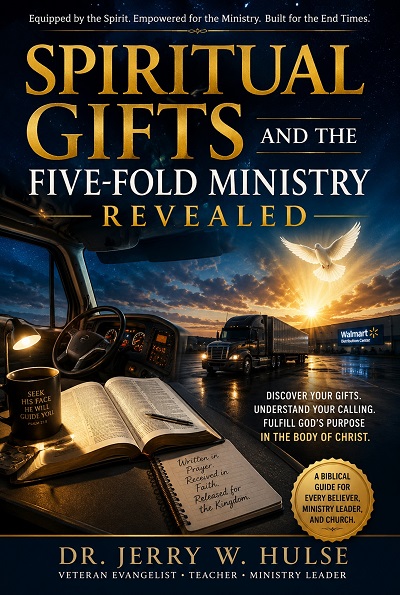
If you long to discover your spiritual gifts, understand your calling, and become more effective in God's Kingdom, this book will provide a solid biblical foundation for your journey.
Finally! Understand and learn from the New Testament Books of Galatians, Ephesians, Philippians, Colossians, 1 Thessalonians, 2 Thessalonians, 1 Timothy, 2 Timothy, Titus, Philemon.
Try James first for free
Now there is a Bible tr
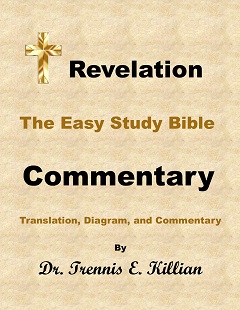
Revelation: The Easy Study Bible Commentary
Not for scholars but for anyone who struggles to understand the New Testament!
The Easy Study Bible Commentary takes The Easy Study Bible Diagramed and examines, describes and expounds upo