AuthorsDen.com   Join | Login    
Where Authors and Readers come together!

SIGNED BOOKS    AUTHORS    BOOKS    SAMPLE CHAPTERS    AUDIOBOOKS    eBOOKS    STORIES    ARTICLES    POETRY    BLOGS    NEWS    VIDEOS    SUCCESS    TESTIMONIALS

Featured Authors:  Anita Shaw, iJudith Bailey, iJennifer Miller, iChristina Neely, iGracie McKeever, iAlexander Shaumyan, iRachel Glasgow, iElla Rydzewski, iRoger Vizi, iChristine Boyce, i

  Home > Education/Training > Articles Popular: Books, Stories, Articles, Poetry      Authors: A B C D E F G H I J K L M N O P Q R S T U V W X Y Z     

Randall Davis Barfield

 Follow Me  

· Contact Me
· Success story
· Books
· Articles
· Poetry
· News
· Stories
· Blog
· 430 Titles
· 2,130 Reviews
· Save to My Library
· Share with Friends!
·
Member Since: Before 2003

Randall Davis Barfield, click here to update your pages on AuthorsDen.


Is It Where We Write or What We Write?
by Randall Davis Barfield   
Rated "G" by the Author.
     
Recent articles by
Randall Davis Barfield

• John and Juan: Colombia's Facebook Killers
• Do As I Say...
• Decision
• Why Is He Calling? (Pass Me Not...)
• The Double Cure: a closer look by Randall Barfield
           >> View all


Just think--how many of us had heard of Annie Proulx before 2005 or 2006?

I have been thinking about writers and what and where they write. There are so many sites available online. Some go here, others go there. Some return to their first site, others never return. Some create their own site, others keep writing for long periods of time on one or two writer sites.


There are even writers who do not write online. They still write on paper and send off (often by snail mail, which is the mail Meadowbrook Press seems to prefer) to the small zines and other publishers. All this is well and good, though maybe a bit on the primitive side these days. Much of it has to do with preference and taste.


I remember how we students/disciples in university writing class in Atlanta, Georgia, were anguished over the fact that we had not been published or over our ‘need’ to be published soon. One of our profs, who is now Poet Laureate of Georgia (heady stuff there!), made a statement one day that still rings between my ears. He said we’d get published if we wrote something outstanding and/or extraordinary. Those were not his two adjectives, but they come close. And, of course, he was absolutely right. This was a little before, by the way, our common practice of publishing ourselves online with or without an editor’s ‘kind’ assistance as we do here on AD. (I have trouble thinking favorably toward editors for some reason I’ve yet to fathom.) And our own flash fiction critic here at AD, G. Hogan, said as much recently when he mentioned in one of his many helpful writings concerning the creation of literary fiction that we needed to hold off posting/submitting so quickly and to go over and over our stories umpteen-dozen times (my figure, not his) and THEN post with coherence, no punctuation errors, etc. And who can solidly challenge what he said? I think no one. My response was that since I was older, I didn’t have as much time as the young writers. However, after reading the article, I silently vowed to try to write better and better (One’s limitations vis-à-vis brain matter must be considered, etc.).


As to one having her/his own website, what’s wrong with it? Nothing, of course. But we must remember, if  we have a weak name as a writer, we will in all likelihood experience ‘weak’ visitation by the public on such a website. An pure example of a weak name as a writer is Debbie J. Hawken. Ever heard of her? No, you haven’t and I haven’t. That’s because I just made the name up this moment. But if you are surfing or whatever and you see that this writer Grisham, Suess, Lawrence Sanders or dear Ann Rule has a site, you guess you’ll check it out. This example, however, does not mean that just because a writer isn’t famous internationally or even nationally that she/he will not be ‘discovered’, found on the web or read. There are other approaches. For example, if you want some info on the writers of the Harlem Renaissance and period and you begin your research (google.com, etc.), you will come across names of good writers such as aberjhani of Savannah, Georgia.


So, now we see we have talked briefly about writers and what and where they write nowadays. We have mentioned one or two media in which their writings can be displayed/read for the public. We have understood the need for each writer to write something truly outstanding and that will have high ‘public appeal’. This last point is without any doubt the most important. If we can, through arduous practice and persistence, bring ourselves to produce a quality piece of writing on the level of Stephen King’s novella “The Body”, for instance, then we will have succeeded as a writer and our name will be ‘weak’ no longer. We must never forget that all the well-known writers of today, such as King, Grisham, and Alice Munro, were once ‘unknowns’.

Just think--how many of us had heard of Annie Proulx before 2005 or 2006?


Thanks for reading.  


Want to review or comment on this article?


Need a FREE Reader Membership?
Reviewed by Rosemarie Skaine
Reviewed on April 28, 2007
I always enjoy reading about writing -- I agree one hundred percent that the secret of good writing is in the rewriting, though I admit, it is time consuming. R

Reviewed by Joyce Bowling
Reviewed on April 23, 2007
Enjoyed this very much my friend...I am happy with AD, I have visited other sites, and posted on a few, but I have never felt the desire to leave AD...I used to write stories for my children, the eyes of wonder and enjoyment were all that I needed. After I started teaching I had a brand new audience year after year to read my stories for, even more rewarding! I love the reviews that I recieve from the readers here at AD...In the future others will read my work, but I will always remember how my children enjoyed the stories that I wrote for them...great informative article!
Blessings,
Joyce Bowling

Reviewed by Taylor Ryan
Reviewed on April 21, 2007
Enjoyed reading this, Randall. I'm glad for a site like AD as compared to others I have visited...although I make little effort to date to rise to known status.
xo Taylor

Reviewed by Stan Grimes (Reader)
Reviewed on April 21, 2007
Very informative article. Thanks

Popular Education/Training Articles
  1.  Why Peterson Field Guides are Best
  2.  Book Covers and New Content
  3.  The 100th Anniversary of the Harlem Re
  4.  5 Quotes from Greeting Flannery O’Conn
  5.  Malcolm X in a Time Such as This
  6.  Writer's Toolbox
  7.  Through the Eyes of a Rapist
  8.  Main Street is Prison Street. Governor
  9.  Violence, Student Disrespect and Fight
  10.  Tips for Success on AuthorsDen
  11.  Student Fighting in Public Schools
  12.  Mind Ya' Own Business
  13.  Making an Author Hub
  14.  Blake H.S. and Newton’s Laws of Motion
  15.  The Great Australian Migration
  16.  The Poisoned Parables
  17.  The Long March through the institution
  18.  THE PHANTOM SOVEREIGN
  19.  The Joy of Learning (video)
  20.  PATRIARCHY
  21.  Hamline Mitchell is NOT a Law School.
  22.  The Messy Paradigm Shift in Understand
  23.  Pronoun Predicament
  24.  Write a Novel
  25.  Arizona Literacy

Free Book Review Program
Select a book to read and review today!

Crisis Management for First Responders by Trennis Killian

Crisis Management for First Responders is for first responders to be able to help victims of critical incidents as well as their own personnel who are affected by the trauma they witness or experience themselves.  
Member BookAds

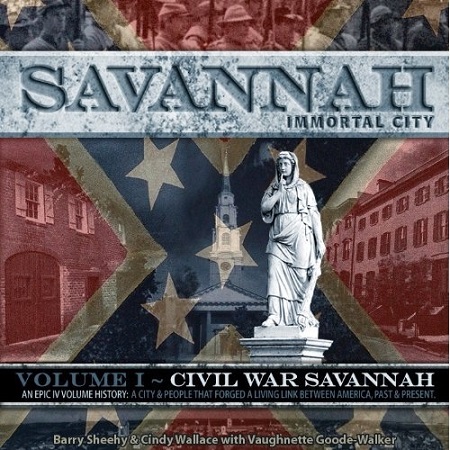
Savannah, Immortal City (Civil War Savannah, edited by Aberjhani) by Aberjhani

A decade of dedicated research unveils the true history of one of America's most enigmatic cities, Savannah, Georgia. America250  
Member BookAds

Simple Steps to Sentence Sense for Elementary School and ESL Students by Charlene Tess

At last, a version of Simple Steps to Sentence Sense for younger students and those whose native language is not English. Students can learn to analyze sentences in 5 easy steps.  
Member BookAds