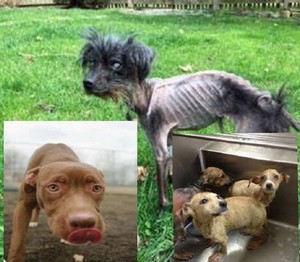
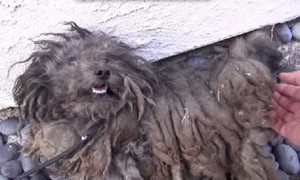
Somehow, these three wonderful animals – Junior, Tater, and Flower – managed to survive Hurricane Katrina, but their many trials and tribulations aren’t over yet – nearly two years later.
Junior was nearly dead when I found him several weeks after the storm – severely dehydrated and starving. And when I brought him home, he immediately tested Positive for Heartworm. And, he immediately began a painful, lengthy, medical treatment program for it.
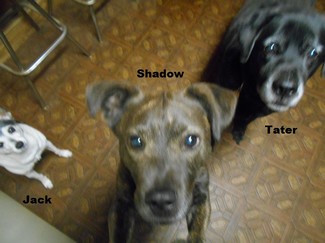
Tater, who I found at a devastated trailer park on the Gulf Coast, thankfully tested Negative for this deadly disease. That is, until just recently. Now, he, too, is undergoing medical treatment for Heartworm.
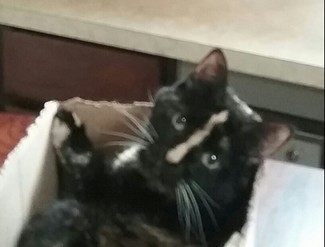
Flower, who was found starving in a gutter in New Orleans, has been an extremely happy and active feline ever since I brought her home nearly two years ago. But very sadly, just recently, she took ill, became very lethargic, and began breathing very heavily.
My veterinarian confirmed my worst fear – Little Flower has now tested Positive for Heartworm as well.
What exactly is Heartworm?
It's a devastating, debilitating pet illness, once only found in hot, humid, areas of the country. But very sadly, it is now found in every corner of the United States, in all fifty states.
According to Dr. Amy Attas, V.M.D., founder and owner of CityPets, a veterinary house call practice in New York City, pet caregivers often don't even realize that heartworm is something that could affect their pets. Other pet owners who know about the disease are often deterred by the cost of the preventative medicine.
"Heartworm is a very common disease these days, and treatment is costly and dangerous," says Nancy Peterson, issues specialist for Companion Animals at The Humane Society of the United States. "Educating pet owners about heartworm prevention is good medicine."
Dr. Attas agrees. "This is a devastating, even fatal, disease that we can safely and inexpensively prevent. Without prevention, animals are exposed to this disease which, in its early stages, has no symptoms."
And, of course, Junior, Tater, and Flower were never protected from it.
Heartworm is transmitted to animals through a bite from a mosquito containing the infected larval form of the heartworm. When an animal is infected, the heartworm larva can grow and develop into worms. These worms live inside blood vessels within and surrounding the heart and lungs.
The adult worms mate inside the blood vessels, and their offspring—which are called microfilaria—circulate in the bloodstream. These microfilaria can then be picked up by another biting mosquito, and then passed to another animal.
In dogs, the adult worms live in the cardiovascular system and cause a great deal of physical damage. Severely affected dogs develop heart failure because the physical presence of a large number of these worms can actually obstruct blood flow through the heart. Untreated heartworm disease causes serious cardiovascular complications.
And although this disease can be prevented, it does require a visit to a veterinarian. Dogs must be tested first to ensure they don't already have heartworm before putting them on preventative medication. And by federal law, heartworm preventative medicine is only available through a prescription. Pet caretakers should consult with their veterinarian to discuss their pet's individual needs.
Once infected, animals with heartworm like Junior and Tater can be treated if the disease is caught in time, but as I am now learning, there are several drawbacks.
"The treatment for canines, although effective, is painful, expensive, and can have numerous side effects," says Attas.
But if the disease goes untreated, the results can be fatal.
Cats can also become infected with heartworm, and in some cases, the disease progresses in the same way as it does in dogs, where the worms settle in the blood vessels and heart. However, because this parasite is not as well adapted to cats, sometimes the immature worm is unable to complete its migration.
Flower has now been prescribed steroid medication, and hopefully, she, too, will be able to fight off this deadly Heartworm infestation, and survive her latest ordeal.
Mosquito Season is upon us once again. Please start making Heartworm Prevention a priority for your precious pets by learning all you can about this deadly disease, and by scheduling an appointment with your veterinarian for your pets.
Junior, Tater, and Flower are now sadly enduring this deadly disease, but your pets don’t have to, if you take preventive measures.
And right now, is definitely the time.
















Blessings,
Joyce B.
Never even knew there was such a disease!!
Sighhhhh....heartbreaking for sure Eddie!!
Love Tinky
You are a gem among animals. It would be interesting to research the whys of the high cost for treatment for a common ailment. This is your next crusade. Vet bills and cost prevent many from seeking treatment yet should high costs prevent someone from sharing love with a pet? I'll watch for your next article.
Cynthia
We have the "Superior Plan" for each of the three and it runs us $182.00 per cat, per year. The plans vary per animal, per age, but for me it has been a God sent gift, worth every penny. If you do not already have insurance, you might want to look into this plan.
Perhaps pass it along to other pet owners. The Superior Plan is their best, most expensive, but I found it has come in handy many times over, for office visits, hospital stays, surgery and medication. A follow up exam also is included after surgery.
At each incident you must pay initially, but they reimburse you within 30 to 60 days, at least that is what I have experienced. I have my vet fill out her portion immediately and then fill out the rest of the form after I get home, then either mail or fax everything to the insurance company.
Godspeed to you, Tater, Junior and Flower....
Karen
You and yours are in my prayers. Thank you for educating us on what the little ones suffer.
(((HUGS))) and love, Karla.
(((HUGS))) and much love, your friend in Tx., Karen Lynn. :(
On my eyes you are not only a poet and a talker for Nature but you are also a doer.
Georg