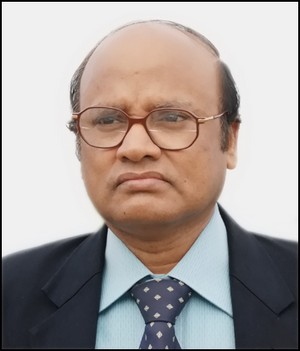
Identity Politics and Social Exclusion in India’s North-East: A Critique of Nation-Building and Re-distributive Justice BY N.K.Das
This paper examines how various brands of identity politics since the colonial days have served to create the basis of exclusion of groups, resulting in various forms of rifts, often envisaged in binary terms: majority-minority; sons of the soil’-immigrants; local-outsiders; tribal-non-tribal; hills-plains; inter-tribal; and intra-tribal. Given the strategic and sensitive border areas, low level of development, immense cultural diversity, and participatory democratic processes, social exclusion has resulted in perceptions of marginalization, deprivation, and identity losses, all adding to the strong basis of brands of separatist movements in the garb of regionalism, sub-nationalism, and ethnic politics, most often verging on extremism and secession. It is argued that local people’s anxiety for preservation of culture and language, often appearing as ‘narcissist self-awareness’, and their demand of autonomy, cannot be seen unilaterally as dysfunctional for a healthy civil society. Their aspirations should be seen rather as prerequisites for distributive justice, to which no nation state can neglect.
Northeast India is a politically vital and strategically vulnerable region of India. Surrounded by five countries, it is connected with the rest of India through a narrow, thirty-kilometre corridor. North-East India, then called Assam, is divided into Arunachal Pradesh, Assam, Manipur, Meghalaya, Mizoram, Nagaland and Tripura. Diversities in terms of Mongoloid ethnic origins, linguistic variation and religious pluralism characterise the region. This ethnic-linguistic-ecological historical heritage characterizes the pervasiveness of the ethnic populations and Tibeto-Burman languages in northeast. North-East mountain ranges and river valleys indeed divide up South- East Asia from South Asia. This predominant tribal region, replete with protracted records of isolation, difficult terrain, and lack of intense inter-ethnic contacts, had witnessed formation of three types of society and polity such as ‘tribe’, ‘chiefdom’ and ‘state’ (Das 1989).
The British colonisation process of Assam started in 1826 and ended in 1898. The colonial regime, at the beginning, resorted to the policy of non-intervention in most of then larger Assam. Two administrators J.H. Hutton and N.E.Parry advocated for separation of hill areas from general administrative scheme. In 1873 was introduced “The Inner Line” in hill areas, beyond which no person could pass without a license. Local tribes-people resisted colonial interference in their midst, and thus they often attacked the British. Their resistances were depicted as ‘raids’ and ‘uprisings’ (Das 1989, 1993:28). In the long history of this region the feelings of in-group-out-group, perceived marginalisation, and ‘minority-consciousness’ have variously surfaced as key factors causing ethnic unrest. Depending on varied influences of marginality and ethnicity some movements remained more explicit and specific than others, in articulating and defining their objectives. Strategies of operation correspondingly varied. Ethnic conflicts in northeast originally grew essentially through primordial affiliations. The distinctive ethnicity factor amongst communities led to steady expansion of aggressive binary categories of in-group and out-group (Das 1989, 1994, 2004, 2007).
Language has always been in the centre-stage of ethnic turmoil in northeast. The Bodo Sahitya Sabha (established in 1952) and PTCA however ultimately succeeded in making the Bodo language the medium of instruction (up to the secondary level). In doing so the Bodo-leaders opted for the Roman script - though they were ultimately convinced to accept the Devanagari script. The Mishing Agom Kebang (Mishing Sahitya Sabha) formed in 1972 and several other Missing organizations had also worked consistently and succeeded in 1987 to introduce Mishing language as a subject of study in primary schools. The rejection of the Assamese script by the Miris, the Bodos and others dismayed the Assamese, who thought, without their tribal counterparts they may become minority, overwhelmed by the Bengali - speaking population (Miri 1993: 71). The Ahom, Meitei, Zeliangrong, Seng Khasi, and Zomi communities had all felt threatened by the near extinction of their original language and religion (Das and Gupta 1982, Das 1989:). In Manipur Valley the Meitei revivalist leaders (before the formal inclusion of Manipur-Meitei in the Eighth schedule to the Constitution), had demanded that the Manipuri language be named “Meeteilon’. The Zeliangrong movement grew as a religious-cultural movement, originally against the spread of Christianity, but it assumed an anti –colonial political overtone. It actually came out to be the only tribal movement of north east which maintained links with the national freedom struggle (Das 1989). The Zeliangrong People’s conference (ZPC), demanded the recognition of ethnic nomenclature ‘Zeliangrong’, an acronym ( Ze-Liang- - Rong), who are spread in contiguous areas of Manipur, Nagaland and Assam.
On the eve of Independence of India, several ethnic groups had variously made effective use of the factors of ethnicity and regionalism as basis of ethnic rage, and democratic struggle for self-rule, greater autonomy and militant actions. Other factors such as frontier location, development process, rise of Christianity and democratic process, partition of country, influx of ‘infiltrators’ and minority syndrome variously led to claims of separatism among the communities. The more assertive tribes who consistently rebelled against their incorporation within the new Indian nation-state such as the Nagas and Mizos ultimately succeeded in attaining status of ‘statehood’ and greater autonomy. Thereby they also succeeded in changing their minority status to that of a majority status in respective hilly states. Even after the formation of Nagaland, however, the Naga movement had not died, as A.Z Phizo, who had originally given the call for a ‘ long Naga struggle’ in 1953, continued to occupy centre-stage later also (Das 1982, 1994, 2004, 2007). The Naga movement, in which both ‘ethnicity’ and ‘extreme nationalism’ were used as operational strategies, is regarded as the mother of all movements in northeast India. The origin of ethnicity among the Nagas may be traced first in the formation of a Naga Club in 1918, which consisted of the Naga headmen and members of English educated Naga middle class (Das 1982).
From the 1980’s onwards, virtually the entire Northeast was plagued by various ethnic movements. Most of the movements were non-violent in earlier stages, but gradually assumed severe militant nature. In the seven states of the Northeast India reportedly more than 30 ‘insurgent’ groups operated, carrying on protracted armed-struggle. Among them the National Socialist Council of Nagaland (NSCN -IM, NSCN-K) and the United Liberation Front of Asom (ULFA) remained prominent ones. Even though some scholars have tried to apply typology of class – formation to describe the ethnic conflict in the region, it may be argued that there are innumerable ethnic – regional factors buttressed by typical tribal features, which seem to influence the escalation of unrest.
It is amazing to note that at one point, more than 120 militant groups operated in India's northeast. Their demands ranged from autonomy to outright secession. In recent years, the Indian state has had considerable success in achieving stability in the region, using tactics from negotiations to military operations to root out militants. Militant outfits also used various tactics. They even joined hands as early as 1989 forming the Indo-Burmese Revolutionary Front (IBRF), which consisted of NSCN, ULFA, KNF (from India) and Chin National Front (Myanmar). The influence of IBRF diminished gradually. Until recently, the NSCN (IM), NSCN (K), Bodo Security Force (BSF), National Democratic Front of Bodoland (NDFB), United Liberation Front of Assam (ULFA) and Kamtapur Liberation Organisation (KLO) remained the most forceful and assertive groups. In the meantime quite a few Muslim extremist outfits too became active in the region (Das 1994). In the Manipur Hills, the most powerful defiant groups, besides the NSCN, are UNLF- (Meghen), PLA, KNO, KNF, KNA, KDF and KFC. The Kuki-Naga conflict rocked the state of Manipur in the mid-nineties. When the Naga claim of “proprietorship” over the vast hilly region of Manipur was endangered by demands for a ‘Kuki Homeland’, the NSCN quickly asserted its dominion. The Kuki Impi and the Zomi Council had worked tirelessly to bring about a permanent settlement. In Mizoram areas, the Reangs came to form Bru National Liberation Front whose leaders held talks with the Mizo Chief Minister. The population of displaced Reangs rose to 40,000 in camps in Tripura. The Mizos were specially perturbed when the Bru National union, formed in 1994 to protect the rights and privileges of the Reang minorities called for Autonomous District Council under the Sixth schedule of constitution. What gives strength to the demand of the Reangs (Brus) is their position as the second largest ethnic group in Mizoram. Both in pre-Independence and post-Independence eras, Tripura witnessed regular inflow of emigrants, and land alienation of tribals was rampant. The tribespeople thus became a minority in their own homeland. Tripura National Volunteers therefore did not target the state, but it opposed a community. In this respect, Bhaumik, says, “The TNV’s anti-Bengali violence created a general climate of ethnic hatred, which were sharpened by large-scale alienation of the tribal lands and actual marginalization in jobs, professions and politics (1996). Prior to TNV, the Seng-krak (Clenched Fist) surfaced as a tribal insurgent group in 1967. It maintained close links with the Mizo National Front (MNF). Tribal leaders of Tripura, right from 1974, voiced demands of reservation, restoration of tribal land, and specially the restoration of native Kok-Borok as one of the official languages, and lastly the Autonomous District Council. The language and script issue, which engulfed Tripura for a long time, has hardly been addressed in right earnest.
There is a long history of incursion of outsiders, emigration and resettlement in Assam. One can see this broadly in four spheres; tea plantation related manual labour, Bengali Muslim emigration (mostly occupying agriculture), Hindu Bengali migration (mostly occupying service sector), and Marwari migration in trading sector. Bangladesh war resulted in over 10, 00,000 ‘refugees’ taking shelter, who never returned. Modern Bangladeshi “infiltration” is however said to be a more severe phenomenon. It was alleged that Bangladesh Char area dialects spoken by the migrant Muslims, were declared as Assamese dialect to the census enumerators. Politicians too encouraged the Bangladeshi Muslims and other minorities into Assam, giving voting rights. This was a narrow exercise in electoral politics (Dixit 1998, 2003). This last wave of illegal- exodus from Bangladesh is a more dangerous phenomenon, as some among these infiltrators got involved in terrorist activities in parts of urban India. It is said fear within the native Assamese community of being overwhelmed by the unabated influx of illegal Bangladeshi migrants from across the porous border triggered off the long- drawn “Anti-Foreigner mass uprising -1979 - 1985”, spearheaded by the All Assam Students’ Union (AASU). It ended by arriving at an agreement, Assam Accord- 15 August 1985. The Accord fixed 25 March 1971 as the cut-off date for detection and expulsion of the illegal foreign migrants. The Assam movement was led by AASU. All Assam Gana Sangram Parishad- AAGSP, which was umbrella organization of several outfits, including Asom Sahitya Sabha, emerged as the political forum the AASU.
After its partitions, Assam was left with 23 tribes, comprising of 14 hill tribes of Karbi Anglong and North Cachar Hills; and nine plains tribes inhabiting the plains of the Brahmaputra Valley. Seeing development in the hills, some tribes became conscious to develop their sub-regions. Some tribes who had earlier launched movements rushed to renew their agitations. Thus the Ahom renewed the demand for the re- scheduling their scheduled tribe status. In order to push forward demand of a separate Ahom State, the ‘Tai-Ahom Land Committee” was formed, by merging old organisations. In 1995 the Ahoms placed a 17-point charter of demands. Showing his concern for the Ahoms , the then Ahom Chief Minister of Assam, Hiteshwar Saikia, highlighted the unique cultural heritage of the Ahom people. The Karbis, have been conscious about their minority status vis-à-vis the majority - Assamese.
The Bodo movement is the longest social movement in the plains of Assam. The first two phases of the Bodo movement were concerned with social reforms (1947 – 1967) and consolidation of the Bodo identity vis-à-vis the Assamese community (1967 – 1987). Earlier phase of the Brahma movement (1907 onwards) was a short-lived ‘Sanskritization movement’ led by the Mech-Bodos. After second phase of mass protests, there was a Bodo Accord signed in February 1993 that had led to the creation of a Bodoland Autonomous Council (BAC). The BAC was a non-starter, as the territorial boundary issue remained unresolved. The movement for maximum autonomy by the Bodos, succeeded ultimately in securing a new politico-administrative structure within the existing State of Assam following a memorandum of understanding with the Government of India on 10 February, 2003. The Bodo-majority areas have now come under the new Bodoland Territorial Council (BTC), an elective body. The BTC Accord is seen as a fulfilment of the sub-national aspirations of the Bodos of Assam. Under the BTC understanding, the Government of India provides financial assistance of Rs 100 crores per annum for 5 years for projects to develop the socio-economic infrastructure.
The Naga peace initiative has a long tradition. Diverse perceptions surrounded the earlier 19-point Agreement of 1960 and the Shillong Accord of 1975. In recent times the Naga Hoho convened a series of meetings of Church leaders and NGOs from all Naga areas culminating in a call for “journey of conscience” to seek reconciliation and to rebuild the Naga society. A Declaration was adopted in 2001 to pursue the cause of peace. Since 1998-99 peace parleys particularly with the NSCN (IM) has been generally successful. The NSCN (IM) has been demanding a homeland for all Nagas living in North East, which will be called ‘Nagalim’.
Ethnic unrest in northeast is as old as the country’s independence. The Indian independence along with the partition, influx of émigrés, suspected fear of linguistic –cultural subjugation, economic negligence, and failure to value approaching political institutions variously infused in the minds of the ethnic communities a ‘sense of narcissistic self-awareness’. The spectre of social exclusion, minority-syndrome and ethnic rivalry remained the driving force for protests demanding autonomy in the shape of homeland/state/ or autonomous district council, within constitutional framework. Some of the movements followed the violent paths. While the former opted for constitutional path, the later sought an extra-constitutional / secessionist ideational path. Ever increasing evidences, however, now indicate that most of the militant outfits in North-East have now transformed themselves into terrorist entities, empty of their original objectives and ideology. For example, U.L.F.A. in Assam, since 1990s, has repudiated its earlier anti-Bangladeshi position. Vested interest and quarrel over interests led militant groups to clash among themselves. It will be incorrect to attach terrorist label to N.S.C.N., but the media reports suggest that most fatalities in Nagaland are the result of the infighting between the two factions of the N.S.C.N., rather than from government forces. Despite several successful peace initiatives, the security force operations are in place by utilizing the army, state police forces and the paramilitary forces to contain militancy.
Poor governance has been a major problem in the region. Wasbir Hussain says the region is caught in a vicious cycle of lack of economic development and then militancy and the resultant violence further retard economic growth. Under the circumstances, it is natural to find the people of the region harbouring a sense of alienation from the Indian mainstream and feel neglected. We have noted above how the state of Assam is under siege with the aspirations of different communities and groups showing no signs of a decline despite attempts at devolution of power to the grassroots level. B. P. Routray of the Institute for Conflict Management, has rightly observed that 'this is primarily a governance issue. Poor governance is the main trigger factor for ethnic groups clamouring for autonomy. Such demands from newer groups are here to stay.’ Special provisions for self-governance and autonomy are provided for people of North East within the Constitution of India, particularly through such Acts as the Sixth Schedule, NEC and Department of North Eastern Region (DONER). The DONER and the North-Eastern Council, under the central control need more effectively to tackle the problems of unemployment, underemployment, and economic backwardness of the region. Let the people’s representatives monitor the activities of these institutions. The DONER has an annual budget of Rs.550 crores. The NEC has another Rs.500 crores earmarked for the region. These are apart from the enormous amount of funding available to the States through different central schemes, one-time packages announced by successive Prime Ministers, ‘Peace Packages’ provided to States like Nagaland and Mizoram, grants by international development agencies like the World Bank, and the Asian Development Bank (ADB), which in 2003 approved a master project of Rs.2, 000 crores for the Northeast. These institutional arrangements and provisions need to be appropriately regulated to assuage ethnic misgivings. In more recent years the peace initiatives, such as the bilateral cease- fire, and the peace talks held between militant leaders and government representatives, symbolize the determination of the Nation-state to resort to a broad -spectrum consensus on vital issues by adhering to flexibility and extendibility. These are basic foundations aimed at the national- consolidation, which should be strengthened. Peace, development and proper linkages are bound together and are intrinsic to harmony in the region. Gradually the region has increasingly witnessed not only naturalisation of electoral politics, but also slow adaptation of national political parties.
Resurgence of ethnic identity and persistence of ethnicised politics does not indicate repudiation of the political state. Their concern for variously perceived threats to their distinct ethnic identities and their anxiety for preservation of culture and language and their demand of autonomy can not be seen as dysfunctional for a healthy civil society. Their aspirations should be seen rather as prerequisites for distributive justice, to which no nation state can neglect. Indian path of institutional adjustments aimed at wining over and changing the opinion of hostile ethnic groups and extending special safeguards to hill States have helped solve ethnic problems to a great extent. These need to be endured.
REFERENCES:
Ahmed, A and Shore,C. 1995 ‘Introduction :Is Anthropology relevant to the Contemporary World’ in A.Ahmed and C.Shore (Eds.) The Future of Anthropology; Its relevance to contemporary world. London: Athlone.
Barth, F.1994 Enduring and emerging issue in the analysis of ethnicity in H.Vermuelen and C.Govers (Eds.) The anthropology of ethnicity. Amsterdam: Het Spinhuis.
Banks,Marcus, 1969 Ethnicity:Anthropological construction. London: Routlege .
Baruah, A.K. 1993. A note on the impact of Regionalism on a parliamentary democracy in India, pp. 60-66, in Regionalism in India B. Pakem (Ed.) New Delhi: Har-Anand publications.
Baruah ,Sanjib 1992 Symbolism and Statesmanship. The Telegraph.11 June 1992.
Bareh, H. 1993. India’s northeast and her ethnic character during the British and contemporary set up, pp. 196-226, in Regionalism in India. B. Pakem (Ed.) New Delhi : Har-Anand publications
Cohen, A 1974 ‘Introduction: the lesson of ethnicity’ in A.Cohen (Ed.) Urban Ethnicity London:Tavistock.
Eriksen, T.H.1993.Ethnicity and Nationalism: Anthropological Perspectives. London: Pluto.
Geertz, Clifford.1973 The Interpretation of Cultures. New York: Basic Books.
Jenkins, Richard.1997 Rethinking Ethnicity: Arguments and Explorations .New Delhi/London: Sage Publications.
Banerje,Sumanta.2003 Bengali Left. Economic and Political Weekly.February 22,2003.
Bhadra,Gautam,1975.”The Kuki(?)Uprising:Its causes and nature” Man in India 55,1.January-March,1975.
Bhattacharya,N.N.2000 .Trends of population growth in North east region ‘ in Population ,Poverty and Environment in North East East India Eds.Datta-Ray,B.B.,H.K.Mazhari, P.M.Passah and MCPandey.New Delhi: Concept.
Bhaumik,Subir 1996.Patterns of minority violence in north east India .Seminar on Minorities in Norath East india .13-14,January,1996.Dept. of Political Science Calcutta University Calcutta.
Bhattacharya,N.N.2000 .Trends of population growth in North east region ‘ in Population ,Poverty and Environment in North East East India Eds.Datta-Ray,B.B.,H.K.Mazhari, P.M.Passah and MCPandey.New Delhi: Concept.
Bhattacharya, S.K. 1990. Population Heterogeneity and Ethnic Indentity in Mizoram in Nationality. Ethnicity and Cultural Identity in North East India B. pakem (Ed.) Guwahati : omsons publications.
bhaumik, S. 1996. Patterns of minority violence on North-East. Seminar on minorities North East India. Dept. of Political Science. Calcutta University.(Mimeographed).
Das, A.K. 1981. Assams Agony New Delhi : lancers publishers.
Das N.K. 1982 The Naga movement in Tribal Movements in India VolumeI Ed. KSSingh Delhi:Manohar.
Das, N.K. 1987. A Report on Zeliangrong Areas of North-East India. A Report submitted through D.G.An.S.I. to P.M.O.New Delhi. Mimeographed. Shillong:Anthropological Survey of India.
Das, N.K. 1989 Ethnic Identity, Ethnicity and Social Stratification in NorthEast India. New Delhi:Inter-India Publications.
Das, N.K. 1993 Kinship, Politics and Law in Naga Society.Memoir No.96. Calcutta; Anthropological Survey of India.
Das, N.K. 1994 Ethno–Historical Processes and Ethnicity in North-East India Journal of Indian Anthropological Society 29 (1-2) 3-35.
Das, N.K., 2000.Religious Transformation and Cultural Change in NorthEast. Report of a project on History of Science.Department of Philosophy, Jadavpur University.Kolkata.(Mimeographed).
Das, N. K. 2001.Regionalism and Ethnicity in NorthEast J.Anthrop. Surv.India 50:1-16
Das, N. K. 2002 Dalit Women, Dalit Literature and Anthropology in Status of Women in Rural Societies. R.Chauabe and K.Saini (Eds.).Bina:Aditya Publishers.
Das. N.K. 1982 The Naga Movement. In Tribal movements in India Volume-I. Ed. K.S.Singh New Delhi: Manohar.
Das. N.K. 1982 The Zeliangrong or Haomei Movement. In Tribal movements in India Volume-I. Ed. K.S.Singh New Delhi: Manohar.
Das,N.K.. and P. Gupta 1982. ‘Ahom Movement’ in Tribal Movements In India Vol. i, K. S. Singh (Ed.) New Delhi : Manohar Publishers.
Das, N.K. 1988. A Report on Zeliangrong Areas of North-East India. A Report submitted through D.G.An.S.I. to P.M.O.New Delhi. Mimeographed. Shillong:Anthropological Survey of India.
Das, N.K. 1989 Ethnic Identity, Ethnicity and Social Stratification in NorthEast India. New Delhi:Inter-India Publications.
Das, N.K. 1993 Kinship, Politics and Law in Naga Society.Memoir No.96. Calcutta; Anthropological Survey of India.
Das, N.K. 1994 Ethno–Historical Processes and Ethnicity in North-East India Journal of Indian Anthropological Society 29 (1-2) 3-35.
Das, N.K. and P.Gupta 1982 ‘The Ahom Movement’in Tribal Movements in India VolumeI Ed.KS Singh Delhi:Manohar.
Das,N.K.,2000.Religious Transformation and Cultural Change in North-East India. Report of a project on History of Science. Department of Philosophy,Jadavpur University.Kolkata.(Mimeographed).
Das, N.K.2001.Regionalism and ethnicity in Northeast India.J.Anthrop.Surv.India.50:1-16.
Das, N.K.2003.Religious syncretism and cultural homogenisation on northeast India. In Culture, Religion and Philosophy: Critical Studies in Syncretism and Inter-Faith Harmony.N.K.Das (Ed.). New Delhi: Rawat.
Das, N.K.2004. Regionalism, Ethnicity and Nationalism in Northeast India .In Anthropology for Northeast India : A Reader . Indian Anthropological Congress Commemorative Volume. A. Basu, B.K.Das Gupta and J. Sarkar (Eds). Calcutta: Indian National Confederation and Academy of Anthropologists.
Das. N.K. , 2007 ‘Ethnicity, nationalism and regionalism in North-East India’ In Ethnicity, Movement and Social Structure: Contested Cultural Identity. Eds. R.K. Bhadra and Mita Bhadra. Jaipur-New Delhi: Rawat Pub.
Datta, Sekhar.1996.Tripura Tribals. The Telegraph October 1996.
De, Barun and Suranjan Das 1992.Ethnic Revivalism: problems in the Indian union ‘in Ethnicity caste and people .Ed. KSSingh..Delhi: Manohar and Anthropological survey of India.
Gassah, L.S.1990.”Maintenance of ethnic Identity and Administrative framework: The Jaintia Sequence”, in Nationality, Ethnicity and cultural Identity in North East India .Eds, B.Pakem.NewDelhi :Omsons Publications.
Das Gupta,Malbika 1993. ‘Regionalism and separatist forces in Tripura’ in Regionalism in India B. Pakem (Ed.) New Delhi : Har-Anand publications.
Datta, Sekhar.1996.Tripura Tribals. The telegraph.3 occtober 1996.
De, Barun and Suranjan Das 1992.Ethnic Revivalism: problems in the Indian union ‘in Ethnicity caste and people .Ed. KSSingh..Delhi:Manohar and Anthropological survey of India.
Dixit J.N.No Suitors for Seven Sisters .The Telegraph 26 october,1998.
Dixit J.N.Back to Square One .The Telegraph 12 March 2003.
Gassah, L.S.1990.”Maintenance of Ethnic Identity and Administrative Framework: The Jaintia Sequence”, in Nationality, Ethnicity and cultural Identity in North East India .Eds, B.Pakem.NewDelhi :Omsons Publications.
Gassa, L.S. 1993. Regionalism and the HSPDP in Meghalaya, pp. 280-288, in Regionalism in India. B. Pakem (ed.) New Delhi : Har-Anand publications.
Ghosh,Subir 1996.A State and its fragments.The Telegraph.17 April 1996.
Ghosh,Subir 1996.Return of the natives The telegraph. 7 June 1996.
Gohain,Hiren 1990a The Task before Assam’s elite.TheTelegraph.6 April 1990
Gohain,Hiren 1990b Whom does the ULFA seek to librate The Telegraph 31July 1990.
Guha,Amlendu.1982.The Indian National Question. Economic and Political Weekly .17(31) July 31.1982.
Guha,Amlendu.1987 “Nationalism: Pan-Indian and Regional in a Historical Perspective” in Nationality Question In India. Pune.1987.
Hazarika,S.1992.The Bangladeshisation of India. The Telegraph February.1992.
Hazarika,S.1993 Bordering on Catastrophe. The Telegraph 27 May 1993.
Hussain, Monirul, 2003. Governance and Electoral Processes in India’s Northeast. Economic and Political Weekly. March 8-14,2003.
Hussain,Nazneen 1994.Brothers and other strangers The Telegraph 8,September 1994.
Imchen, C.L. 1993. Naga politics: Regionalism or Non-State Nation, pp. 103-122, in Regionalism in India.B. Pakem (Ed.) New Delhi : Har-Anand Publications
Kabui, Gangmumei 1992. Political development in Tribal North East India : A Historical perspective, pp. 203-213, in Tribal Transformation in India. Vol. II ed. buddhadeb Choudhury, New Delhi : Inter India publications.
Kamkhenthang,H.1990 Identity crisis among the tribes of Manipur. In Nationality, Ethnicity and cultural Identity in North East India .Eds, B.Pakem.NewDelhi :Omsons Publications.
Lalghungnunga 1993. ‘Regionalism in north east India : The case of Mizoram’ in Regionalism in India B. Pakem (Ed.) New Delhi : Har - Anand publications.
Mukherji,Bhabananda and K.S.Singh 1982 Tribal movements in Tripura. ” in Tribal Movements in India Volume I Ed. K.S.Singh Delhi :Manohar.
Mukherji,D.P. P.Gupta and N.K.Das 1982 “The Zeliangrong or Haomei Movement” in Tribal Movements in India Volume I Ed. K.S.Singh Delhi :Manohar.
Mukhopadhyaya ,Kanchan,1994 Dynamics of ethnic identity Maintenance among the Khasis of north east India. J.Indian.Anthrop.Society.29 (3)209-219.
Majumdar,D.N. n.d. Ethnic situation of North Eaest India .Mimeographed.
Miri,Sujata 1993. Communalism in Assam: A civilizational Approach. New Delhi : Har-Anand Publications.
Nunthara, C. 1993. The maintenance of Ethnic boundary in Mizoram : a case of identity politics in Regionalism in India B. Pakem (Ed.) new Delhi : Har-Anand Publications.
Omvedt, Gail 1993. The North East Region and Indian civilization: A view from the East in Regionalism in India. B. Pakem (Ed.) New Delhi : Har-Anand publications.
Report on Bodo Issue. 1993-96. A Report submitted to the Government of India.Mimeographed.
Sarkar, J.K.1982.”APHLC in Retrospective” in Tribal Movements in India Volume I Ed. K.S.Singh Delhi: Manohar.
Saikia, D and D.N. Majumdar 1990. Some characteristics of Ethno-cultural identity of North-east India in Nationality, Ethnicity and cultural identity in north east india, B. pakem (Ed.) Guwahati : Omsons Publications.
Sharma ,K.N.1983 ‘who turned Assam in to this graveyard’. For a new democracy. March-April ,1983.
Singh, B.P. 1987. The Problem of Change: A study of North East India. New Delhi : Oxford, Oxford University Press.
Singh, R.K. 1990. ‘Tribla Identity in Manipur’ in Nationality, Ethnicity and Cultural Identity in NorthEast India. B. Pakem (Ed.) Guwahati : Omsons Publications.
Smith, Anthony 1979.Nationalism in Twentieth Century. Oxford: Martin. R.O.
Smith, Anthony.1981. The Ethnic Revival in the modern World. Cambridge :Cambridge University Press.
Talukdar, A.C. 1993. ‘Regional Political Party, Arunachal Pradesh : Its nature and role in State politics in Regionalism in India B. Pakem (Ed.) New Delhi : Har-Anand Publications.
Thomas, C.J.1994. ’Ethnic Cleansing by Dirty Politics’ The Telegaraph.28 January 1994.
Weiner, Myron 1978 Sons of Soil: Migration and Ethnic Conflict in India. New Jersey: Princeton University Press.
Weiner, Myron 1983 Political Demography of Assam’s Anti-Immigration Movement. Population Development Review. Vol.9.1983
Ghosh,Subir 1996.A State and its fragments.The Telegraph.17 april 1996.
Ghosh,Subir 1996.Return of the natives The telegraph. 7 June 1996.
Gohain,Hiren 1990a The Task before Assam’s elite.TheTelegraph.6 April 1990
Gohain,Hiren 1990b Whom does the ULFA seek to librate The Telrgraph31July1990.
Guha,Amlendu.1982.The Indian National Question. Economic and Political Weekly .17(31) July 31.1982.
Guha,Amlendu.1987 “Nationalism: Pan-Indian and Regional in a Historical Perspective” in Nationality Question In India. Pune.1987.
Hazarika,S.1992.The Bangladeshisation of India. The Telegraph.6 February.1992.
Hazarika,S.1993 Bordering on catostrophy The Telegraph 27 May 1993.
Hazarika,Sanjoy 2001 Imphal Imbroglio.The Times of India .June 29,2001.
Hussain,Nazneen 1994.Brothers and other strangers The Telegraph 8,september 1994.
Imchen, C.L.1993.Naga politics: regionalism or non-state Nation. In Regionalism in India. B.Pakem (Ed.). New Delhi:Har Anand Publications.
Kamkhenthang,H.1990 Identity crisis among the tribes of Manipur. In Nationality, Ethnicity and cultural Identity in North East India .Eds, B.Pakem.NewDelhi :Omsons Publications.
Mukherji,D.P. P.Gupta and N.K.Das 1982 “The Zeliangrong or Haomei Movement” in Tribal Movements in India Volume I Ed. K.S.Singh Delhi :Manohar.
Mukhopadhyaya ,Kanchan,1994 Dynamics of ethnic identity Maintenance among the Khasis of north east India. J.Indian.Anthrop.Society.29 (3)209-219.
Natarajan,Nalini 1977.The Missionary among the Khsis.New Delhi Sterling.
Report on Bodo Issue. 1993-96. A Report submitted to the Government of India.Mimeographed.
Navalakha,Gautam 2003.Naga Peace Process. Economic and Political Weekly.February 22,2003.
Majumdar,D.N. n.d. Ethnic situation of North Eaest India .Mimeographed.
Sarkar, J.K.1982.”APHLC in Retrospective” in Tribal Movements in India Volume I Ed. K.S.Singh Delhi :Manohar.
Smith,Anthony 1979.Nationalism in Twentieth Century .Oxford: Martin. R.O.
Smith, Anthony.1981. The Ethnic Revival in the modern World. Cambridge :Cambridge University Press.
Thomas,C.J.1994.’Ethnic Cleansing by Dirty Politics’ The Telegaraph.28 January 1994.
Weiner, Myron 1978 Sons of Soil: Migration and Ethnic Conflict in India. New Jersey: Princeton University Press.
Weiner, Myron 1983 Political Demography of Assam’s Anti-Immigration Movement . Population Development Review. Vol.9.1983
Whitten, Norman, E.1975. 'Jungle Buchchu ethnicity’ in Le Despres (Ed.) Ethnicity and Resource competition in Plural societies. Paris: Mouton.
Wolf, E.R.1994. Perilous Ideas: Race, Culture, People” Current Anthropology, 35: 1-12.