Curiosity killed the cat
But satisfaction brought her back
Curiosity and Perseverance
In the world of science, these attributes can lead to breakthroughs. Rewrite text books. Create paradigm shifts in our thinking.
Let's spotlight two prominent physicists of the late 20th century, who exemplified those qualities.
* Dr. Stephen Hawking
* Dr. Richard Feynman
Stephen Hawking is considered one of the greatest physicist of recent times. And he passed away this year (2018) on March 14th, the same day as Einstein's birthday. [reference: Stephen Hawking ]
Yet perseverance helped him overcome the physical challenges of ALS. With perseverance and curiosity, he pursued a distinguishing career in cosmology and theoretical physics, as shown below:
Likewise, Nobel laureate Richard Feynman was driven by curiosity. Which drove him to learn new things. Get out of his comfort zone. Search for answers. Solve nature's puzzles. Connect the dots.
While a graduate student days at Princeton, Feynman developed a method that served him well. He started with an empty notebook titled -
NOTEBOOK OF THINGS I DON’T KNOW ABOUT.
He filled the pages as he reorganized his thoughts in the concrete form of pen and paper. Trying to find the essential kernel of each branch of physics. This discipline may have paved the way to his Nobel Prize.
* Check out: The Feynman Notebook Method and the video below:
Learning new things can be hard. It takes work. Most resist it. Yet, through curiosity and perseverance, as Stephen Hawking said -
Regardless of vocation, avocation, hobby, interests, passions...
Stay curious
and
Don't give up
----------------------------------
----------------------------------
Previous posts in this series:
Physics (part 1) - Picking Feynman's Brain (2013)
Physics (part 2) - Flat Earth? It depends ... (2015)
Physics (part 3) - 100 years of Einstein (2015)
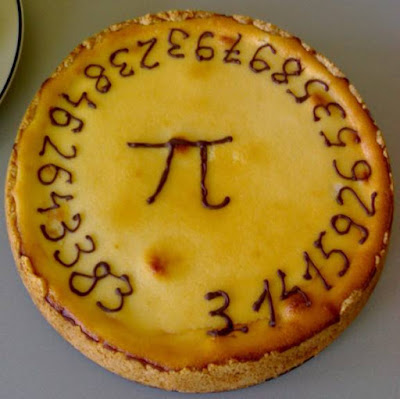
Physics (part 4) - Einstein and Pi (2016)
----------------------------------
----------------------------------
Photo: Curiosity Cat/everystockphoto.com
















well said
never stop writing
m
Thanks for sharing your personal story. A struggle much like Stephen Hawking.
Stay curious, my friend
Susan
That curiosity, especially about what was down the road or be revealed for the first time to me, has stayed with me. Like Hawking, when I was paralyzed during surgery in the middle of my junior year of college already wondering if I was on the right major (I should have chosen physics… Got As in all my physics classes). Like Hawking, initially, I was depressed and returned to my parents home with little thought of what to do. So I spent nine months soul-searching before returning to college, determined to do well and I did, earning a fellowship to Stanford in their engineering Masters degree program.
I love reading stories, articles and poetry here on AD because it helps me fuel my insatiable curiosity that comes from finding that the more I know, the less I really know. Just yesterday an author asked me to watch the documentary, Unacknowledged. While I'm quite a critic of false theories and pseudoscience, I will reserve judgment until I finish viewing the movie. My curiosity is piqued by theory that focuses on what the military-industrial complex has been doing since it formed during World War II.
Ron