Writing Options By Bill Cottringer
“There is nothing to writing. All you do is sit down at a typewriter and bleed.” ~Ernest Hemingway.
Writing is both an art and science involving both the right and left hemispheres of the brain, including the thinking and feeling brain functions. Many great writers feel that they didn’t intentionally choose the profession of writing, but rather writing choose them as its available conduit. The better writers have lost their egos along the way.
The best writers write because they are compelled, not necessarily because this is the best way to spend their time. But being enjoyable, the writing experience is often timeless. Writing usually flows from the heart and then the real writing occurs in re-thinking and re-writing and more re-writing. And there is some significance to the saying, “The teacher appears when the student is ready.”
Genre
The first option writers have is to choose a writing genre. The trouble here is that genre is an ever-evolving term with ever-expanding categories, and so choosing one of today’s expansive categories, may not be a free choice, but one the writer evolves into gradually from life experiences, personality development and the skills needed to survive and eventually thrive as a writer.
The Greeks were the first to label writing genres as tragedy, comedy and satire. But today writing genres include a few sharp distinctions and many varieties within those distinctions.
One main writing genre distinction is non-fiction vs. fiction, with embellished overlap somewhere in between as a credible, workable compromise. Traditional literary genres include expository, essay, journals, letters, narrative, persuasive and descriptive.
The movie industry makes distinctions between comedy, drama, horror, realism, romance, satire, biography, cartoons, true crime and crime mystery, fantasy, science-fiction, action and adventure. Other genres include children’s, classic, epic, folklore, poetry, prose, lyrics, historical, academic, philosophical, bibliography, self-help, social, political, and religious. Tomorrow another genre will likely appear.
Purpose
One important dichotomy a writer tries to decide is the choice about the main writing purpose, or more directly, who is the intended audience and for what reason? Some writers choose to write safely about what may be most popular at the time and comforting, validating reading, while others write what provokes or what is novel or unusual, pushing the envelope on people’s comfort zone. Another choice here is to write what you think readers want (or need to know), vs. to write what the mind, heart and soul tells the writer to write. This is the other-directed vs. the inner-directed writing model.
The other-directed style of writing takes great research as to the extent of the audience you want to be popular with. The writer will need to find out what most meets the needs of the intended audience. The size of the intended audience will obviously increase the time and effort to find out this information, at least before the writer arrives at his or her destined or discovered niche. The discovered needs of the audience could be to inspire, direct, identify common problems or conflicts that resonate, tease, offer plausible solutions that are easy to apply, or entice the reader to reach and grab ahold of some important ideas and make them their own. Or other times, simply to entertain as a diversion from real life.
Inner-directed writing takes boldness and courage to tiptoe out the very edge of known reality to discover the wisdom of the higher reality realm, often called the spiritual world, containing both the joyful light and scary dark side of life. This is where the writer lets go and risks having adverse, painful and life-changing experiences without fearing the consequences, This is in order to develop an abundant store of empathy for others and a better understanding of life’s lighter and darker moments. Then comes the hard part—reaching deep inside the soul to give birth to the critical problems and solutions that can help make life more enjoyable. Some successful male writers say this is the only somewhat similar experience that a woman has in giving birth.
Conflict
All writing has to deal with one or all of the three conflicts that confront us in this life: (a) us vs. life (b) us vs. others, and (c) us vs. ourselves. All these conflicts have the secondary either-or flavors of good vs. evil, head vs. heart, sensible vs. nonsense, light vs. heavy, positive vs. negative, fun vs. dread, and real vs. fake. Since these conflicts are our common enemy, there will be common interest, regardless of the purpose, focus or genre of the writing. How the writer resolves these conflicts with proposed solutions, whether fictional or real, has a great deal of influence on the reaction of the audience.
The conflict resolution can be positive and satisfying, where the hero wins, or very negative and unsatisfying, where the good hero loses and the bad villain wins. Or, what is now emerging is an outcome that is partially satisfying and partially dissatisfying, leaving the final decision to the audience’s imagination. This is often the best viable compromise, most true to life.
Choosing the type of conflict will depend upon whether the writing is other-directed—something others can easily identify with, or inner-directed—something the writer knows a lot about from his or her own personal struggles or those close to home with family and friends. The details of the conflicts are usually a story in themselves and of course the resolution, failure or partially satisfying outcome, must be consistent and integral to the entire writing.
Focus
The main dichotomy of focus is local vs. global. The writing can cover anywhere from a cross-section, single, time-constrained experience or situation of a single person or event, or a longitudinal saga, covering centuries and generations. “Local” writing requires a penchant for details, but always risks providing too many or too few to hit a bullseye. But then again writing globally, the writer may lose the audience in abstract generalizations that are lite on resonance or meaning. Balance is always more pleasing than lopsidedness, unless that is used humorously to drive home a point.
Focus is likely tied to the writer’s own personality, life experiences and personal preferences. Of course, choosing to do a little of both in writing, may help join two opposing audiences who may want just the opposite of what the writing is trying to focus on. Again, careful thought about the right compromise is often a winning choice.
The appearance of these choices only become apparent after they have been made, as the writer gradually migrates towards one side or the other and eventually moving towards the middle in the creative process. At the end of the day, writers can really only know where their destination is by looking at where their footsteps have taken them to, so far. I am not a great writer yet, but I am becoming more familiar with the path there.
“We write to taste life twice, in the moment and in retrospect.” ~Anais Nin.
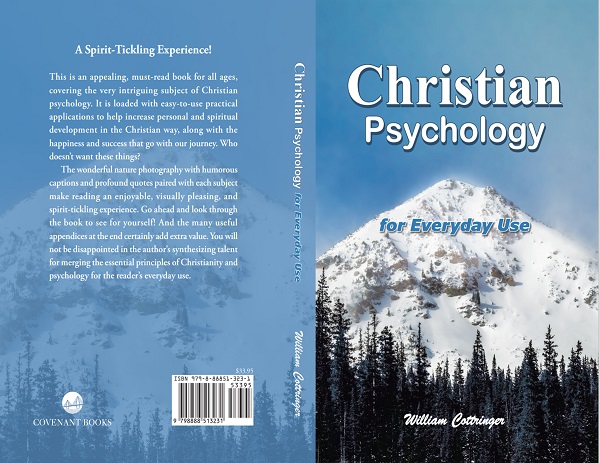
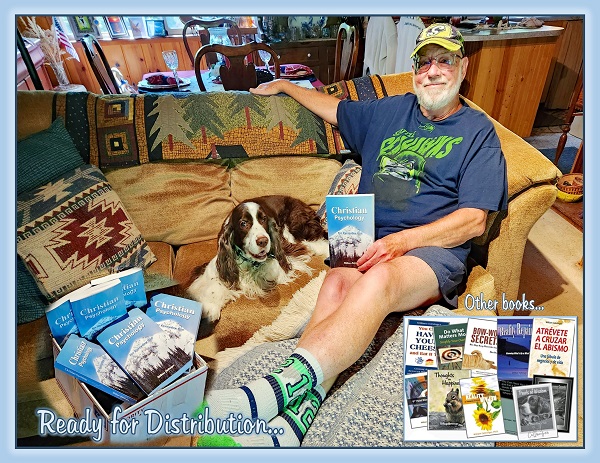
William Cottringer, Ph.D. is retired Executive Vice President of Puget Sound Security in Bellevue, WA, along with being a Sport Psychologist, Business Success Coach, Photographer and Writer living on the scenic Snoqualmie River and mountains of North Bend. He is author of several business and self-development books, including, Re-Braining for 2000 (MJR Publishing); The Prosperity Zone (Authorlink Press); You Can Have Your Cheese & Eat It Too (Executive Excellence); The Bow-Wow Secrets (Wisdom Tree); Do What Matters Most and “P” Point Management (Atlantic Book Publishers); Reality Repair, (Global Vision Press), Reality Repair Rx (Publish America); Thoughts on Happiness; Pearls of Wisdom: A Dog’s Tale (Covenant Books, Inc.) Coming soon: A Cliché a day will keep the Vet Away (Another Dog’s Tale). Bill can be reached for comments or questions at (206) 914-1863 or ckuretdoc.comcast.net.












I write because I have to. I can't go golfing or socializing like most retired people my age tend to do. My hands do not allow me to do the kinds of hobbies that I probably would do if they worked. Fortunately Dragon allows me to write faster (not necessarily better) these days so I find myself running overly long sentences as my thoughts enter the paper faster than I can properly lay them down.
Until lately, it's been a long time since I submitted work to an anthology. Recently, I received two short stories I submitted from a panel of three or four other reviewers with an edited copy of their corrections/suggestions. My fictional style involves getting rid of the, that, but and other unnecessary words that serve as bridges to my writing. I also leave out subjects when they are obvious.
Anyway, the two short stories came back with many edits. Making my writing more culpable for a third grader. And in some places questioning my logic that was scientifically correct but not believed. I was writing science-based science fiction. I have come to the conclusion that my editor was probably a grade school English teacher, retired, writer.
Ron