 Here are sever crossroads which interact with the three main types of conflicts that confront us00Us. vs. life, us vs. others, and us. vs, ourselves. How we view and deal with these crossroads in these conflicts results in how much happiness and success we can enjoy in life.
Seven Crossroads
by
Bill Cottringer
“If you come to a fork in the road, take it.” ~Yogi Berra.
Self-consciousness compellingly temps us into falsely believing we have a unique identity as “I, me, and myself,” which is a stand-alone person distinctly separated and different from everything else in life. Everything we see, hear, touch and smell confirm this reality. Then came the dualistic mind which divided the whole world up to this and that in polar opposites, from night and day to life and death, and even added yet another dualistic quality on top of each of these opposites as good or bad and other such judgments. The current day outcome is communication mayhem.
Whether we discovered or we invented the following important crossroads in the evolution of our consciousness, the origin remains to be determined. At any rate, how we view and deal with these crossroads has a lot to do with the amount of success and happiness we get to enjoy. The following seven crossroads interact with each as a part of the three main conflicts we all are confronted with in life—us vs. life, us vs. others, and us vs. ourselves. We have to try both roads to find out which one we prefer, or at least which one most deserves leaning in that direction.
1. Destiny and Free Will
The divided mind views all these crossroads as either-or choices for us to decide, without seeing the intersection where they actually become one and the same through thoughtful reconciliation. That important insight seems to be reserved for later spiritual enlightenment, because it requires us to lose ourselves and we tend to not want to volunteer going there readily. Traveling to this point in our personal development requires increased awareness of how unfree our will actually is from all the genetic, environmental, and social conditioning forces that shape it to be anything but free. The use of real free will only starts when we become aware of all these influences and begin to focus on the main thing that is actually under our immediate control, and that is how we choose to respond to the situations that life decides to place us in, maybe as our destiny. True peace of mind flourishes when we figure out how to use our free will to follow our destiny.
2. Exclusion and Inclusion
The exclusion-inclusion crossroads have many different varieties but they all stem from the basic dichotomy of acceptance vs. rejection, which is probably an offshoot of the self-conscious problem that deludes us into believing we are at the top of the food chain as superior human beings. Probably the hardest thing to do for those who choose to be inclusive in their attitudes and behaviors, is to include those who have decided exclusion is the better way. This is the dilemma of trying to accept the unacceptable. A strange thing with certain religious groups that were founded on the value of inclusion, is that they dare to exclude others from membership. The danger in being exclusive is that you may be inadvertently excluding something, because of annoying differences, which may be too valuable with beneficial commonalities, to not include. Sometimes, a different perspective solves the most difficult problem.
3. Fear and Hope
The fear and hope crossroads have many different versions, but the main qualities of fear resemble negativity, pessimism, failure, and danger, while hope includes the characteristics of positivism, optimism, success, and opportunity. How much time we spend on each of these two roads depends upon what we learn to expect from our efforts, which may be a mixture of internal genetic predispositions and external life experiences. Research has shown the practical benefits from leaning towards an optimistic viewpoint, as being better health, more happiness, more wealth, fewer physical symptoms, better relationships and living a longer life. Although it may be difficult to change your viewpoint, there will always be opportunities to choose how you react to the next situation that occurs, by consciously setting aside past memories and future expectations.
4. Differences and Commonalities
During the first half of our lives, our self-conscious minds tend to lead us to focus mostly on differences between us and life, us vs. others, and us vs. ourselves, especially the noisy and annoying differences. During the first half of our lives, we stay busy taking everything apart so we can study and understand the differences better. This is okay, at least until it becomes unproductive and even destructive. Eventually the time comes to start noticing the commonalities of all the puzzle parts so we can put them back together again where they belong. During the second half of our lives, we take advantage of the Gestalt Principle, which teaches us that the whole is greater than the mere sum of its parts. In other words, a team can accomplish much more together than any individual can alone.
5. Science and Religion
Science and religion have argued about which is true r than the other since when we first named these two things. Ironically, they are often saying the same thing, just in very different languages. Science establishes relative truth from testing mathematical numbers and formulas in a controlled laboratory setting and using inductive reasoning to get there. Religion uses faith, beliefs, images, and symbols to establish absolute truths within a deductive reasoning model. Our divided minds have our own similar dichotomy with our rational, logical brains thinking in words, while our emotional brains sense in images. Unfortunately, we have not been able to come up with a common language for clearer communication between the two. Maybe advances in AI technology can soon help with this reconciliation problem.
6. Simple and Complex
The most valuable truths in life seem to be well hidden somewhere as profound simplicity, usually in between simple simplicity, and complex complexity, which often lies between a rock and hard place. During the evolution of our consciousness, we look for the easy low hanging fruit to solve problems. After finding out that quick and easy solutions really satisfy our problem-solving minds, we start looking for more complex solutions, but the trouble with this approach is that some of these complex solutions bring even more complex problems in the long run. So, we have to go back and understand the problem better so we can see a solution that does more good than harm, with both short-term and long-term gains.
7. Certainty and Uncertainty
We have spent a lot of time, money, and effort in our pursuit of security and certainty, despite the fact that insecurity and uncertainty rule the universe, at least according to modern physics. There are many different types of security blankets that are quite effective in helping us to feel more secure and certain in our lives, including the reliance on organized religion, politics, money, power, mental health services, university degrees, drugs, nature, friends and family, and knowledge. The beginning of spiritual enlightenment is seeing these security blankets for what they really are—a temporary source of relief from suffering—until we begin to lose ourselves and our self-conscious habit of adding another unnecessary layer of suffering on top of the inevitable suffering we can’t escape. That is the wisdom of insecurity. Suffering is a real part of life, but suffering about the suffering isn’t mandatory.
“Adversity is a crossroads that makes a person choose one of two paths: character or compromise. Every time he chooses character, he becomes stronger, even if that choice brings negative consequences.” ~John C. Maxwell.
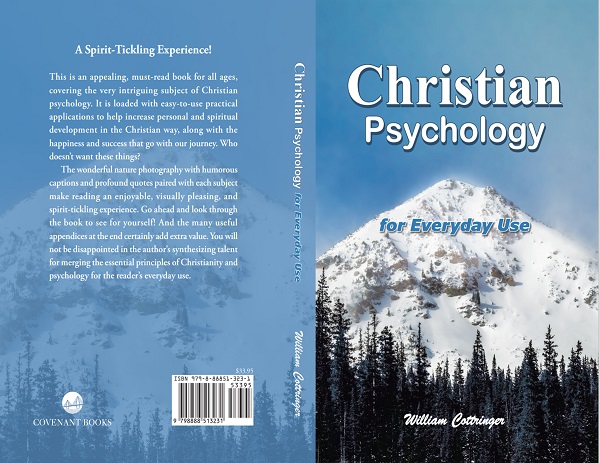
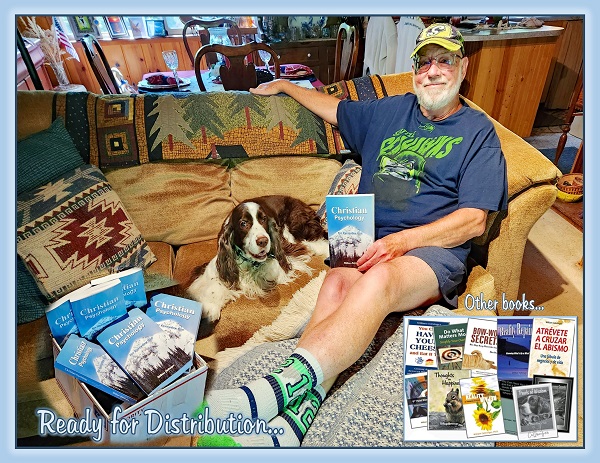
William Cottringer, Ph.D. is retired Executive Vice President of Puget Sound Security in Bellevue, WA, but still practices sport psychology, business success coaching, photography, and writing, living on the scenic Snoqualmie River and mountains of North Bend. He is also on the Board of Directors of the Because Organization, an intervention program in human trafficking. Bill is author of several business and self-development books, including, Re-Braining for 2000 (MJR Publishing); The Prosperity Zone (Authorlink Press); You Can Have Your Cheese & Eat It Too (Executive Excellence); The Bow-Wow Secrets (Wisdom Tree); Do What Matters Most and “P” Point Management (Atlantic Book Publishers); Reality Repair (Global Vision Press), Reality Repair Rx (Publish America); Critical Thinking (Authorsden); Thoughts on Happiness, Pearls of Wisdom: A Dog’s Tale (Covenant Books, Inc.). Coming soon: A Cliché a day will keep the Vet Away and Christian Psychology for Everyday Use (Covenant Books, Inc.). Bill can be reached for comments or questions at (206)-914-1863 or ckuretdoc.comcast.net.
|



















Thinking about Yogi Berra… When I come to a fork in the road, I pick it up, wash it off and it becomes part of my utensils for eating my meals. But what am I going to eat tonight that will require a fork?
Ron