Haiku is a 17 syllable poem arranged in three lines of 5-7-5 syllables. At least, that’s what I was taught in high school. But “‘t’ain’t necessarily so”.
The sticking point apears to be that 17 English syllables convey more meaning then a like number of Japanese syllables. An english 5-7-5 haiku tends to be alittle fat as compared to
a Japanese 5-7-5. This leads to two schools of thought in english haiku.
5-7-5 and Damn the Desenters.
This school seeks to use the Japanese form in English. The 5-7-5 form is seen as both a standard and a challenge to be met
Spirit of Haiku
This school seeks to capture the spirit of haiku in English. The “form” is not very important being defined as 17, or fewer, syllables arranged in 3 lines, short/long/short.
Personally, I lean towards the “Spirit” school, but I write 5-7-5 as well. What I dislike is the “I’m Haikuier than Thou” attitude. A ku is just a means of expression, and, for me, it is what
is expressed that is paramount.
Both schools recognise that a haiku is not just 17 or fewer syllables hung together in a single sentence such as:
the roster jumped up
on the barn roof tree high, said
his piece and flew down
A haiku has a break, a caesura, either at the end of line 1 or 2, dividing the ku into two unequal portions, what Jane Reichhold calls fragment and phrase. It is the way in which these two relate to each other that make or breaks the ku. Keeping with our fowl friend:
red rooster
on barn roof–
Sunday dinner
See Reichhold, Jane: “Haiku Techniques” for a full discussion on this point.
Haiku are often about nature and in that case they contain a kigo a seasonal word. This kigo indicate the season of the year. Be aware that in English there are some seasonal words that
are highly evocative in some places, but meaningless in others.
a lover’s touch,
a child’s smile–
ice out
Does it help to know that “ice out” is that happy time in the north when the ice leaves the
lakes and summer begins its yearly trip north?
I hope that I haven’t muddied the waters too much. I list some of my favourite
references. A quick web search will turnup more than half a million more.
The most important thing with haiku? Fun. Haiku are fun. Have some!
SUGGESTED REFERENCES:
England, Gerald: “How to write Haiku”: http://www.geraldengland.co.uk/ge/gepm002.htm
Reichhold, Jane: “Haiku Techniques”: www.ahapoetry.com
Reichhold, Jane: “Haiku Rules that Have Come and Gone”: www.ahapoetry.com
Reichhold, Jane: “Fragment and Phrase Theory”: www.ahapoetry.com
Imaokam Keiko, “Forms in English Haiku”: www.ahapoetry.com
Shirane, Haruo, “Beyond the Haiku Moment: Basho and Buson and Modern Haiku myths.”:
www.lowplaces.net/beyond_the_haiku_moment.html
Thanks for the information John! I'm sure we can all learn something great everyday. I've never stopped learning yet. Thanks!
Sandie Angel :o)
Reviewed by Kate Clifford (Reader)
Reviewed on March 22, 2003
Thanks for the sharing of information. I helped out a friend of mine last summer who was teaching Haiku to some children in a writers campground. I had a riot and totally enjoyed the fresh thoughts these children showed in their writes. I took photos that day that are being used in a book that they all have now with their Haiku's. Its a day I will never forget. Can't you tell since I am rambling on more then usual?
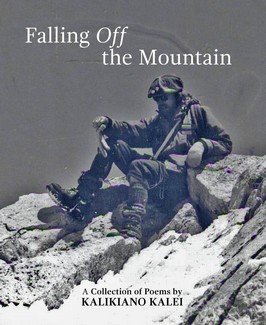
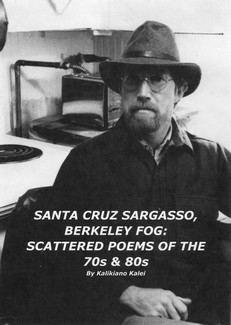
A further collection of poems, many from years in the Middle East, but also the California San Francisco and Central Coast areas (Santa Cruz, Carmel, Big Sur, Berkeley, etc.).


Haiku for you
Fun for me
thank thee
:))
Love
Tinka
Sandie Angel :o)