“I respect and admire John Milton and his poems so according to T.S. Eliot, I am worse.”
-Bhuwan Thapaliya
One of the greatest poets of the English language, best-known for his epic poem PARADISE LOST (1667). Milton's powerful; rhetoric prose and the eloquence of his poetry had an immense influence especially on the 18th-century verse. Besides poems, Milton published pamphlets defending civil and religious rights. Paradise Lost is not easy to read with its odd syntax, difficult vocabulary, and complex, noble style. It tells a biblical story of Adam and Eve, with God, and Lucifer (Satan), who is thrown out of Heaven to corrupt humankind. Satan, the most beautiful of the angels, is at his most impressive: he wakes up, on a burning lake in Hell, to find himself surrounded by his stunned followers. He has been defeated in the War of Heaven. "All is not lost; the' unconquerable Will, / And study of revenge, immortal hate, / And courage never to submit or yield... /" Milton created a powerful and sympathetic portrait of Lucifer. This view influenced deeply Romantic poets William Blake and Percy Bysshe Shelley, who saw Satan as the real hero of the poem and a rebel against the tyranny of Heaven. In The Marriage of Heaven and Hell Blake stated that Milton as 'a true Poet, and of the Devil's party without knowing it.' Many other works of art have been inspired by Paradise Lost, among them Joseph Haydn's oratorio The Creation, Alexander Pope's The Rape of the Lock and The Dunciad, John Keat's poem Endymion, Lord Byron's The Vision of Judgment, satanic Sauron in J.R.R. Tolkien's saga The Lord of the Rings. But T.S. Eliot has attacked the author and described him as one whose sensuousness had been 'withered by book-learning.' Mr. Eliot has every right to criticize him and his poems because he himself is a great poet. His contribution to the English literature is as priceless as that of many other great poets like Shelley, Keats, Shakespeare, Chaucer, Wordsworth, Yeats etc. But Eliot has also claimed that Milton's poetry 'could only be an influence for the worse.'
Milton, A dead poet, they call you
but your death, I accept not.
Nothing is more fascinating
to me, than the recognition
of your existence deep within me.
Their insipid attempts
to corroborate your demise
swerves you not from my heart.
Your spirit stimulates, my naked
heart with joy and motivates
me to write evermore, sans thinking
about the fate of my capricious soul.
I know and the whole world knows
that my poems are inferior to yours
but my pervasive admiration for you
is as superior as your immortal soul.
Copyright 2004 Bhuwan Thapaliya
Want to review or comment on this poem?
Need a FREE Reader Membership?
Reviews of "Ode to Milton"
Reviewed by Debashish Haar (Reader)
Reviewed on February 2, 2004
This is truly a wonderful tribute..
Reviewed by William J. Cryer (Reader)
Reviewed on February 1, 2004
A soaring tribute to a towering figure, a man of such staggering genius and poetic talent, that when all the world has ended, there will probably be less than 10 who can stand next to him with dignity and honor. Excellent homage. Wish I had done it.
Reviewed by Anna Marie Fritz (Reader)
Reviewed on February 1, 2004
I, too, appreciate Milton.
Your verse captures his spirit well.
Reviewed by Floria Kelderhouse (Reader)
Reviewed on February 1, 2004
Wonderful tribute Bhuwan .....from a wonderful poet to a great poet...Oh maybe I should clear that up...(((grin))) from YOU to HIM....NOT from me to you...LOL...great write..floria
fine tribute .Who is to say one is better than another..better ,best are words non exsistent in my dictionary,there is a place for all because all have been given a place.
Bhuwan We never know from whence our inspiration comes so we must go with the flow that brings out our best. Superb tribute and poetry from you once again!
'Better Without You'is a compelling narrative that explores the complexities of an affair, hidden secrets, and abuse. It also highlights a daughter's heartfelt journey as she cares for her mother who is battling dementia.
The Wholly Book of Exodus is humorous adult literature that features adult language, situations and content. It is the companion book of Jay Dubya's The Wholly Book of Genesis that satires the entire first book of the Bible.
The Wholly Book


 Share
Share Print
Print Save
Save Follow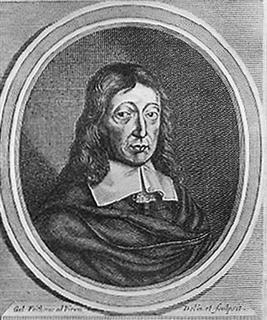








Your verse captures his spirit well.
Love Tinka
excellent tribute poem ...
Michael
Reindeer