Luis García-Abrines Calvo
(June 21, 1923, Zaragoza, Spain - May 17, 2016, New Haven, CT)
Collage para Luis García-Abrines Calvo
CLASSIC GREAT MAJOR UNIQUE REVEALING BRILLIANT REMARKABLE UNMATCHED INIMITABLE BEST-SELLING MAGNIFICENT SHOCKING PROVOCATIVE INGENIOUS LANDMARK HISTORICAL REVOLUTIONARY STARTLING STUNNING FAMOUS INCOMPARABLE ORIGINAL SENSATIONAL INSPIRATIONAL INSIGHTFUL DELIGHTFUL GRAND SPECTACULAR PROMINENT PERFECT NOTEWORTHY SUPREME BIG EXTRAORDINARY IMPORTANT SERIOUS ENORMOUS CHEF D’OEUVRE SIGNIFICANT LUCID LUMINOUS MARVELOUS INTENSE CONVINCING FINEST DISTINGUISHED ACCLAIMED AWARD-WINNING OUTSTANDING REMARKABLE MODERN FIRST FASCINATING CELEBRATED PAR EXCELLENCE DRAMATIC EXQUISITE CHARMING IRRESISTIBLE FORCEFUL DEFINITIVE GIGANTIC POIGNANT TOUCHING STIMULATING THOUGHT-PROVOKING LANDMARK BIZARRE CAPTIVATING TERRIFYING RELEVANT CLEAR RUDIMENTARY FUNDAMENTAL INFLUENTIAL LEGACY INTERNATIONAL PHILOSOPHICAL POETICAL DAZZLING DEVASTATING ENCHANTING SPLENDID COLORFUL SUPERB SUBLIME KEEN SHARP FAR-SIGHTED FAR-REACHING PENETRATING CLEVER SCINTILLATING GENIUS VOLUMINOUS PROLIFIC SUPERIOR ABUNDANT SCIENTIFIC TRANSCENDENT DEEP PROFOUND PRIME SUBSTANTIAL URGENT MOMENTOUS NOTABLE TREMENDOUS ESSENTIAL PRESSING USEFUL SOLEMN EXCELLENT AUTHORITATIVE PREEMINENT EMINENT IMPRESSIVE INDISPENSABLE SURPASSING PARAMOUNT UNSURPASSED SUPERLATIVE SUPER SOVEREIGN NE PLUS ULTRA TOPMOST HIGHEST MASTERPIECE MAJESTIC DOMINANT IMPERATIVE ROYAL NOBLE ABSOLUTE COMPLETE CHIEF AMAZING CHALLENGING ENTHRALLING SPELLBINDING RESPECTABLE CONTROVERSIAL INNOVATIVE PROGRESSIVE CLARIFYING INVENTIVE STRIKING SCHOLARLY MEANINGFUL ENLIGHTENING EXPRESSIVE ENGROSSING ABSORBING CREATIVE IMAGINATIVE STRAIGHTFORWARD ACCOMPLISHED AMBITIOUS POWERFUL ELECTRIFYING BEST-KNOWN HONORABLE FUTURISTIC RECENT ULTRAMODERN PUBLISHED PSYCHOLOGICAL ASTONISHING EXPLOSIVE EXPERT BEST INTERESTING VARIED BOLD STIMULATING FINAL ULTIMATE QUALITY MAJOR SINGLE ONE FIRST ACCREDITED TIMELESS BIGGEST SEXUAL EROTIC TRANSFORMATIONAL CONCISE IRREFUTABLE GORGEOUS UNIVERSAL POPULAR HILARIOUS SAD HOLY MEMORABLE UNFORGETTABLE PRECIOUS ENJOYABLE PROFESSIONAL INVALUABLE PRICELESS FANTASTIC...
...and deadly boring!
April 26, 1987
--Alexander Shaumyan
______________________________________________
Professor Luis García-Abrines Calvo was born on June 21, 1923, in Zaragoza, Spain. He graduated from the Jesuit School El Salvador in Zaragoza. In 1940, at the age of 17, he went to Madrid to study classical piano under the tutelage of Luis Galve, a renowned musician. After two years of piano study, he returned to Zaragoza where he continued his studies in Fine Arts at the University of Zaragoza. In the summer of 1944, he attended the University of Oviedo as a resident student to further his study of music. In 1948, at the University of Madrid, he received his degree in Romance Philology. In 1950, he founded the Philharmonic Society of Zaragoza and the Academia Miral for college students. At this time, he began his research and publications in literature, with scholarly editions and critical reviews of various works. In 1952, Luis published a facsimile edition of Gaspar Sanz Instrucción de música sobre la guitarra española which has been through several editions and cited by musicologists as their basic text. That same year, he was co-founder with Manuel Derqui Martos of the Sansueña Music Society, a division of the the Philharmonic Society of Zaragoza. At the age of 32, he was awarded a scholarship by the French government to study contemporary French music at the Sorbonne. While in Paris, he integrated himself into the community of exiled Aragonese artists, musicians and poets that included Honorario García Condoy and Fermín Aguayo. Pablo Picasso, Pierre Boulez and Oscar Domínguez were also among his friends. In 1953, he accepted a teaching position in Spanish Language and Literature at Yale University, where he remained until 1961. He became a US citizen in 1959, the same year that Yale awarded him a Morse Scholarship to begin research on Juan del Valle y Caviedes, resulting in a two volume critical edition. In 1960, he published Asi sueña el profeta en sus palabras, the first book of collage published in Spain. In 1967, he married Marie Ellen Branchini, professor of Spanish at Southern Connecticut State University, with whom he had twin daughters, Linda and Alicia. The same year, he was elected Secretary of the New Haven Opera Society. In 1971, the Republican Party nominated him for the position of Registrar of Voters. In 1975, Fairfield University made him an honorary member of Alfa Mu Gama. South Central Community College honored him with two awards in 1973 and 1975, for his civic, social and cultural work on behalf of the Hispanic community of New Haven. He was the founder and collaborator of two Spanish newspapers, Últimas Noticias and Gaceta Hispana. He was also secretary of the Spanish Cultural Society of New Haven. In 1977, he was unanimously elected to the Music Section of the Royal Academy of Fine Arts of San Fernando, filling the seat vacated by Stravinsky. For this, he received an honorary medal which became one of his most prized possessions and which he wore during many formal occasions. In 1980, Luis published Ciudadano del Mundo (Citizen of the World), a book that best defined who he was. It was a self-published anthology of aphorisms, poems, short stories, puzzles and calligrams. That very same year, he also published Crisicollages para Luis Buñuel, a book that paid homage to Buñuel on his 80th birthday. In 1982, he was named Favorite Son of his native city Zaragoza; and in 2000, he received the Gold Medal of Saint Isabel of Aragón, Queen of Portugal. Luis published critical essays and articles about Rubén Darío, Pío Baroja, the Brothers Machado, García Lorca, Neruda, Sastre, Arrabal, Stravinsky, Debussy, Chopin, Manuel DeFalla, Oscar Esplá, Goya, Buñuel, etc. He spent the rest of his teaching years at South Central Community College and at the University of New Haven, where he was named Distinguished Lecturer in the School of Arts and Sciences. He was a Fellow of Branford College at Yale, from 1973 to 2016. In an article published in the New Haven Register in 1980, Israel Amitae wrote: “ Don Luis is not only a poet. He is also a “humanist for all seasons,” a teacher, a writer, a painter, a devoted musician, a craftsman, who built himself a harpsichord and clavichord and an expert in Hispanic and Latin culture. He can quote great writers and philosophers, compare literary works of ancient and contemporary masters and recite classical poetry. In the course of his endeavors, he has befriended giants in the world of arts and letters, such as, painters Pablo Picasso and Salvador Dalí and filmmaker Luis Buñuel. When asked about his poetry, Don Luis confides, “It is in a way a confession of mine, my autobiography. I hate hypocrisy and I present myself naked completely naked with my good things. This is the way I want to be remembered.” The stories abound about Luis and his exploits in Zaragoza at the legendary Café Requeté Aragonés (today Cinco de Marzo), Paris and New Haven as a precursor of the happening (a spontaneous, improvised event that occurs anywhere and at anytime): dropping to his knees to receive the Apostolic Blessing of celebrity friends; dressing up as the reincarnation of an Aragonese Dracula; putting himself inside his own homemade wooden coffin; wearing his monk tunic, complete with sandals and large rosary beads - to take Marie and the twins to eat lunch at Bonanza. Luis was spontaneous, irreverent, improvisational, funny and mischievous. He was free-spirited and witty; he relished sarcasm, profanity, scatology, humor, poetry and paradox. He was an Aragonese extraordinaire who lived Aragón in his heart while in exile.
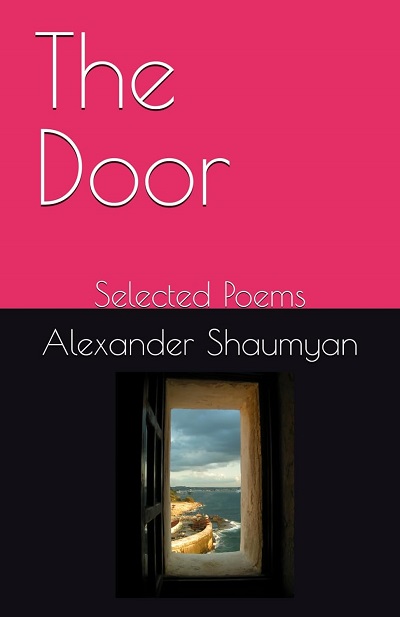
The Door: Selected Poems



 Share
Share Print
Print Save
Save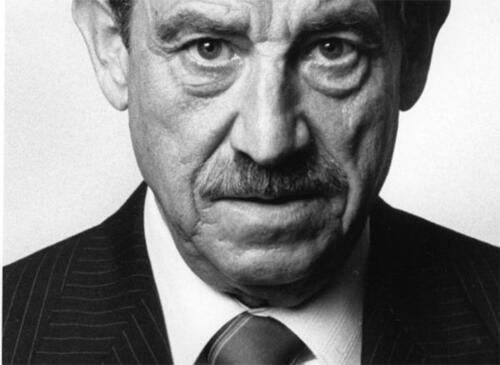







Luis García-Abrines Calvo was not only a scholar, but from his bio, a character larger than life. I gather that he was also one of your mentors. A great one to have if one is a poet.
Ron
Unbeknownst to many of those who do not lead reflective lives, the normal human heart contains many formative places such as you reference in Calvo's nature. In my case, thus far, a search for such related venues in my own heart takes me to an equally absurdist place, which is radio comedian Stan Freberg's Lawrence Whelk spoof ('Wun'nerful, Wun'nerful!', released in Oct 1957, almost exactly a month before Soviet Space Dog Laika made her tragic trip into orbit) on the Lawrence Whelk Show, in which at the end of same, Catalina Island's famed Aragon Ballroom floats out to sea.... (Cue foghorms, thumb-in-cheeks "pops" and champagne bubbles...)