 None of us seem to have enough time these days to do all we need to do, yet we each have all the time there is. This article proposes a way for us to stop being the tail that wags the dog.
THERE’S NEVER ENOUGH TIME:
A Dozen Simple Ways to Add 12 Hours a Day
By Bill Cottringer
There is never enough time to do all the things that need doing, but we each have all the time there is. Good time management—using what time we do have in the most efficient and smartest way—starts by refusing to be the tail that is wagging the dog. In this sense, your attitude towards time itself is the best starting point in having more time and getting more done in less time. Below are some attitude adjustments that can open the door to making more time and getting more done in what time you do have.
1. Stop and think about this reality (and please try hard not to dismiss it as abstract BS because it isn’t). First there was time and then we invented a way to measure it and know it in secondary terms of seconds, minutes, hours, weeks, months and years. Which is the more important reality—the time that we are measuring or what the measurement says? There is a very big difference. Personally, I always seem to have much more time when I am not looking at a watch, clock or calendar or otherwise over-scheduling myself.
2. Here is another interesting reality to consider. Negative thinking and acting eats up more time than positive thinking and acting. If you shift focus from what little time you have to do all the things you have to do, to what time you do have to do these things, you will be going from a negative perspective to a positive one and have more time to get more done. This is because you will be controlling the controllables and letting go of the uncontrollables.
3. Probably the quickest and easiest way to create more time is to get more focused in what you are or aren’t doing in the here and now moment. The more attention you pay to current thoughts and actions, and less on the past or future, the less time you are wasting. And time not wasted, is more time to do more. By the way, this notion may be a big clue in understanding the practical sides to the concepts of eternity and infinity. And perhaps this explains the odd tendency for us to over-estimate what we can get done in an hour while underestimating what we can accomplish in a year.
4. Sometimes you have to invest some time in the short-range scheme of things, to save more time over the long haul. Does the saying “a stitch in time saves nine” ring a bell? One way to do this is to spend valuable time organizing your living and work environments so that you have easy access to the things you use most frequently, and can quickly find the things you need when you need them.
5. I think we are all short of time for a positive purpose—so that we can sort out the essential stuff from the superficial things, a re-ordering of real priorities if you will. When we are brutally honest with ourselves, we all waste a lot of valuable time working on insignificant personal priorities that really don’t stack up against what is truly important. And top priorities should be forever visible or at least on the very top of a to-do list.
6. Along these same lines, all the things that we have do in life, at home and in work, never seem to space themselves out equally. In other words, when it rains it pours. When we run through a rainstorm we tend to want to take a breather and relax when it is over. Maybe that normal tendency has to be resisted, and we have to use this valuable “down-time” to invest in planning better, smarter use of time to proactively reduce the number of rainstorms. As it turns out, a lot of our rainstorms are really just other people’s emergencies to solve, of which we easily get hooked into being the rescuer, until we learn to say enough is enough.
7. One interesting way we are like the tail wagging the dog is in our typical thinking. Most of the time we are reacting to our conscious thoughts, rather than being proactive and directing conscious thoughts to accomplish productive actions. This is just a habit you have to force yourself to do to turn a bad habit into a good one. That shift always produces more time and increases productivity.
8. We live in a world overloaded with busy work and negative emotionality. Learning how to stand up and say “no” legitimately is difficult but not impossible. The only trick is to know when and when not to do that, because it will always be unpopular, no matter how the answer is given. But sometimes you have to just do and damn the consequences.
9. Other people often don’t respect your time. That is because you haven’t taken the time to save time, by teaching them how to be briefer with the important things, not to shuffle their own emergencies onto you, or to think about possible solutions to the problems they are confronted with before pleading to be rescued. Also learn when to “shut your door and unplug your phone” to work on your own priorities that you have planned out. When you finish open your door for more spontaneity, because sometimes other people’s priorities are in fact more urgent and important than yours. But that is the kind of honesty that paves the ways to do the few things that save time in the long run.
10. Conversely, we don’t respect other people’s time when we over-speak and over-write too many details in going past the point of perfection with an adequate explanation of things. Writing any more here would violate my own advice! But one sure bit of advice worth saying is, learn to translate abstract notions with concrete images in going from a puffy white cloud to a pebble of sand.
11. A peculiar reality is the Pareto Principle or so-called 80-20 rule, where we usually spend 80% of our time getting 20% of our results, despite being fully educated on this dismal, unproductive reality. The only solution is to take advantage of “P” points, or the perturbation points in any situation where a well-timed and well-placed little effort gets BIG results. Common examples are newspaper headlines, book titles, poetry, art, songs and political soundbytes.
12. The final idea here to embrace is good stress management practices—eating, drinking, relaxing and sleeping right to produce the maximum alertness and awareness. That way you are better able to use what time you do have to be most positive and productive.
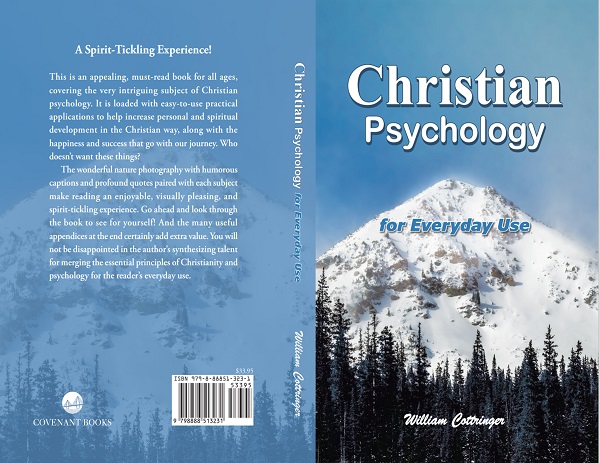
William Cottringer, Ph.D. is President of Puget Sound Security in Bellevue, WA. He is also a Business Success Coach, Sport Psychologist, Writer and Photographer. He is author of several books including Passwords To The Prosperity Zone, Getting More By Doing Less, You Can Have Your Cheese & Eat it Too, and The Bow-Wow Secrets: How Dogs Live a Simple Life and People Don’t. Bill can be reached for comments or questions . (425) 454-5011 or bcottringer.pssp.net
|