 Improving written communication is a high demand challenge today. This article offers 20 useful tips for meeting this challenge.
20 Writing Tips for Better Results
By Bill Cottringer
Excellent writing has never happened by chance. It takes open-mindedness and an insatiable drive to continually learn how to improve what you are trying to say and the hard work that goes along with that challenge. Excellent writing is clear, concise, complete, concrete, correct and compelling—with the right content and style to maximize understanding and impact. Below are some useful tips on producing better writing to help you go from getting good to excellent results:
1. Better writing starts with a thoughtful plan that replaces all that you may think is okay with your current style of writing. Think about the topic. There is usually a question being asked regarding what you know about something that has general importance and value for others. This is your mission.
2. With a specific question being asked, read and re-read the question carefully to fully understand what is required in a 6-C answer (above), and then answer the question exactly as asked with objective, factual evidence. Remember, what starts out badly (misunderstanding the question), will rarely end up well. Michelangelo used that as a guide for his painting projects.
3. Know who your reading audience is so you can customize your writing in order to improve understanding and impact of what you are writing and provide the right content and style that makes a good connection in meaning. Know what may be distracting to your readers and eliminate those things like misspelled words, poor grammar, run-on sentences, cliché’s, jargon, over-used words and phrases and you know what else bothers you too.
4. Good writing is mainly re-writing and more re-writing. Be ruthless with your writing to speak in simple words, with short sentences and explain yourself clearly enough to not be misunderstood or too easily forgotten with the mountains of meaningless mediocrity.
5. Learn to write as you would properly speak to make your writing more readable, enjoyable and memorable and less stifled, boring and easily forgettable.
6. Think of a creative “headline” title that grabs readers’ attention and makes them want to read more. Example: "How to Double Your Productivity in Half the Time, With Even Less Effort."
7. With short essays, start out by researching your topic and summarizing what you learned with a strong "thesis statement" revealing what your research or reading proves, in one sentence. Example: "The effectiveness of community corrections is influenced by many factors including previous incarceration, degree of community ties, the type of offender and treatment program matching, and amount of supervision."
8. Follow-up the thesis statement with three to four strong paragraphs of support for your position, gained from your reading, research and expertise.
9. Summarize what you have written with a succinct conclusion tying back to your thesis statement in answering the question.
10. Always include several concrete examples of what you are explaining or arguing, to show that you really do know what you are writing about. Example: “There are many different political influences on corrections. One is the two party system where Republicans traditionally take a hardcore stance towards criminals with a "lock 'em up and throw away the key" position and are tight-fisted with funding of community programs in making such programs prove their worth. On the other side, the majority of Democrats lean towards spending more money on rehabilitation programs to reduce high incarceration rates.”
11. Most issues have two valid sides and so present your issue that way—the pros and cons of something and then conclude which side seems to prevail from your reading, research and informed opinion.
12. If you criticize the way something is currently being done, spend a little extra time suggesting how realistic improvements can be made.
13. If you have substantial experience at something, don't be afraid to express your opinion with the reasons for doing so; otherwise keep everything "objective" with rational, reasonably proven facts or truths.
14. Accept the reality that the real truth of something is evolving as we go in time. Learn to increase your tolerance for ambiguity and uncertainty and never be too sure you are right about something.
15. Make reading your writing as enjoyable, fun, creative and interesting as you can because people's attention spans these days run in seconds rather than in hours.
16. Adopt a likeable communication style—one that avoids a defensive tone. Do this by expressing empathy, equality, tentativeness, positivism, freedom, honesty, humility and humor. These things facilitate effective communication.
17. Learn the power of word psychology. Use “good, strong and fast” words to emphasize the right points and use “bad, weak, and slow” words to help people forget the wrong ideas or points. Avoid over-used, empty words and use visual words and new and unusual ones to startle the reader. Word psychology can help engage the readers more with your writing.
18. Actively seek and be open to using honest and valuable feedback to continually improve the quality of your writing.
19. Spend some time reading great novels to learn from the master writers of great writings of the past.
20. In the end, nothing much is truly new under the sun; It is just old and retold, but in newer and more unusual ways for re-thinking, re-consumption and re-using.
Use some or all of the above 20 tips to take your writing from okay to fabulous and get the results you hope for.
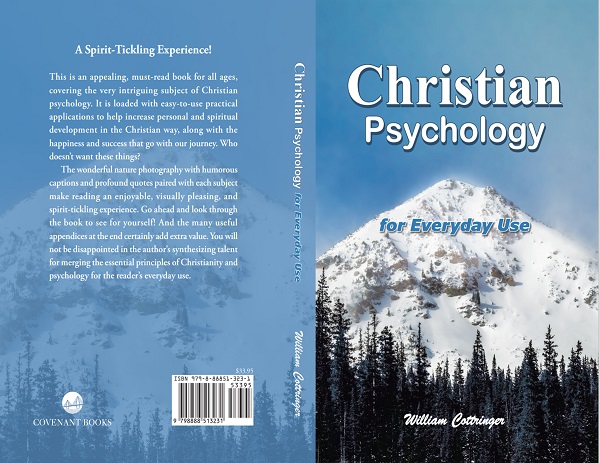
William Cottringer, Ph.D. is Executive Vice-President for Employee Relations for Puget Sound Security, Inc. in Bellevue, WA, and Adjunct Professor at Northwest University, along with his hobbies in being a Sport Psychologist, Business Success Coach, Photographer and Writer living in the peaceful but invigorating mountains and rivers of North Bend. He is author of several business and self-development books, including, “You Can Have Your Cheese & Eat It Too” (Executive Excellence), “The Bow-Wow Secrets” (Wisdom Tree), “Do What Matters Most” and “P” Point Management” (Atlantic Book Publishers), “Reality Repair” (Global Vision Press), Reality Repair Rx (Authorsden), and “If Pictures Could Talk,” coming soon. Bill can be reached for comments or questions at (425) 454-5011 or ckuretdoc.comcast.net
|
























Writers Are Born Innate-Who Needs
Reviews That What You Are Driven To
Or Classifies Themselves As Author!?
TRASK...
well said
The AD editor does not like complex (hidden) formatting in Microsoft Word. I usually save my document in something with less format, like text (.txt) or rich text (.rtf) before copying, and then make sure that I use a "special" paste in my browser. I use, "Paste and Match Style" in Safari to get my story to look like it was originally formatted.
You are well researched and written. Your tips seem to apply to nonfiction writing rather than fiction or creative writing of any type, like poetry. I have a feeling that you are highly driven to financial success. Most authors like myself, while I don't mind making money, are driven more by philosophical thought and creativity than mere "success," whatever that is.
Ron