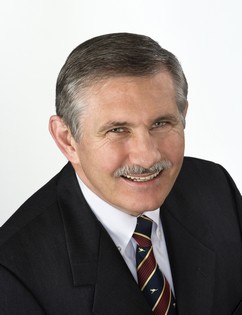
I had the pleasure of interviewing Hank Holland, an extremely successful executive, for my book "A Garage Full of Ferraris". This article highlights how Hank used empowerment to reach his goals.
Understanding and Accountability
“If you have a common understanding of the mission and vision, and have conducted a deliberate exercise to create strategies to execute the mission and create the vision, then you have a basis for communication and a basis for accountability and measurement.” – Hank Holland
To get to the heart of the matter, I went back to the leader who had done the best job of empowering his team and accomplishing the goals he set out to achieve. When I asked Hank about empowerment and ownership, Hank first honed in on the importance of clear communication. He held a number of jobs where the people he hired came to him with a plethora of backgrounds and experiences. Hank always took time to ensure his expectations were understood. He realized the negative impact on performance that would result when people were unclear on what was expected of them. Hank was a strong proponent of empowerment. He taught me how important it was for senior executives to focus on strategic issues and delegate as much as possible to the people on their team. He was always encouraging me to stay out of the weeds.
Accountability Is Part of Empowerment
Hank also told me that he thought the word accountability needed to be added alongside empowerment and ownership, and that to some extent, the three words were synonyms. He has always been a strong proponent of processes. As he talked me through his philosophy, he said it started with a clear understanding of the organization’s mission and vision. He was quick to point out that he was not talking about a vision in the grandiose sense – but more like a target. He said, “Where do we want to be in three years, and what will that look like?” He then walked me through a process, which took the mission and vision down to quarterly goals that could be measured. “After that, it is all about execution.”
The Characteristics of Empowerment
Before Hank went any further, he reflected upon the times in his career when he was empowered or empowered others. He said:
“I asked myself in those situations what characteristics were always in play. To me, there was always an element of trust; there was always an element of open communication and mutual respect, which would go along with trust.”
He added that when it came to processes he had always been a big believer in the mission, vision, strategy, objectives, goals, and milestones way of doing things.
To facilitate open communication, which is required to monitor the achievement of the goals and objectives, both the leader and the subordinate need to be in total agreement on what the goals are. Once they both buy in to the goals and how they will be measured, they have a basis for the communication that needs to take place. Having worked under Hank’s “system,” I was very appreciative of the kind of dialogue about achieving goals that occurred on a regular basis. These discussions were not without some stressful moments, particularly when something unexpected came up, but in no way did the discussions come across as micro-managing. Having regular sessions to review achievements against a plan sent a message that the goals were important and hitting the milestones was a necessary part of reaching the goals. These sessions also enabled mid-course corrections, which were frequently needed to get activities back on track.
The Process Conversation
Hank brought the discussion back to educating and enabling by reminding me of the goal that he and I had worked on at Landmark. He recalled asking me to tell him what we needed to achieve the goals we were committing to. He expected that a big part of it would be training. Not surprisingly, he was right. Given that we would be growing the organization from sixty to three hundred and sixty consultants, we would need a lot of training to deliver quality solutions to our clients. “An executive needs to understand what his team needs.”
Train, Develop, Repeat
Given that Hank and I share a love for college football, he brought up a story about Nick Saban, the head coach for the University of Alabama. Apparently, much of their football program’s success is due to the focus Nick Saban has on processes. Saban breaks down everything they do, from recruiting to how they execute in a game. Given the success the Crimson Tide has experienced under Saban, it appears that adherence to processes does pay off.
We finished our conversation by talking about how much our high school football coaches had contributed to how we approached business and life. As I was fortunate to have Roland Hallmark as my coach for five years, Hank had played for his coach for four. He told me how his coach took them to the state championship game in Alabama his senior year and added that he was a strong believer in processes and repeating processes to ensure the players had the fundamentals down pat, “He enabled people through training and development.” The coach took Hank and his teammates through a series of conditioning and football fundamentals that lasted the entire year. “We even put pads on and practiced in the gym in the off-season, which I believe was against the rules.”





Ron