Existentialism's premise precludes its existence
The term "existentialism" was picked up by the American press in a Paris jazz cellar after WW II from a flippant remark made by a jazz singer in reference to the "scene" being observed by the tourists flocking to Paris. War-weary philosophers such as Jean Paul Sartre were just doing philosophy and did not care for the popular term, yet they adopted it and used it to their own advantage.
"Existentialist" thought as we know it is a cluster of ideas including vague, emotion-laden notions of homelessness, alienation, and death, ideas emphasized in response to the horrors of two world wars systematically fought pursuant to the institution and breakdown of "objective" political and economic systems perceived as "reasonable" and "rational."
Faith in the the great idol of the Enlightenment, Reason, and in universal, abstract systems-of-being, was greatly diminished when confronted with the disastrous effects of political reasoning and the global rationalization of economic production. World war immediately succeeded a few decades of relative peace and prosperity. Agreements outlawing war were drafted and applauded if not signed by world leaders. Various scholarly treatises, claiming that economic interdependence had made war impossible, were published. The military staffs, however, were poring over the same old plans of attack and defense during the peaceful interlude.
Existentialism therefore includes especially the notion that an individual must be responsible for his own thinking and external behavior instead of relying on experts to do his thinking for him or allowing habitual culture to determine his behavior. Existentialism as such, if there is such a thing, is not supposed to be a system at all, but is more or less a reflection on the human predicament, particularly the predicament of a man's individuality, made blatantly apparent by the fact that he is doomed by birth to die. We might observe that he dies that others might live, but that might be of little comfort to particular individuals as such, for each individual would live forever and without resistance if only it could, in its own little heaven - but without resistance, there would be no individual on this earth.
In any case, any sort of systematic existentialist thought put forward would contradict the premise of existentialism. An existentialist intellectual worthy of philosophical existence should be moved to reason against it with lengthy rationalizations, trying not to repeat himself lest he be charged with systematic thinking and with putting being before naked existence. Of course, in all seriousness, I jest.
Long before the word "existentialism" was coined by the press, the subject of individual human existence, the human being, was considered to be unlimited by and even antithetical to grandiose systems-of-being such as those propounded by Hegel and Marx. Indeed, members of the human race have experienced centuries of alienation, slavery, irresponsibility, guilt, despair, dire circumstances, persecution unto death, and many other experiences of enormous interest to modern existentialists. The subject of existentialism, the human individual, is really nothing new and is the broadest of subjects: he is the subjective subject of all the objects he would have subjected to him. Christian existentialists in need of an objective standard or external authority might project the subject within as the Subject without - the Divine Man, the Subject of subjects, the Vanity of vanities, and so on.
Now that the historical "progress" of liberty or diffusion of freedom has gradually liberated individuals from diverse cakes of custom and relatively oppressive moral codes constituted as laws, folks have become individual components of a global society. Individuals stand apart in solidarity with one another, as an abstract collective universal: all card carrying members of the Category of One. Individuals are, jointly and severally, juxtaposed to the objective world, including the objective self as a social animal with its conditioned roles. Thus an extraordinary tension exists between individuals and society.
Although the modern individual has much greater freedom of movement and consumption than members of 'primitive' societies, s/he feels overwhelmed and enslaved by The Free Market System that was supposed to liberate The Category of One from parochial servitude. S/he might long for a return to the good old days, of the Golden Epoch in Organic Paradise, a Totalitarian Garden presided over by an arbitrary and ambiguous tyrant who makes each leader in his irrational image, that s/he might rebel and be booted into self-conscious existence. And now that humanity is almost liberated from obvious tyranny, each individual may have his or her own paradise to cultivate within, at least between serial marriages. Now each is responsible for his or her sins, and rewards and punishments. Still, if the ideal within is not realized in this world, the next will purportedly suffice.
Matters are not working out as well as one might wish. Nothing is perfect (and only Nothing is perfect). Just as, when we peeled back the roofs from the houses of the much vaunted nuclear families, we beheld torture rooms dominanted by brutish overlords and mean queens, when we crack skulls open, we find hellish psychic worlds therein, conditioned to misery by an individualistic system-of-being based on the premise that if everyone overcharges and overtaxes everyone else, in the name of God and Democracy, everyone will stand to profit and salute the flag.
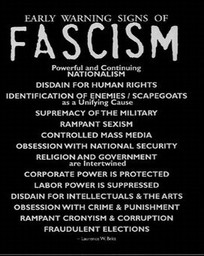
In fine, despite the claims of individualism to an impossible anarchic freedom, individuals have become so thoroughly socialized that it can be fairly said that they are unwitting subjects of a totalitarian culture. For that reason it might behoove intellectuals to retire to jazz cellars, commiserate over the miserable existence of the human race, and conjure up a much better system of being before existence is annihilated. What the press might call such underground denizens, if not existentialists, I cannot say.
|











Hugs
Tina