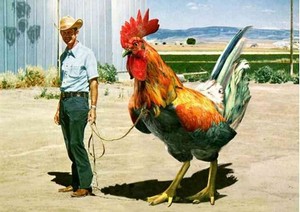
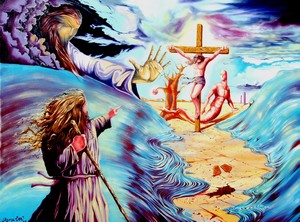
Is man an animal or a god, both, or neither?
I recently opined that 'time' is not a substance or thing, but is effectually an adverb signifying a kind of changing. My muse objected with, "Are we then to reduce this subject to mere semantics?"
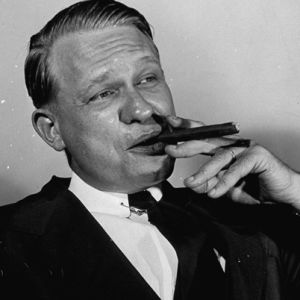
A Polish engineer and professor by the name of Alfred Korzybski (1879-1950) founded the art of General Semantics in America - his notions are elaborated at length in his tome, Science and Sanity. Professor Korzybski believed habitual thinking was lagging behind the logic and language of modern science, hence he drew on relativity theory, quantum mechanics, colloidal chemistry, neurology, and mathematics for his reform program. Linguistic reform would, in his view, restore sanity to society. He is best known for his notion that language is a map, not the territory itself - of course an accurate map is necessary to arrive at the destinations desired; and the "indexing" notion, that we should keep in mind that a general term denotes multiple particulars; for instance, all men are not the same: there is man-1, man-2, man-3, man-4, et cetera. Of course a particular man differ in time, hence Hitler-1930, Hitler-1942, et cetera.
The study of meanings, or the relation between language and things, and how those meanings influence behavior, enjoyed a burst of popularity. People were fed up with the metaphysical vagaries that fostered ignorance and signified excuses for economic and political exploitation leading to depression and war. Scientific management tempered by social justice was posited by the experts. If only the social relations of individuals were scientifically engineered by enlightened technicians, the miserable history of humankind would stop repeating itself.
Absurd political religions justifying exploitation by irrational power elites, particularly the "vested interests" or "parasites" who live "to get something for nothing" under the cloak of "monarchy", "republic", or "democracy" would be replaced by a technocracy led by sociologists; the technocrats would apply the lessons of natural science to human society so that humankind might realize its social ideals; wherefore "utopia" would no longer mean a good place that was really no place, but would be engineered and realized.
To accomplish that scientific objective, precise scientific language would have to be employed. Of course mathematical language, so valuable to mechanical engineering, would be the model language for social engineers. It is essential to know what one is talking about if particular objectives are to be obtained. Language has largely evolved into so much nonsense. Inceessant chit-chat provides human beings with the feeling of society, the feeling that they belong, the feeling that they are in touch with one another and not thoroughly alienated by their individuality, but it is otherwise not very useful except to those who use it to manipulate people in order to subjugate the many in favor of the few. If humankind is to progress, if liberty and justice is really for all people, scientists and engineers must know, first of all, the nature of the beast they are dealing with. In other words, What is Man? The answer must not only be meaningful but must have the correct meaning if it is to be useful. That is, the language must reflect the reality.
Human beings repeat their lamentable history despite their good intentions, not because the race was deliberately doomed by an evil spirit but because they are confused. Humans have native intelligence without thinking. Yet it is the facility for symbolic action or thinking that distinguishes man from intelligent animals - pigs, dolphins, apes and the like. He can learn from mistakes and think things out before he acts. He is, more often than not, confused by muddy thinking, therefore he must strive to think clearly and correctly, at least where vital interests are concerned. Thinking correctly is a scientific project, a social project. Thinking and linguistic communication are inextricably bound: we must think and speak correctly. The meaning of language, the relation of language-thought and reality is crucial if the human race is to achieve positive goals.
The need for meaningful scientific discourse is felt most acutely during troubled times. Semantics was hardly an obscure and boring province for experts during the Great Depression and world wars: the word spread among the students, was taken up by the general populace and became almost as fashionable as psychoanalysis. Like all fashions, it fell out of vogue. Just as people grew tired of being psychoanalyzed by the man and woman on the street, popular semantics became so much boring talk about talk, and the province was returned to those pedants who are customarily obsessed with systems.
Professor Korzybski founded the modern course of study called "General Semantics", but he did not invent general semantics. During troubled times, the Warring Period in the ancient East, Confucius took up the study of Rectification of Language. People were so confused, he said, that they no longer knew what the names of family members meant. Since people did not know what was meant by 'father' and 'mother' and 'son' and 'daughter' and so on, they were neglecting the familial duties of their roles. Confucius helped straighten things out for quite awhile, but eventually innovators grew bored with the traditional pedantry of their Great Teacher, and revolted.
Protagoras expounded on Correct Speech during troubled times in the ancient West. He believed correct speech had healing power. He was concerned with tenses, moods, and word endings; for example, with the fact that the word for helmet was feminine instead of masculine. At one point Plato ridiculed his pedantry and obsession with systematic thinking. Only 20 lines written by Protagoras are extant. Ironically, Plato gave Protagoras a bad name by attaching his name to the secret doctrine of subjective relativity. However Protagoras was not an objective idealist or a phenomenalist: he was an agnostic empiricist who knew and admired Pericles, wrote a constitution, and said, "Man is the measure of all things, those which are, that they are, those which are not, that they are not." By 'man' he meant Man or humankind, not individual men. By 'that' he recognized the objective existence of things, that they are, not 'how' they are - or how they are not, which would be ridiculous. His concern with correct language and objective verification gives the lie to the unprincipled subjectivity put in his mouth by Plato.
Socrates, who lived about the time of Confucius, had good reason to repeat the Delphic maxim, "Know thyself," during troubled times. His research led him to conclude that he was the only person who knew that he did not know himself. People thought they knew themselves, but careful questioning revealed they were confused and did not have the faintest idea of who they were. Certainly, if we want to know what we can effectively and efficiently do with ourselves or anything else for that matter, we should what that something is.
What is Man? Well, some say, "Man is an animal."
"Wrong," insisted Alfred Korzybski. Man is not an animal. Confusing him with animals by linguistically identifying him with animals is a grave mistake; to posit that he is part natural animal and part supernatural entity compounds the error. There is nothing supernatural about man: man is within nature, not outside of nature. His higher ideals are not supernatural, they are natural to him; the linguistic effort to divorce him from his ideals and to entrust his welfare to ignorant people or to criminals is wrong and dangerous - we add that the threat to moral progress is even worse given the ability of high technology to destroy entire populations if not the human race. References to supernatural agencies are expressions for or signs for ignorance. The dogma and casuistry, the worship of power and the theological rationalizations of power have served to justify all sorts of crimes against humanity.
Figuratively speaking, man at present is a juvenile delinquent who justifies his economic and political crimes by absurd reference to arbitrary supernatural agencies including states, the deities of political religions, and by reference to the mistaken and unethical tenets of zoological ethics - the jungle law of might is right, the will to power, the territorial imperative and the like. Adam Smith's Wealth of Nations, for instance, bases wealth not on the objective principles of the phenomena of wealth but rather on subjective observations of the phenomenal of selfishness, adhering to the assumption of zoological ethics, that man is an animal.
Smith's theory, says Korzybski, is false, and its stringent application would be disastrous in the long run. The same can be said of the related neo-Darwinian interpretations of the "survival of the fittest," yet another confusion of man with beast. Those who bark "survival of the fittest" bark an animal language.
"Where there is 'survival' there must be victims, there has been fighting," said Korzybski. "Survival of the fittest" justifies crimes including murder. Of course killing is not a crime for animals, but murder is a crime for man. The repeated suggestion that man is an animal serves to promote and perpetuate such crimes.
Korzybski will soon say what man is, but first he would rid man of his identification with brutes. In fact, one of the pet peeves of his General Semantics is the 'is' of equality or identity, a relation reinforced by the static either/or logic, that A is either A or not-A, hence cannot be both A and not-A at once. Such an identification in the moral sphere is a gross oversimplification of reality, and promotes knee-jerk reactions, leaps to faith, jumps to conclusions by ignorant and fearful persons with low tolerance for ambiguity, often with vicious results. Unfortunately, the constantly repeated statement that man is an animal suggests that man belongs to the animal class and all that implies. The repeated suggestion serves as a self-fulfilling prophecy. Spiritually inclined people found an alternative in notions of divinity, yet when they failed to advance from religion to science, they wound up on thornier paths than Brother Rabbit.
Now it might be said by atheists that Korzybski's notion of what man is not, is not very scientific, and that his divorce of man from animal and god is "merely semantic." Materialists laid claim to the unified view that matter is at the bottom of everything, and that the forms of nature are the result of complex relations of elements. Julien la Mettrie (1709-1751), author of the once scandalous Man a Machine, reiterated the ancient materialistic prejudice that nature is a unity and is due to the chance interaction of matter and motion. Nature is not the creation of an intelligent and moral agent, but is a product of blind forces.
There is no natural "plan" for man, averred Dr. La Mettrie. Nature's laws are arbitrary; society needs rational laws to subsist and arrest return to the nature state of animals. "Truth" does not lead to virtue; philosophy does not result in morality; but philosophy does show the necessity of conforming to the state's rules. Man is, by chance, a thinking machine enslaved by passions. In essence, contrary to what the quacks say, there is no difference between man and brute. Further, man is an anti-social and amoral animal who is naturally determined to commit "crimes" and "sins" because crimes and sins are necessary for his well-being. Happiness is organic and is disturbed by inculcated "remorse," a symptom of disease. The criminal is not free to choose his course of action.
The well-constituted individual whose natural passions are not too anti-social and who is aware that his selfishness can be realized in society is no problem for civilized society. Criminals should be pitied by the fortunate intellectual elite who are naturally liberated. The intellectual elite accepts the truth, that man is an amoral animal, a relativist machine, not as a matter of conscience but because it is true . The conduct of vulgar imbeciles, on the other hand, is regulated by religious and moral guilt, remorse, and physical coercion. Criminals should be harshly punished for good social effect - they should not be condemned for their natural determination. Ordinary persons are excluded from intellectual liberation by their own mutual fear and contempt; fear-religion, until unleashed in violent episodes, may restrain the natural inclination to crime - challenges to religion and conventions terrify ordinary people and might result in violence. Anti-social populations need legal coercion and despotism to keep them in good order.
Sages should retreat to epicurean quarters; philosophers, however, should be activists and do what they can to improve society. The man who does not philosophize, Dr. Le Mettrie said, is no better than a donkey. And Dr. La Mettrie was contemned for his views, called a crude mechanist and an anarchist, but he was in fact more concerned with psychology than physiology, and he was in fact an advocate of altruistic projects. As a doctor he adhered to the views of Hippocrates, including the perspective that nature, when left alone, often has a healing power far superior to the doctor's power - especially the ivory-tower quacks Hippocrates and La Mettrie liked to ridicule.
Another pioneer of modern materialism, Baron Paul Heinrich Dietrich von Holbach (1725-1789), by discrediting man's contrived illusions gave, conversely, more credit to man's ability to improve himself. Holbach was confident in nature's healing power. Material particles circulated among plant and animal and "dead" kingdoms of nature; the elements are naturally combined into forms and dissolved, hence the apparent transformations observed - this is an instance of the classical "elemental" theory rejected by Korzybski. Baron Holbach's ultimate element was the "fiery particle." Now man can help remedy his ills by returning to nature's laws, taking care not to personify nature or its properties as if nature had a will of its own.
If only man understands nature, he will be a lot better off. Although man is part of nature, apparently his portion of nature includes unwarranted defiance against nature, much to his ruin. Therefore we have a sort of romantic return to nature as an antidote to religion, upon which much of the blame can be placed for the disastrous divorce from nature. Religion is corruption, disease; part of the cure requires the very names of god to be surgically removed from thought and language. The theological definition of 'god', the Baron said, forgetting his previous statement that man needs mysteries, is the definition of Nothing. Morality is to be deduced from the rational recognition of the means to happiness; in other words, we may reason out how we can become happy by examining the causes of misery and happiness. For instance, we might proceed to study ritual, a form of the religious disease, by conducting statistical studies of hysterics in mental hospitalss.
"Man is unhappy merely because he misunderstands nature," Baron Holbach indited. "His mind is so infected by prejudices that one must almost believe him to be forever doomed to error; the chains of illusion in which he is so entangled from childhood have so grown upon him, that he can only with the utmost trouble be set free from them. Man disdained the study of nature to pursue after phantoms, that, like will-of-the-wisps, dazzled him and drew him from the plain path of truth, away from which he cannot attain happiness. It is therefore time to seek in nature remedies against the evils which fanaticism has plunged us."
"We only see so many crimes on earth, because everything conspires to make men criminal and vicious. Their religions, their governments, their education, the examples before their eyes drive them irresistibly to evil in vain; then, does morality preach virtue which would only be a painful sacrifice of happiness in societies where vice and crime are perpetually crowned, honored, and rewarded, and where the frightful disorders are only punished in them who are too weak to have the right to commit them with impunity. Society chastises in the small the excesses that it respects in the great, and often is unjust enough to condemn to death those whom the prejudices that it maintains have rendered criminal."
Baron Holbach gives us cause to hope that correct thinking and speaking - in alignment with natural law - will save humankind from itself. We expect him to quote Pythagoras, and say that theory without practice and practice without theory are in vain. But he does not say that. Man tends to act in accord with his feelings, he says, and not in accord with what he thinks, if those thoughts are at variance with his passions; hence thoughts themselves, no converted into action, are harmless. Let men think what they will; the truth or error of their thinking is not dangerous in itself. Judge men by their actions.
Not only does Baron Holbach leave us with muddled thinking, his discourse gives us cause to suspect that man's portion of nature might be naturally perverse. Yet surely the recognition of that perversity and how it leads to misery, and an understanding of natural forces and a correct definition of man's nature, communicated by correct thinking and clear language, will set humankind on the right path to an agreeable salvation. If we can scientifically manipulate or engineer the conditions in just the right way, the unnecessary "excesses" can be avoided, and we can be, at least, generally prosperous and happy to boot. Man might be a member of the animal kingdom, but he is the king of the kingdom and might become the loving god he wants to be, as can be seen by his projection of the god of love on an ideal man, who, when he returns to men, will have no further cause to suffer their foolishness.
Yes, man might be classed with the animals, but he is a peculiar subclass of his own, and Professor Korzybski was right to make a semantic distinction, and given the proper procedures man shall now go where no man has gone before, to the realization of ever higher and higher collective ideals.
Not so, claimed Robert Ardrey in African Genesis, for man is an animal. Here we go again. The ideal of human engineering, to use science and applied technology to eradicate evil from human society, is the "romantic scientific fallacy." Man is not a god who can manipulate conditions in order to realize his innate goodness, argues Ardrey, but he is an animal whose nature dooms him to miserable viciousness.
Yes, animals can learn from their environment, therefore human animals can be conditioned by the manipulation of economic and political factors. However, crime, war, economic exploitation cannot be eradicated by resort to environmental manipulation. Aggression is inherited. Animals will compete not because they want to compete, but because they must compete over something. If there is nothing to compete over, they will compete anyway: they will compete like the cuckoos: cuckoos do not nest and are polyandrous; they do not compete over mates or territory; they just compete. And that reminds us of the frustrated scholar who observed that there is no justification or reasonable explanation for human warfare: war just is, period, end of sentence.
As for competition over things, Freud was wrong to limit human competition to family and sex, claims Ardrey. Territorial proprietors, for instance, are universally hostile towards neighbors; for example, hierarchically ordered baboon societies of one-hundred members compete for status and territory.
In the final analysis, the social factor, the Oedipus Complex, and the so-called emotional or internal causes of aggression do not explain aggression. After all, prehistorical fish were organized into societies. Systems of dominance are characteristic of most animal species; animals are "patriotic" and are devoted to each other in self-defense. "The mentality of the single Germanic tribe under Hitler differed in no way from that of early man or late baboon," Ardrey opines. We add that recent studies indicate that certain animal species engage in "wars." Tyrants are rare in societies, Ardrey claimed, and they are usually dealt with by their own, aristocratic class, by means of "palace revolutions." The lower classes remain below. The ideal that sons established law to replace a murdered father's tyranny is improbable and is sheer bunk. As for sex, a bird views a snake with horror but has no penis.
Taking up evolution, Huxley, Darwin's propagandist or "bulldog", believed that competition was between individuals organized into gangs. Darwin himself posited sex as the sole cause of male competition. Darwin recognized amity and altruism in animals, yet said he could find no fixed principle in the evolutionary process to explain the altruistic principle, yet he observed in Descent of Man that, "No tribe could hold together if murder, robbery, or treachery were common.... (A tribe) superior in patriotism, fidelity, obedience, courage, sympathy, mutual aid and readiness to sacrifice for the common good" would naturally be selected over a tribe without those qualities.
The question as to whether or not the amicable qualities are inherited, making for a dual, amity-enmity nature, remains unanswered. Spencer suggested an ethic of external enmity in contrast to an ethic of internal amity; in other words, hate-based group-love.
In any case, the evidence shows that man reacts more to the environment than he shapes it; that he is not originally good, but is a carnivore who uses weapons to wage war. He is obsessed with acquisition of wealth and status, yet given wealth and status he will still fight like an animal over trivialities or over nothing if need be.
In fine, man is an animal, not a god. Science and applied technology, economic and political systems will never uproot and destroy the cause of his misery or his original sin: he is an animal condemned to fight for his living whether he likes it or not.
Well, then, we might suppose that man would not be virtuous without his viciousness, or that his vice is his virtue. Let us then raise the idol of competition on the altar above the bloody arena and let the best man win.
Was not Korzybski correct? Men have confused man with animal. You can take the man out of the animal, but you can't take the animal out of man. Whom is to blame for the confusion? According to Plato's Protagoras, the gods fashioned mortals out of the elements and ordered Prometheus (forethought) and Epimetheus (afterthought) to equip them with the properties appropriate for life on Earth. Epimetheus begged Prometheus: "Let me distribute and you inspect." Okay. Epimetheus distributed among the brute animals various magnitudes of strength, swiftness, and size, along with equipment for burrowing, flying, swimming, and such. He clothed the creatures with different kinds of skins, hairy and bare, making sure the hooves and calloused skins were under their feet. He distributed all sorts corresponding environments including appropriate foods. In short, he distributed everything to animals.
"Prometheus came to inspect the distribution, and he found that the other animals were suitably furnished, but that man alone was naked and shoeless, and had neither bed nor arms of defense.... Prometheus, not knowing how he could devise man's preservation, stole the wisdom of practicing the arts of Hephaestus and Athene, and fire with it (it could neither have been acquired nor used without fire), and gave them to man. Thus man had the wisdom necessary to the support of life, but political wisdom he had not, for that was in the keeping of Zeus."
So man is an other animal. Generally speaking, human beings are initially endowed with the manly and feminine arts, wisdom of course being a feminine attribute. Hephaestus, originally an Asian fire-god, was popular in Athens as divine smith and god of craftsmen. He fashioned ornaments, shields, and weapons among other things. He took to wife Aphrodite, goddess of love, who made a fool of him. He was a comic figure: had a powerful upper body, but was lamed because he allegedly offended Zeus. Athene spring from the head of Zeus. Supreme goddess of Athens and goddess of cites, Athena was necessarily a virgin because no man was good enough for her. She was goddess of wisdom, peaceful pursuits, spinning, weaving, prudent and defensive warfare, and the like. Incidentally, Athene invented the flute but threw it away because playing it distorted her face.
As we can see, not only is man confused with animals, he is confused with supernatural or immortal gods - another pet semantic peeve of Korzybski. "Now man," writes Plato, "having a share in divinity, was at first one of the animals who had any gods, because he alone was of their kindred, and he would raise altars and images of them."
Absent the political arts including the art of last resort, the art of war, the primitive humans had a serious problem; namely the wild animals who wanted to eat them. Wherefore the gathered together in self-defense, learned to make war on animals, and eventually founded cities. They did not yet have the higher political art, of good government, hence they dealt injustly with one another in the cities and began to destroy each other.
"Zeus feared that our entire race would be exterminated, and so he sent Hermes of mankind, bearing reverence and justice to be the ordering principles of cities and the uniting bonds of friendship." Hermes asked how reverence and justice should be distributed, to a few skilled experts, as other crafts are distributed, or to everyone?
"To all," answered Zeus, "I should like them to have a share; for cities cannot exist if a few only share in justice in reverence, as in the arts. And further, make a law by my order that he who has no part in reverence and justice shall be put to death, for he is a plague of the state."
Plato supports the truth expressed by myth, explaining that "all men actually do regard every man as having a share of justice and of every other political virtue.... They say that all men ought to profess justice whether they are just or not, and that a man is out of his mind who says anything else. Their notion is that a man must have some degree of justice, and that if he has none at all he ought not to be in human society.... And I will now endeavor to show further that they do not conceive this virtue to be given by nature, or to grow spontaneously, but to be a thing which is taught, and which comes to man by taking pains. No one would instruct, no one would rebuke or be angry with those whose calamities they suppose to be due to nature or chance; they do not try to punish or to prevent them from being what they are; they do but pity them. Who, for example, is so foolish as to chastise or instruct the ugly, the diminutive, or the feeble?"
Plato speaks of justice, reverence, piety, self-control - ideal behavior, collective or social ideals. Reward good deeds, punish evil deeds; praise wrong, blame right. The lessons are available to all, that they might learn self-control. And they fail to do so under pain of exile or death. Reverence is "to fear" - to fear gods or persons, including the ideal representative of the community: the god, the leader. All that must be performed sincerely and with great respect, with piety.
After reviewing Plato's Protagoras' Great Speech, how would we clearly distinguish man from "other animals"? By the moral (mental) faculty that enables him to learn arts and crafts, including the art of living together peacefully, and the ability to pass the information and lessons on to succeeding generations. The sciences purpose to know what nature is and how it works, and are prerequisite to technical applications of acquired knowledge; they are best known by experts, pursuant to an efficient division of labor. As for getting along together peacefully, the art of harmonious living must be learned by all. And it is fair to say that there will not be much progress in that practice without scientific knowledge of the nature of the beast - excuse me, I mean the distinctive nature of man.
Alfred Korzybski believed the faculty for continuous improvement is not derived from a supernatural source but is innate to man. Since the origin of the race is rather remote and obscure, to say the least, we hopefully have no good cause to quibble over myths today. When the Greeks said, "Know thyself," they referred to man's limits, his definition. Since then many men and women have pushed the envelope, sometimes to far with disastrous results: reality melted the waxen wings fashioned by Daedelus; he and his son Icarus wanted to escape from the labyrinthine laboratory inhabited by the half-animal, half-bull Minotaur - Daedelus' only genetic engineering experiment.
Korzybski said that "Know thyself" does not command man to know (feel) himself intuitively, the way a fish "knows" itself, but instructs man to reflect and reconsider himself objectively, to analyze human nature in order to arrive at a realistic synthesis of what man really is. He did just that, and concluded that man is not an animal but is a "time-binding" being; that is, he can accumulate, store, and communicate knowledge. Animals can move but do not have man's reasoning power; they are space-binding creatures. Plants, unlike animals, cannot move, but are energy-binding.
"This stupendous fact is the definition of the mark of humanity - the power to roll up continuously the ever-increasing achievements of generation after generation endlessly," quoth Korzybski. "We have seen that this time-binding power is an exponential power or function of time. Time flows on, increasing in arithmetical progression, adding generation unto generation; but the results of human energies working in time do not go on arithmetically; they pile up or roll up more and more rapidly, augmenting in accordance with the law of a more and more rapidly increasing geometric progression."
Comparative disparities in the progression of science and culture result in "jumps" - violent readjustments - economic swings, revolutions and wars, etc. No doubt the traditional resort to space-binding, zoological ethics, the wasteful fights for territory according to jungle law, especially evident in the lawless international arena today, can be attributed to the cultural lag. "Time binders can not use 'animal' logic without degrading themselves from their proper status as human beings - their status as established by nature. 'Animal' logic leads to 'animal' ethics and 'animal' ethics and 'animal' economics; it leads inevitably to a brutalized industrial system in which cunning contrives to rob the living of the fruit of the dead." And, we reiterate, brute violence.
The "free" press, unfortunately, holds out a promise of freedom that it does not advance because it sells out to vampires (my term). "Unfortunately, the press is often controlled by exploiters of the living powers of the dead.... The press, which is itself the product in the main of the dead, is made a means for the deception and exploitation of the living." Indeed.
Despite the fact that the free press has sold its freedom, there is a remedy: "The only remedy is enlightenment - not revolution." Professor Korzybski envisions general seminars for everyone - doctors, artists, professors, laborers, businessmen, etc. Man must not only be intelligent and skilled, he must understand himself in context, understand that the true man is of a higher dimension than space-binding animals and energy-binding plants. Humankind has a natural capacity for perpetual progress, a heritage of collective ideals inherited from the efforts of previous generations, men and women who persevered despite cultural lag and whose class-motive certainly was not the selfish motive put forward by regressive political and economic thinkers who rely on pig-philosophy, wolf-politics, dog-psychology (my hyphenated terms) et cetera. Just as we can see the dead alive in our own faces, we may observe that our progress is based on the living powers of the dead.
"The wealth of the world is in the main the free gift of the past - the fruit of the labor of the dead." This capital belongs to the race; it is, like the earth, a treasure to be employed by engineers for the public benefit. A patent is not something to be held by the inventor forever, and neither are the benefits of the invention to be hoarded and inherited by a few that they may lord it over the many. Mind you that humankind has three fundamental powers: sun-power; the power of the living; the power of the dead. Human engineers using these powers must be held accountable and subjected to the same severity as would bridge engineers.
Korzybski certainly did not intend to turn human beings into machines. He would free laborers not only from slavery to their passions but from physical slavery. We do not want control of the laborer, he said, we want control of his muscular power, but almost all mechanical work can be replaced by machines, while man cannot be replaced. To use men as tools or instruments is "repugnant, stupid and short-sighted," he said. Tools do not have the autonomy of their maker. The power of all men to produce wealth for all under wise direction must be released. "Much more is to be gained in exploiting nature aimfully... than exploiting man all the time and nature occasionally."
Like all engineers who want predictable results, Korzybski has faith in the precise language of mathematics, and in what Ardrey rightly or wrongly identified as the "romantic scientific fallacy."
"Human logic - mathematic logic, the logic natural for man - this will show us that 'good' and 'just' and 'right' are to have their significance defined and understood entire in terms of human nature.... Human Engineering will eliminate 'wild-cat schemes, 'gamblers and politicians.' It will put an end to industrial violence, strikes, insurrections, war and revolutions." Thorstein Veblen might add that it will put an end to the enormous waste generated by capitalists and entrepreneurs who profit by impeding production: holding out, creating false scarcities, cornering markets, etc.
Human Engineering to just ends would naturally require a just definition of justice, and just how that might be calculated to the general satisfaction of humankind in accord the nature of the race remains to be seen. If we take up zoological ethics and hold that justice is the greatest happiness of the greatest number, we encounter the usual problems with quantification, particularly with how to quantify qualities. If we take human nature as derived from sensibility and assume that happiness is pleasurable, we might not discover in our nature a universal basis or general laws that might be employed to please everyone or "make" them happy.
Indeed, that was the problem encountered by another great reformer, Destutt de Tracy, the French Ideologist whose influence in America was felt through Thomas Jefferson. The natural premise, that morality (mentality) is rooted in sensations, as per Locke, Condillac et al, depends on the truth of the Sensational Premise: that everyone has the same sensation of the same object. Tracy was eventually forced by his studies to conclude that language is generally qualitative, rather than quantitative like algebra, hence inherently imprecise. Said imprecision wrecked Tracy's reform project; he wanted to rid humankind of its bad habits of thinking and metaphysical rubbish by reducing language to its simplest terms and making the relations between them more certain, that they might be employed correctly. Human language would then serve its natural function, of satisfying human needs. The virtue of algebraic languagge is that is symbols are sufficiently precise for operations to arrive at definite conclusions. Alas, grammatical operations are qualitative and its signs will not and can not arrive at quantitative precision; attempts to do so leads to even more complex, vague feelings. Even so, some beneficial reform is possible - complete reform is impossible:
"A complete reform is almost impossible," wrote Tracy, "for too many habits resist it. To change completely a usage... would require a unanimous consent which... would be a real revolution in society."
Nevertheless, notwithstanding the improbability of arriving at a mathematic definition of 'good, just, and right', perhaps general rules of healthy social behavior can be induced and applied experimentally after the collection and analysis of relevant data. But Korzybski seems to reject the possibility of the mathematical definition of social terms, and contradicts the possibility of defining 'good, just, and right', for he tells us that nature does not know 'capital' or 'capitalism', 'labor' or 'communism' etc., but only knows 'space', 'time', 'energy', etc.
"Human logic points to human ethics and human economics; it will lead to a humanized industrial system in which competition will be competition in science, in art, in justice: a competition and struggle for the attainment of excellence in human life," wrote Professor Korzybski. Although he struggled to free man semantically from the constant self-demeaning suggestion, that man is an animal, the professor cannot quite cleanse his language of terms such as 'competition' and 'struggle', terms that suggest that man is in fact an animal. A better choice of words might be 'cooperative effort', but that smacks of 'communism; our current myth includes the Idol of Competition and requires us to compete to do good, howsoever good might be defined by received authority. Alas, there will be arguments over the definition of good; the pressure to win the competition will result in guilt feelings, jealous feelings, hard feelings, etc. Wars might be waged to save humankind from bad manners, and to save the world for the best culture.
Human logics - there are several - can save us from making many mistakes if properly employed. The static logic of either/or has its drawbacks in certain contexts, and can pave the road to hell when people insist on doing one thing or the other. We might dismiss Alfred Korzybski's course in general semantics as "mere semantics," but that would be a mistake. If man is a member of the animal kingdom, say, a glorified ape, or if man is partly divine, or X , and his X is temporarily imprisoned in an animal body, we should take both his animal and divine nature, as we might understand it at the time into account. We should know what "time" is if man's unique faculty is "time-binding" - we are not wholly satisifed with Newton's definition of mathematical time, for time is not something that "flows", but we know what "subjective time" and "objective time" means. And we know what Professor Korbynski means when he insists that man is not a brute animal or a supernatural god or a combination of the two. There is something special about the idea signified by 'man', although we cannot precisely say what that is. And for Alfred Korbynski's intangible capital contribution to the dialectic we thank him very much.
E
Quoted Sources:
The History of Materialism by Frederick Albert Lange, transl. Ernest Chester Thomas, New York: Harcourt Brace 1925
Materialism and Society in the Mid-Eighteenth Century: La Mettrie's Discours Preliminaire, by Ann Thomson, Geneva: Libraire Droz 1981
Manhood of Humanity by Alfred Korzybski
African Genesis by Robert Ardrey
|