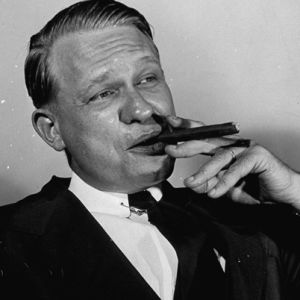
Brief biography of Nicolas Berdyaev

Nicolas Berdyaev (Nikolai Aleksandrovich Berdiaev, 1874-1948), dubbed 'the Philosopher of Freedom,' was a religious idealist and leading Christian personalist. His most important notion, that of mystic freedom, was derived from the ideas of the astute German businessman and great mystic, Jakob Boehme (1575-1624), whom Hegel identified as the first German philosopher.
Boehme of course was the subjective pantheist who took up the willing self, which he said was derived from life-feeling, as the source of all knowledge. For Boehme, god is the Ground of Everything, the willing Nothing that searches for something by means of its will and finds everything within itself. Conflict emerges from the differentiation produced by the will at the core of Nothing, wherefore nature, the outer reflection of the inner discovery, is the image of god, hence a mystical identity of god and nature abhorrent to dualists. The progressive elaboration of the either/or struggle in which one decides for/against god is via the Trinity. The meaning of this moving life is in Christ, and its purpose is to retrieve the lost unity by allowing the fire of love of Christ heart to embrace all. Boehme had a profound influence not only on Berdyaev but on many others including but by no means limited to Descartes, Newton, Goethe, Hegel, Schelling, Blake.
As for politics, Berdyaev was a socialist who studied Marx, but he was not a Communist. He was in fact a foremost critic of the Russian implementation of Marxism (Marxist-Leninism or Bolshevism). Berdyaev was further influenced by such thinkers as Dostoyevsky, Tolstoy, Schopenhauer, Nietzsche, and Jaspers.
Berdyaev studied law at the University of Kiev until 1898, when he was expelled for radical activities. That ended his formal education except for a semester in 1903 under the neo-Kantian professor Wilhelm Windelband at Heidelberg. Neo-Kantian philosophy was largely a "spiritual" reaction to materialism, another 'Romantic' reaction. It was a confused revival of either the human spirit or the transcendental spirit. Berdyaev's philosophy opposed both the human and divine spirit to nature. Berdyaev, like many other non-conformist European thinkers, was not satisfied with "objective" materialism, and attempted to merge Kantian with Marxist thought.
Berdyaev, student of the German idealism, was the best Russian representative of the Christian version of the new spiritualism. It was best represented in Germany by the Christian professor, Rudolf Eucken, who won the Nobel prize for Literature in 1908 over the objections of critics who said philosophy was not literature. Eucken is barely heard of today, and then as a neo-Kantian curiosity. He was disgraced, perhaps unfairly, by his patriotism - his devotion to the German cause in the Great War and especially his endorsement with other notable German scientists and philosophers of the infamous paper whitewashing the German atrocities in Belgium, where he sometimes addressed German soldiers.
The philosophy of neo-Kantian Christians was more or less a subjective philosophy of life, somewhat vague and obscure, one might say 'romantic' - Eucken was criticized for his indefinite Christian "activism," while Berdyaev's work is sometimes referred to as "impressionistic." Berdyaev attempted to elaborate a coherent philosophy, yet he like other neo-Kantian inclined philosophers rejected systematic or mechanistic thought in favor of a dynamic dialectic. He emphasized the freedom of the individual. He therefore was not averse to accepting the tag "existentialist" when the pop-culture sobriquet was eventually applied to him.
Berdyaev had welcomed the Russian Revolution of February 1917, but he detested the policies of the Bolsheviks who seized power in October. Despite his opposition, he was in good graces with the Revolutionary government for awhile. In 1919 he founded the Free Academy of Spiritual Culture, and he became professor of philosophy at Moscow University (1920). However, in 1922, he and more than 100 other non-Marxist exiles were expelled from the Soviet Union for refusing to embrace "orthodox" Communism - they could only return to Russia on pain of death.
Berdyaev and other exiles in Berlin founded the Academy of Philosophy and Religion. He transferred the Academy to Paris in 1924 and soon became France's leading Russian émigré. He founded PUT - the Way - (1925-1940), dedicating the religious-philosophical journal to criticism of Russian Communism. He was Editor-in-chief (1924-1948) for the YMCA-Press in Paris, the main outlet for Russian religious philosophers.
For Berdyaev, truth is not the product of rational inquest but comes from a transcendental light. By virtue of the transcendental light human beings can penetrate environmental confusion and arrive at the truth. He prophesized the advent of a progressive era of divine-human "creation."
The reader no matter how "highly" educated will recognize the fact that the fundamental revolutionary notion mentioned above is timeless. Berdyaev's song is relatively modern and it is somewhat unique in the expression of its truth. We shall listen to a phrase or two, and return when we will with our reflections:
"The idea of the existence of eternal principles of life has a double significance. It is has positive significance when freedom, justice, the brotherhood of men, the supreme value of human personality as that which must not be turned into a means to an end, are acknowledged as eternal principles. And it has negative significance when relative historical social and political forms are made absolute, when concrete historical institutions, represented as organic, are given the prestige and authority of sacred things, as, for example, monarchy or some particular form of property.
"It can be expressed in this way, that the eternal principles of social life are values which can be realized in subjective spirit and not concrete forms which can be realized in the objectivization of history. The conservative tendency of the organic theory of society which defends the sacred character of concrete historical institutions cannot be recognized as Christian, not only because it contradicts Christian personalism, but also because it contradicts Christian eschatology. In the objective historical world there are no sacred things which can be transferred to eternal life; there is nothing worthy of eternal life, and for this reason there exists a moral obligation that the world should come to an end and be judged by a higher judgment. Organic theories of society are anti-eschatological; there is a false optimism, a reactionary optimism in them." (1)
(1) Slavery and Freedom by Nicolas Berdyaev, New York: Scribner's 1944
|