 Radical constructivism would relieve us of so-called reality
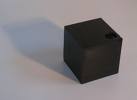
“A reliable description of the behavior emanating from the box may suggest it has been whitened, but nothing about the black box and our relationship to it has changed. It remains unopened and openable, provisional, as black as ever. Knowledge gained from using this model is based in profound ignorance. One cannot, therefore, insist on rightness and should tread warily, respecting the different view of others.” article on ‘Cybernetics’ in Encyclopedia of Science, Technology and Ethics.
SOROSIAN I. RADICAL CONSTRUCTIVISM
The everyday reader may be somewhat familiar with the age-old controversy over the usual philosophical dichotomies, such as mind and body to begin with, and between subject and object, self and world, ideal and real, mind and matter, and the like; but s/he may be unfamiliar with the Constructivism label placed on the old bottles, a new name for the academic approach that generally emphasizes the subjective side of the divisive debate, a side that was strangled in Russia in favor of materialism even though many of the Russian Constructivist artists were Bolsheviks. Therefore let it be known that so-called Constructivist thinkers in the West have built up a constructive ideology of knowledge, an epistemology, or rather an anti-epistemology, called Constructivism. In sum, whatever we know is manmade or constructed, and nothing else, including the objective nature of man the maker, not to mention the self, can really be known. Our ideologies, sciences of ideas and of things indicated by ideas, our ways of actively looking at the world and our principles of behavior, are mental or moral constructs. Therefore Constructivist educators, for example, encourage students to actively construe things as working hypotheses rather than learn everything passively by rote, a constructive approach that was once limited more or less to the elite. Reactionary teachers have raised objections to “anything-goes constructivism,” insisting that traditional restraints must be observed, for nature and society does and must set conditions on what anyone can learn.
Postmodern artists do not call themselves Constructivists today, as did certain painters and installation artists of the revolutionary Russian avant-garde. Yet there are a number of constructive thinkers who have embraced the Constructivism label for what it’s worth. For example the highly esteemed cyberneticist and cognitive psychologist Ernst von Glasersfeld has almost milked the construction metaphor dry with his so-called Radical Constructivism. Mind you, first of all, that he could give a hoot whether we know and agree with his Radical Constructivism or not: he merely offers his conceptual construction as a “metaphor” for us to take it or leave it at will – come to think of it, we cannot think without metaphors.
In his 1970 paper, ‘Cybernetics, Experience and the Concept of Self,’ at least Professor Glasersfeld’s self-construction, based on the perennial myth of the enduring-I, seems radical enough: “If the self, as I suggest, is a relational entity, it cannot have a locus in the world of experiential objects. It does not reside in the heart, as Aristotle thought, nor in the brain, as we tend to think today. It resides in no place at all, but merely manifests itself in the continuity of our acts of differentiating and relating and in the intuitive certainty we have that our experience is truly ours.” Yet his constructivism is not as radical as he construe s it, for while dabbling at length in ambiguities, he carefully plants an objective hedge around his subjective constructivism, attributing obvious physical constraints to his inability to walk through his desk as if it were not there; even so, he claims those restraints are not due to the independent existence of his desk itself but to the “particular distinctions” that his “sensory system” enables him to make.
Inasmuch as we original thinkers reject the traditional notion of truth, that the truth is out there, objectively speaking, for our knowing, as long as we take our revolutionary notions seriously and refuse to perjure ourselves by claiming that any one theory of truth including our own is true , our meaning of the term ‘radical’ vaguely coincides with Professor Glasersfeld’s. Of course our tolerance does not extend to the traditional notion of truth, just as Luther’s tolerance did not extend to the truth as the Church sold it. Professor Glasersfeld admits that the constructivist revolution is frightening: “To relinquish the inveterate belief that knowledge must represent something that lies beyond our experience is, indeed, a frightening step to take. It constitutes a feat of de-centering that is even more demanding than the one accomplished by a few outstanding thinkers in the 16th century who realize that the earth was not the center of the universe.”
Everyone used to need physical and metaphysical grounds to stand upright on, with feet planted on earth and head in the heavens. But now the substances we depended on have been pulled out from under out feet. God is dead; Nature is dead; Existence is dead. If there is any heaven left presided over by traditional authorities, Constructivism would relieve us of same. What could be more radical than that?
The word ‘radical’ is rooted in ‘root’, meaning the origin of a thing or of the universe itself, an origin generally thought of as something pristine, the true nature of a thing, or perhaps as the first cause or self-mover unstained by its effects. Just what that is, we do not really know, although Gnostics claim to know God the Creator, for the pure principle is obscured by a very long and complex history. As for radical people, we think radicals, whether they stand on the left or the right or in between somewhere, are those persons who would somehow liberate us from natural or social constraints; otherwise we would pay them no mind. It appears that radicals of both wings have total freedom in mind; but their final freedom or utopian outcomes are in effect totalitarian states, where freedom is total obedience, supposedly voluntary obedience instead of unwitting compliance, utopias no doubt intentionally representing the natural domination of the race at its origin, before humans became self-conscious of their subjective struggle against objective constraints.
Mr. Glasersfeld, in his ‘Introduction to Radical Constructivism’, informs us that Giambattista Vico was “the first true constructivist,” for Vico answered, way back in 1710, “the main question which radical constructivism attempts to deal with,” which is, “If…our experience can teach us nothing about the nature of things in themselves, how, then, can we explain that we nevertheless experience a world that is in many respects quite stable and reliable?” Professor Glassersfeld interprets Vico’s answer: “As God's truth is what God comes to know as he creates and assembles it, so human truth is what man comes to know as he builds it shaping it by his actions. Therefore science (scientia) is the knowledge (cognitio) of origins, of the ways and the manner how things are made. Vico's battle cry ‘Verum ipsum factum’ – the truth is the same as the made (factum and ‘fact’ both come from the Latin facere, to make!) – has been quoted quite frequently since Vico was rediscovered in our century as a cultural historian and a philosopher of history. His revolutionary epistemological ideas, however, are rarely mentioned, let alone explicated. According to him, the only way of "knowing" a thing is to have made it, for only then do we know what its components are and how they were put together. Thus God knows his creation, but we cannot; we can know only what we ourselves construct.”
We have scanned a number of the constructivist professor’s papers for further mention of God to no avail, although Giambattista Vico is mentioned therein many times. Apparently there is no room for the radical notion at the very root of Vico’s own philosophy of history, whose principle is Divine Providence, in the professor’s Radical Constructivism. Giambattista Vico, whose father taught him to be self-taught when he was kept home from school due to an injury at age 7, is considered to be an original thinker because of his profound influence on philosophers after him, particularly those who disagreed with the cogito ergo sum that Rene Descartes was so sure of, as if his rationalization were the metaphysical principle of all human truths. Of course Descartes proved that God exists, but God might as well not have existed for all the good so much lip service did anyone in those days. Vico accused Descartes of being unoriginal, of concealing his sources, gathering “the fruit of that plan of wicked politics, to destroy completely those men through whom one has reached power.” Even worse, “Descartes has done what those who have become tyrants have always been wont to do. They came to power proclaiming the cause of freedom. But once they are assured of power, they become worse tyrants than their original oppressors.” Vico humbly replaced Descartes’ cogito ergo sum, “I think therefore I am,” with his own principle, ‘verum et factum convertuntur’, “the true and the made are convertible,” or ‘verum esse ipsum factum’, "the true is precisely what is made.”
Mind you that Vico’s ambition was to reconcile “the best philosophy, that of Plato made subordinate to the Christian religion,” therefore we imagine that foolishness counts for more than human wisdom when the fools concerned place their faith in Jesus the Christ – we think the author meant that divine revelations may be better known to the uneducated than to the learned men whose commonsense has been converted into nonsense. Vico dismissed Descartes' notion that clear and distinct ideas are the source of truth: "The mind does not make itself as it gets to know itself, and since it does not make itself, it does not know the genus or mode by which it makes itself." Vico was moved by his Maker to subordinate man’s so-called essential nature, his rational power, to the providence of the only being that conforms to the self-made, creator-creation principle; namely, the Supreme Being, or if the pagan term is preferred, God. In other words, God is the only true Constructivist. Since man is made in God’s image, he can know his own works, but he cannot know truths except by images or representations. Indeed, humankind has declined from the original purity of the singularity. Effete and meaningless rationalizing rules the academic world with artificial, pedantic constructions. Abstract thinking instead of imaginative action wearied Vico. Abstraction was a “vice” to which we are condemned, as far as he was concerned, in marked distinction to the power of "construction," which resides only in God. Loving utility was the principle of Vico’s ethics. He proposed three cures for the alienation from unity, the last one being destruction followed by a return to the age of gods.
It appears that Mr. Glasersfeld has no God other than the autonomous self to perfectly know what has been wrought. Mr. Glasersfeld thinks that his radical perspective, which happens to be neo-Darwinian, has in fact freed him from conventional ignorance, therefore he belongs to the minority rank, that of original or uncommon thinkers: “The only aspect of that ‘real’ world that actually enters into the realm of experience, are its constraints…. Radical constructivism, thus, is radical because it breaks with convention and develops a theory of knowledge in which knowledge does not reflect an ‘objective’ ontological reality, but exclusively an ordering and organization of a world constituted by our experience. The radical constructivist has relinquished ‘metaphysical realism’ once and for all, and finds himself in full agreement with Piaget, who says: ‘Intelligence organizes the world by organizing itself.’”
Once radical constructivism has freed us from conventional thinking, which has at its root the notion that we are victims of our environment, we can be fully responsible for our behavior: “One need not enter very far into constructivist thought to realize that it inevitably leads to the contention that man, and man alone, is responsible for his thinking, his knowledge and, therefore, also for what he does. Today, when behaviorists are still intent on pushing all responsibility into the environment, and sociobiologists are trying to place much of it into genes, a doctrine may well seem uncomfortable if it suggests that we have no one but ourselves to thank for the world in which we appear to be living. That is precisely what constructivism intends to say… We build that world for the most part unawares, simply because we do not know how we do it. That ignorance is quite unnecessary…. For constructivists, all communication and all understanding are a matter of interpretive construction on the part of the experiencing subject and, therefore, in the last analysis, I alone can take the responsibility for what is being said on these pages.”
Now all that might fit nicely into the prevailing ideology of radical individualism, that if something goes wrong, then it is the individual’s fault, if only the person speaking, the almighty constructive subject, were not a plural “we” instead of a solipsistic subject. How we as perceptive, windowless monads are to communicate with one another let alone act on one another remains to be seen after sturggling through the first few pages of Leibniz' essay on monads. Perhaps constructive cyberneticists or behaviorists will heat up the black box that absorbs all colors, that it might turn brilliant white, bringing out all colors in equal intensity. Or, to dignify a single puppet master, we might go along with the status quo as if this were the best of all possible worlds. Or perhaps we may follow Malebranch, and presume that our behaviors are merely occasions of God’s unfathomable pulling of invisible strings every which way behind the scenes instead of an illusory complex of natural causes and effects including the causes and effects of self-made men. Or, instead of counting on millions of years of evolution, we might prefer to take responsibility as a WE, and take a quantum leap to faith in order to overthrow the power elite who would rather have us blame ourselves for our faults instead of them, and construct a TOTAL for ourselves to identify with, in sum, a Utopia or Heaven on Earth. WE would then be Radical Constructivists. I for one have faith in indefinite Nothing, for Nothing is perfect.
|