Can the new messiah revive the commercial spirit?
Economic downturns provide Christianity with an opportunity to bring more sheep into the fold and to further solidify itself through the demonstration of its virtues, especially the cardinal virtue of charity that is love, the universal love that calls for sacrificing selfishness, for voluntarily sharing the good things of life, including the spreading of material wealth.
In Rome, Pope Benedict XVI called for solidarity in the face of uncertainty. The customary economic selfishness that led to the crisis simply would not do to resolve it: "If people look only to their own interests, our world will certainly fall apart."
‘The Local – Germany’s News in English,’ reported on December 25 that Germany’s main Christian churches lambasted unbridled greed and the capitalist system for the global financial crisis. Catholic and Protestant officials worried that the economic downturn, caused by the selfishness of the privileged few, would increase the suffering of the world’s people. Bishop Wolfgang Huber, head of the Evangelical Church in Germany hoped people would stop worshipping money, and would show solidarity with needy people. Robert Zollitsch, head of the Catholic Conference of Bishops in Germany, questioned society’s priorities, and Munich’s Archbishop Reinhard Marx warned that an economic system which was no longer people-oriented destroyed society’s fundamental fabric.
The British press reported that religious leaders in the United Kingdom devoted Christmas sermons to the global downturn. Churchmen said that recessions offered spiritual and moral advantages to people. Cardinal Cormac Murphy-O'Connor, Archbishop of Westminster, claimed that the "breakdown of trust" presented an opportunity for people to reconsider their priorities and decide what constituted a good life and a good society, which for him would be a more personal and humane life. "One of my hopes is that you and I and people everywhere will be able to build communities based on trust, places more like villages than cities, where neighbours have names and faces, where their concerns gradually become our concerns. My dream is of a society that becomes more deeply human, more satisfying, more hopeful.” Recent examples of "spectacular" misbehaviour by financiers would make it very difficult to rebuild trust in the global economic system, he noted. The millions of people let down by the spectacular misbehavior of financial were "deeply anxious" about the future and it would be difficult to rebuilt their trust in economic globalism. The market economy might be necessary to our survival, he said. "but we have to remember that it is a system governed by people, not some blind force like gravity….Those who operate the market have an obligation to act in ways that promote the common good, not just in ways that promote the interests of certain groups.”
Dr John Sentamu, Archbishop of York, flagellated financiers and all those who would enrich themselves at their poor neighbours' expense. "True charity,” he preached, “repudiates the idea of personal gain as a result of lending money to make ruthless gain - usury - bringing about permanent misappropriation and enslavement. Clearly the way to come closer to God is to be generous and honest towards our fellow human beings.” He drew an analogy between the current economic fallout and the Nazi bombardment of England: “In the present economic crisis we need to rediscover that spirit of togetherness that helped the British people during the Second World War to stand together in the face of food rationing and the Blitz.”
Dr Rowan Williams, Archbishop of Canterbury, who had previously criticized Prime Minister Gordon Brown’s economic salvation prescriptions, likening them to an addict returning to a drug, preached charity as well: People must “care for those who bear the heaviest burdens in the wake of our economic crisis - without waiting for the magical solution, let alone the return of the good times." he said. People should not waste time waiting for "larger-than-life" heroes to bring comprehensive solutions to the ills of the world. Relief from the crisis will come through "small and local gestures" from individuals, "Our personal involvement in prayer and giving is utterly essential, whatever pressure we may rightly want to bring to bear on governments and organisations.” He too saw a silver lining in the crisis, claiming that the credit crunch was a welcome "reality check" for a society driven by unsustainable greed.
The Bishop of Monmouth’s (Wales) Christmas Sermon noted that “When the world is in a mess, people look for a Messiah. Our American brothers and sisters have great hopes in their new President-elect and even our own Prime Minister is expected by some to save the world, but we all know in our hearts that the mess we are in, is likely to get worse…. People look for the Messiah, the saviour, but they look in the wrong places. They will not find him in the White House or even in Number Ten, Downing Street. They will find him in a stable and on a cross and they will find his teachings in the Christian faith…. We live in a secular society where people feel they have no need of God. Those who live hand-to-mouth have a much greater spiritual awareness. We know that in times of war, recession, natural disasters and national calamity, people wake up to the reality that all that we have and life itself is dependent upon God. Their ears may be open to the message that the world cannot continue as it is – we need to change the way we live. We need to change the way we trade, we need to change the ways we create energy, we need to change the ways we exploit poor people and animals. We need to stop killing one another and proclaim the message of Christmas, ‘Give glory to God in the highest and on earth may his peace rest on all people of good will’.”
Across the pond, the ‘Black Christian News’ reported on December 14, 2008, that American churches had been filling up as the economy worsened. A “sudden crush” of worshipers at the evangelical Shelter Rock Church in Manhasset, New York was reported. The Mars Hill Church in Seattle picked up an additional 1,000 attendees during the year. The Life Christian Church in West Orange, New Jersey, reported that prayer requests for job security had doubled. Catholic and mainline Protestant churches nationwide reported somewhat increased attendance and more requests for assistance, while evangelist pastors, who preach the literal authority of scripture and spiritual rebirth, said religious interest was booming. "It's a wonderful time, a great evangelistic opportunity for us," declared Reverend A.R. Bernard, pastor of the Christian Cultural Center in Brooklyn. "When people are shaken to the core, it can open doors." The report said that the evangelical excitement was rooted in the communal belief that the big Christian revivals of the 19th century, known as the second and third Great Awakenings, were touched off by economic panics. "We need to leverage this moment,” said Reverend Don MacKintosh, a Seventh-day Adventist and religious broadcaster in California said, “because every Christian revival in this country's history has come off a period of rampant greed and fear. That's what we're in today - the time of fear and greed." Reverend McKenzie Pier, president of the New York City Leadership Center, an evangelical pastors' group in New York celebrating the 150th anniversary of the Businessmen’s Revival that started during the Panic of 1857 and led to the institution of the Salvation Army, the anniversary with a three-day conference at the Hilton New York, announced that "The conditions of the Businessmen's Revival bear great similarities to what's going on today," he said. "People are losing a lot of money."
The ‘Church Hill Annapolis’ reported on December 21, 2008, that “Whatever you think of organized religion, recent events - from Wall Street to the Illinois governor's office - suggest a lot of people would do well to remember simple concepts like humility, decency and the difference between right and wrong, things one might learn in Sunday school.” Rabbi Moshe Weisblum of Congregation Kneseth Israel in Annapolis said people just wanted comforting words, while Rev. Henry Green of Heritage Baptist Church in Annapolis offered that “people are looking for something that's real and of value now. I mean, we've gone through a whole period of time now where people have been living on glitz and glitter. They've watched the Bernie Madoffs and they've watched Lehman Brothers. They've watched the whole catastrophe on Wall Street, and they've witnessed the companies like Constellation Energy that are just playing with money, playing with our money. And they realize that we've got to make some changes."
A December 21, 2008 article in ‘The Republican’ revealed that “Americans are turning to religion for solace and support in greater numbers.” Vickie L. Riddle, director of Catholic Charities for the Roman Catholic Diocese of Springfield, said that some of the Diocese’s regular donors were now the ones who need help. Temple Beth El, a conservative Jewish congregation in Springfield, is using the crisis to emphasize basic religious themes, while also trying to help individuals with urgent daily needs Temple Beth El Rabbi Amy Katz said, "People very much want to help." Rev. Catherine A. Munz, pastor at St. John's Episcopal Church in Northampton, said that "When horrible things happen, we need to turn the focus on where God is working in the world. A lot of people out there have lost jobs, incomes, but we get hope from God." Rev. Joseph M. Soranno, the pastor at St. Cecilia’s in Wilbraham, reported that parishioners were arising to the depressing occasion. "They might be watching their own pocketbooks, but they have a great sense of spiritual generosity as well."
On the other hand, Rebecca Boyle’s article in ‘Fort Collins Now,’ entitled “God and the Economy,” reported that church attendance had not swelled as much in Fort Collins as it had in other parts of the country in response to the downturn. Northern Colorado seemed to be more insulated from economic ups and downs than others, she said, and any increase in the ranks and in requests for charity might fairly be attributed to the usual holiday increase.
Rev. Larry Christensen, pastor of St. Elizabeth Ann Seton Catholic Church in Fort Collins, said that his parishioners do not seem to be in woeful situations; weekly collections, the contributions Catholics make to the parish, are steady. “I might toss out that we’re going through tough times economically right now in the world. But I don’t give a whole lengthy speech about economics, because it doesn’t fit in and I wouldn’t know what I was talking about anyway.” Christensen grew up during World War II and remembers lines around the block at church and standing-room only crowds. On Sept. 11, 2001, he was on sabbatical in Italy, and remembers people flocking to church then, too.
Ms. Boyle referred to a widely quoted study by Texas State University macroeconomist David Beckworth, ‘Praying for a Recession: The Business Cycle and Protestant Religiosity in the United States,’ which found that, “In all cases, unemployment is positively related to weekly attendance at religious services and is highly significant.” The poll taken indicated that attendance at evangelical churches was boosted by recessions by about 50%, in contrast to mainline churches, whose attendance continued to decline. Mr. Beckworth attributed the increase in evangelical churches to their conservative or authoritative orientation; liberal churches, he opined, did better during good times due to their flexible or permissive orientation. Therefore, “To the extent, then, increased membership is an objective of these denominations, only leaders of evangelical denominations should be praying for a recession,” he opined.
We add that Mr. Beckworth offered an alternative hypothesis for the higher attendance during recessions among evangelicals, the nation’s largest religious group since the 1990s: they are on the whole less affluent than mainline church members hence they depend more on their church communities for support during tough times. They are more likely to work on Sundays in good times, and that might explain a slower rate of growth among evangelical churches in non-recession years.
#
Judeo-Christianity worships absolute power in the form of an omnipotent deity, and politics distributes that power in one way or another. Although church and state may be conveniently conceived of as separate institutions, church has its politics and state has its religion. The assertion of a relationship between corruption and poverty, and the inclination of unemployed poor people to turn for solace and justice to a religious politic of resentment that blames the rich and gives preference to the poor, is common to economic downturns. For instance, we quote Justin Kaplan’s biography of America’s pioneer muckraker, Lincoln Steffens.
“The depression that began in 1893 and lasted for four years had the same formative meaning for Steffen’s generation that a later, longer depression had for the generation coming to social awareness in the 1930s. The depression of 1893 dramatized corporate irresponsibility, the appalling gap between the rich and the poor, the failure of government to regulate an economy run wild. Instead of the old, scattered patterns of reform it encouraged the rough and inconsistent unity of progressivism.”
The middle-class muckrakers “revered sociology and science, but their stance and rhetoric were moralistic, evangelical, millennial, and echoed the pulpit as much as the laboratory, the lecture hall and the soapbox. Scolded by a critic for his ‘Jesus complex,’ Upton Sinclair replied, almost gratefully, ‘that the world needs a Jesus more than it needs anything else.’ His answer was consistent with the fact that the muckrakers claimed Jesus as the greatest of their romantic antecedents….”
Muckraker Upton Sinclair eventually ran for governor in California, where he got a majority of the votes in the primary, but lost the election 1,138,620 to 879,537. His campaign emblem was a busy bee; the economic plank for his ‘End Poverty in California’ campaign was simply “production for use,” in contrast to wasteful make-work and monetary stimulus programs. Instead of employing people, for example, in digging channels in the Los Angeles River, which are bound to fill up with sand again, or instead of sending old people a pension, he thought it best to employed the unemployed productively, in non-profit cooperatives run by experts engaged by the state; in return for their efforts, workers would receive a new form of money, scrip to purchase the products produced.
“We must summon the courage to take the wild beast of greed by the beard. We have to say that human lives and human welfare are first,” Mr. Sinclair declared. For his supply-side, non-profit, humanist notion, he was called a fascist and a communist. He said President Franklin Delano Roosevelt told him he would speak out in favor of productive use, but the president never did, and that effectually caused him to lose the California gubernatorial election – he said he was glad to lose it, in the end, because a businessman had bought a gun and planned to kill him if he won.
“The muckrakers stood at Armageddon,” recounts Kaplan, “battling for the Lord, and in their dedication to moral absolutes they tended to see political and economic problems in terms of a timeless struggle for man’s soul and to pay insufficient attention to the shifting character of institutions and institutions. They and their political counterparts spoke with fine theological inexactitude of sin, guilt, redemption, conversion, adopted revivalist techniques and were often grossly overoptimistic – the muckrakers expected too much of muckraking by itself alone. When Theodore Roosevelt decided that the time had come to part company with his journalistic allies, it was altogether fitting that he should go to a common well of inspiration, John Bunyan’s Pilgrim’s Progress, for his 14 April 1906 attack on the ‘Man with the Muckrake.’ ”
Indeed, the muckrakers then as now were exposing corruption with a vengeance, driving the stake into the shamed heart of the rotten apple. Teddy thought it best to strike a less strident, more moderate tone, to stop whining and blaming, and to accentuate the positive to achieve progress:
“In Bunyan’s “Pilgrim’s Progress” you may recall the description of the Man with the Muck-rake, the man who could look no way but downward, with the muck-rake in his hand; who was offered a celestial crown for his muck-rake, but who would neither look up nor regard the crown he was offered, but continued to rake to himself the filth of the floor. In ‘Pilgrim’s Progress’ the Man with the Muck-rake is set forth as the example of him whose vision is fixed on carnal instead of on spiritual things. Yet he also typifies the man who in this life consistently refuses to see aught that is lofty, and fixes his eyes with solemn intentness only on that which is vile and debasing. Now, it is very necessary that we should not flinch from seeing what is vile and debasing. There is filth on the floor and it must be scraped up with the muck-rake; and there are times and places where this service is the most needed of all the services that can be performed. But the man who never does anything else, who never thinks or speaks or writes, save of his feats with the muck-rake, speedily becomes, not a help to society, not an incitement to good, but one of the most potent forces for evil…. Gross and reckless assaults on character, whether on the stump or in newspaper, magazine, or book, create a morbid and vicious public sentiment, and at the same time act as a profound deterrent to able men of normal sensitiveness and tend to prevent them from entering the public service at any price…. Expose the crime, and hunt down the criminal; but remember that even in the case of crime, if it is attacked in sensational, lurid, and untruthful fashion, the attack may do more damage to the public mind than the crime itself… The men with the muck-rakes are often indispensable to the well-being of society; but only if they know when to stop raking the muck, and to look upward to the celestial crown above them, to the crown of worthy endeavor. There are beautiful things above and roundabout them; and if they gradually grow to feel that the whole world is nothing but muck, their power of usefulness is gone…. To assail the great and admitted evils of our political and industrial life with such crude and sweeping generalizations as to include decent men in the general condemnation means the searing of the public conscience. There results a general attitude either of cynical belief in and indifference to public corruption or else of a distrustful inability to discriminate between the good and the bad…. So far as this movement of agitation throughout the country takes the form of a fierce discontent with evil, of a determination to punish the authors of evil, whether in industry or politics, the feeling is to be heartily welcomed as a sign of healthy life. If, on the other hand, it turns into a mere crusade of appetite against appetite, of a contest between the brutal greed of the “have-nots” and the brutal greed of the “haves,” then it has no significance for good, but only for evil. If it seeks to establish a line of cleavage, not along the line which divides good men from bad, but along that other line, running at right angles thereto, which divides those who are well off from those who are less well off, then it will be fraught with immeasurable harm to the body politic. We can no more and no less afford to condone evil in the man of capital than evil in the man of no capital… No good whatever will come from that warped and mock morality which denounces the misdeeds of men of wealth and forgets the misdeeds practiced at their expense; which denounces bribery, but blinds itself to blackmail; which foams with rage if a corporation secures favors by improper methods, and merely leers with hideous mirth if the corporation is itself wronged. The only public servant who can be trusted honestly to protect the rights of the public against the misdeeds of a corporation is that public man who will just as surely protect the corporation itself from wrongful aggression… More important then aught else is the development of the broadest sympathy of man for man. The welfare of the wage-worker, the welfare of the tiller of the soil, upon these depend the welfare of the entire country; their good is not to be sought in pulling down others; but their good must be the prime object of all our statesmanship. Materially we must strive to secure a broader economic opportunity for all men, so that each shall have a better chance to show the stuff of which he is made. Spiritually and ethically we must strive to bring about clean living and right thinking. We appreciate also that the things of the soul are immeasurably more important. The foundation-stone of national life is, and ever must be, the high individual character of the average citizen.”
More recently, President George W. Bush, a compassionate conservative overheard cursing a muckraker who took him to task, would no doubt agree with at least half of Teddy’s speech. During his first successful campaign for the White House, Mr. Bush named Jesus Christ as his political hero. John McCain, his would-be Republican replacement, might have best followed suit, but instead he idolized Theodore Roosevelt during his failed campaign against Barrack Obama. The latter, an advocate of involuntary i.e. political wealth-spreading, smilingly noticed that one of Teddy Roosevelt’s policies was the exact opposite of the proposal Mr. McCain was putting forward, the abolition of estate taxes. In fact, Teddy’s muckraking speech advocated an estate tax to ensure that society at large is the main beneficiary of accumulating wealth:
“It is important to this people to grapple with the problems connected with the amassing of enormous fortunes, and the use of those fortunes, both corporate and individual, in business. We should discriminate in the sharpest way between fortunes well-won and fortunes ill-won; between those gained as an incident to performing great services to the community as a whole, and those gained in evil fashion by keeping just within the limits of mere law-honesty. Of course no amount of charity in spending such fortunes in any way compensates for misconduct in making them. As a matter of personal conviction, and without pretending to discuss the details or formulate the system, I feel that we shall ultimately have to consider the adoption of some such scheme as that of a progressive tax on all fortunes, beyond a certain amount either given in life or devised or bequeathed upon death to any individual—a tax so framed as to put it out of the power of the owner of one of these enormous fortunes to hand on more than a certain amount to any one individual; the tax, of course, to be imposed by the National and not the State Government. Such taxation should, of course, be aimed merely at the inheritance or transmission in their entirety of those fortunes swollen beyond all healthy limits.”
Of course Mr. McCain intended to relate himself to the moderating spirit of Teddy Roosevelt, which wanted to strike a compromise between the extremes of capital and labor, between greedy robber barons and revolutionary-minded socialists, by reining them in to do good together, especially those inclined to incite revolt against capitalist exploitation and thus overthrow the government altogether. The word was going out from numerous pulpits that, although Jesus gave preference to the poor and castigated the rich, it is evil to damn the wealthy simply for being rich, for many of them are good people who hold wealth as trustees for humankind. One such trustee, Andrew Carnegie, in his June 1889 ‘Gospel of Wealth’, noted that “the poor enjoy what the rich could not before afford. What were the luxuries have become the necessaries of life.” This increase in prosperity he attributed to the capitalist mode of production and to the law of competition: “It is best for the race, because it insures the survival of the fittest in every department. We therefore welcome…great inequality…the concentration of business…in the hands of the few, and the law of competition between these, as being not only beneficial, but essential for the future progress of the race.” Communism had been tried and had failed; it was the industrious workman who ended communism when he said to his lazy workfellow, “If thou does not sow, thou shalt not reap.” The great fortunes heaped up by the few would best be generally employed as capital for the benefit of society instead of being hoarded for the benefit of the few and bequeathed to families: “Why should men leave great fortunes to their children? If this is done from affection, is it not misguided affection? Observation teaches that, generally speaking, it is not well for the children that they should be so burdened.” Taxing away estates would provide an incentive to wealthy individuals to use them well before they die. “The growing disposition to tax more and more heavily large estates left at death is a cheering indication of the growth of a salutary change in public opinion…. By taxing estates heavily at death the state marks its condemnation of the selfish millionaire’s unworthy life…. This policy would work powerfully to induce the rich man to attend to the administration of wealth during his life, which is the end that society should always have in view, as being that by far most fruitful for the people.”
But good works cannot purchase eternal life. Billy Sunday (1863-1935), one of the fastest base runners of his time, placed his faith not in charitable works but in Jesus Christ. He gave up such evils as alcohol and tobacco and playing baseball on Sunday, and he made quite a name for himself as a revivalist converting hundreds of thousands of poor souls to Christianity, and he championed motherhood, womanhood, hard work, cleanliness, and godliness, but he insisted all along that, although high morality and good works might make a better person out of persons, it would never save their souls. Neither books nor all the money in the world will save a soul. Like it or not, there is one and only one way to get eternal life for the soul, and that is through repentance of sin and faith in Jesus Christ.
“You don’t like it? I don’t care a rap whether you do or not,” quoth Billy Sunday. “You’ll take it or go to hell. Stop doing what you think will save you and do what God says will save you. Morality doesn’t save anybody. Your culture doesn’t save you. I don’t care who you are or how good you are. If you reject Jesus Christ you are doomed.”
Billy Sunday’s ‘Onward, Christian Soldiers’ revivals were wildly successful until the United States entered the Great War. Then the lives of soldiers were prayed for and spiritualists vainly tried to contact the souls of the dead. After the war, Americans returned to their sinful ways, to which they added a few sinful ways learned in Europe. Satan, in a word, ran rampant. And then the Great Depression befell. Christians returned to their bibles while godless socialists, convinced that the Protestant god of capitalism was virtually satanic, turned enthusiastically to their moralistic doctrines. Anarchists preferred to repudiate political authority altogether, with bombs if need be.
The United States was saved from revolution by the Second World War, and prospered until greed ran amuck again, to gut the middle class and widen the gulf between rich and poor. Prophets warned of impending doom as usual, but the alarms went unheeded as usual. After all, the poor were better off than the poor were before them. At least they had more bread and entertainment, more junk to consume, more gadgets to distract them, more token wealth to compensate their dream that any poor slob can get filthy rich in America. They had been liberated from puritanical authority, and could commit the sins defined by old-time religion with impunity. It seemed that the gravy train was endless, that prices would go up forever, and that all one had to do is catch up, keep up, then grab some land and stocks to automatically get ahead. But doubt set in again, a sneaking suspicion that something was gravely wrong with the gravy train, that the prosperity was an illusion, that the leaders were misleaders, that the train had runaway and was about to go off track. God works in mysterious ways, and his mysteries are no coincidence. A red flag was raised along the track in the appointment of a Federal Reserve Board chairman, whose main academic interest had been in the economics of the Great Depression. He bespoke himself transparently, signaling that the panic at the top had begun.
The cause of the present economic collapse is attributed, like collapses before it, to a want of regulation; the regulation of greed would naturally be moral. Teddy Roosevelt, in his muckraker speech, warned of the dire consequences of the lack of such regulation:
“The men of wealth who today are trying to prevent the regulation and control of their business in the interest of the public by the proper government authorities will not succeed, in my judgment, in checking the progress of the movement. But if they did succeed they would find that they had sown the wind and would surely reap the whirlwind, for they would ultimately provoke the violent excesses which accompany a reform coming by convulsion instead of by steady and natural growth.”
#
The Hebrew Scriptures are clear about the cause of natural and economic disasters: they stem from a breach of contract, the failure to worship and obey the ethical and ritual prescriptions of the god of tribal unity in order to receive the consideration desired, the land of milk and honey. First and foremost, one must love one’s own tribal god above all other gods. It only follows that all those who love that god should love one another accordingly and therefore behave charitably. Furthermore, although it is quite all right to hate, kill or enslave god’s enemies, everyone should be kind to strangers and slaves.
Now the modern free market economy is essentially corrupted by selfishness and only thrives to the extent that greed is politically organized and regulated by human artifice to avert overt, massive violence. To say that the economic war of all against all somehow achieves its temporal unity from the divine guidance of the Lord’s Invisible Hand must be blasphemy. When things go wrong, literate people consult their bibles to see where they went wrong. Only fools consult economists in dire situations; economists run behind the herd and they do not account for the intangible moral values that cause the statistical dust to be raised to cloud the way, hence the unreliability of their predictions is notorious. When the apocalypse seems nigh, it is best to avoid the economic tables and graphs and to resort to the holy tablets and images to purify oneself for dining at the Lord’s Table. Even professed atheists have been known to hungrily graze on sacred scriptures for enduring values when disasters impend.
The current global financial crisis, which is thus far the symptom of a spiritual and mental disease rather than a physical disaster, has not yet become a life-or-death economic crisis for the overwhelming majority of Americans. Unemployment was recently considered high when it was below 6.5 percent; a few years ago economists used to think that unemployment below 6.5 percent was actually unhealthy for the economy because high demand for labor caused inflation through wage increases. But the unemployment rate is now over 7 percent and might double to 14 percent or more, and the alarming financial losses thus far are motivating more people from all walks of life to turn to religion for reassurance and assistance.
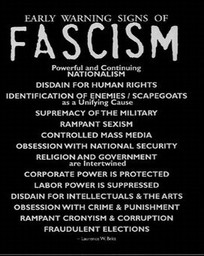
If the downturn becomes downright grave, and the servile majority are let down from the dreams conjured up by public relations firms into prolonged depression, the nation may experience a great awakening or revival led by a charismatic figure. And where spiritual revival is not available or does not avail to voluntarily change the heart so that the legendary good old times might be restored anew from within, the violent minority might have recourse to revolution within, or provoke war without so that total order might be born of the ensuing chaos, with peoples perchance bound into a fasces axe to be wielded, according to the reactionary fuehrer principle, for the sake of expansive living space, or merged into an international collective under the dictatorship of the revolutionary elite.
Friedrich Engels, in his essay ‘On the History of Early Christianity,’ likened the modern working-class movement to the early Christian movement before the Jews of that cult called themselves Christians: “The history of early Christianity has notable points of resemblance with the modern working-class movement. Like the latter, Christianity was originally a movement of oppressed people; it first appears as the religion of slaves and emancipated slaves, or poor people deprived of all rights, of peoples subjugated or dispersed by Rome. Both Christianity and workers’ socialism preach forthcoming salvation from bondage and misery; Christianity places this salvation in a life beyond, after death, in heaven; socialism places it in this world, in a transformation of society. Both are persecuted and baited, their adherents are despised and made the objects of exclusive laws, the former as enemies of the human race, the latter as enemies of the state, enemies of religion, the family, social order. And in spite of all persecution, nay, even spurred on by it, the forge victoriously, irresistibly ahead. Three hundred years after its appearance Christianity was the recognized state religion in the Roman world empire, and in barely sixty years socialism has won itself a position which makes its victory absolutely certain.”
As we have recently discovered from the shocking challenge to the absolute truths of free market capitalist dogma – as if each person did not already know so from our his personal history not to mention ancient history and its perennial philosophy – that nothing is absolutely certain or permanent but death. For all we know, global society may be on the verge of an atheistic socialist revival that will culminate in a virtually godless utopia around the year C.E. 2200. Since workers are becoming also capitalists and capitalists also workers, their corporations gradually being internationally interlocked by a global directorate as their states wither away, the distinction between communist-worker and fascist-capitalist may be rendered moot by the fusion of labor, management, and capitalism in neo-corporatism. Undoubtedly the utopia will be perceived as dystopia by frustrated anarchists, who will eventually emerge from the underground with nuclear devices to dispose to the Blob before it goes where no man has gone before.
Engels’ study of German bible criticism led him to believe that the Revelation of John is the most important resource for understanding the nature of primitive Christianity within its ancient context or “surrounding medium.” But for its emphasis on salvation by faith in the absolute absolution of sin through the one great voluntary sacrifice of the mediating Christ as scapegoat, the Christian revelation was typical of fifteen classical Jewish apocalypses over the previous two centuries, which were drafted when “an absolutely uncritical mixture of the crassest superstitions of the most varying peoples was indiscriminately accepted and complemented by pious deception and downright charlatanism; a time in which miracles, ecstasies, visions, apparitions, divining, gold-making, cabala, and other secret magic played a primary role. It was in that atmosphere, and, moreover, among a class of people who were more inclined than any other to listen to those supernatural fantasies, that Christianity arose.” In John’s Revelation we find no dogma of original sin nor Trinity – Christ like the “seven spirits of God” exists from all eternity but is subordinate to god, and on an equal footing with Moses. 144,000 Jews came first, before heathen, to the throne of God. Sexual prohibitions – fornication – and sacrificing meat to idols, is prohibited. The faithful are adjured to be zealous propagandists, proud confessors of faith, a unrelenting foes against enemies within and without.
“Here we have,” Engels indicated, “neither the dogma nor the morals of later Christianity, but instead the feeling that one is struggling against the whole world and that the struggle will be a victorious one, an eagerness for the struggle and a certainty of victory which are totally lacking in Christians of today and which are to be found in our time only at the other pole of society, among the socialists.” He goes on to say that neither the early Christian nor the socialist movement was made by leaders or prophets: they were a long time coming. The way was apparently paved by many false prophets and factional struggles.
And now the Roman Empire of fascism and the Evil Empire of socialism lay in ruins despite attempts to revive them. Yet the political-economic reign of the protesting capitalism of American Way individualism is threatened anew. And that is no wonder, for it became a new Gilded Age, the Reign of Greed, because ethical religion – especially Christianity, not primitive Christianity but Reformed Christianity – rested on its laurels for far too long. It is as if we have become, or have always been to begin with, our own worst enemy, cursed with the original sin of the selfish individualism that refuses to be the Good; that is, to be absorbed by the One or Total.
Once again a final confrontation between good and evil, presumably represented by the relatively poor masses versus wealthy individuals, seems imminent, at least to fundamentalists, although not quite as imminent as it appears in the Revelation of John, which speaks of things to happen shortly, of the time that is at hand, of the messiah who will come quickly. Many of us would rather put off that time; for, given the corruption prevalent today and the arrogance or the ignorance of guilt of the sinners, relatively few people would be spared by the Terrorist Almighty. Let us then bow our heads and pray for a stay of execution. May the current crisis get just bad enough to be a sufficient warning to all so that ample treasure may be laid up in heaven pending the Lord’s judgment, i.e. doom.
Max Weber’s ‘The Protestant Sects and the Spirit of Capitalism’ describes a time (1904) in the United States, when “the question of religious affiliation was almost always posed in social and in business life, which depended on permanent and credit relations.” During a long railroad trip, a traveling salesman told Weber, ‘Sir, for my part everybody may believe or not believe as he pleases; but if I saw a farmer or a businessman not belonging to any church at all, I wouldn’t trust him with fifty cents. Why pay me, if he doesn’t believe in anything?’ And it behooved a traveling salesman to carry a certificate of his congregation with him to prove his trustworthiness to prospects. If a sect member “got into straits through no fault of his own, the sect arranged his affairs, gave guarantees to the creditors, and helped him in every way, often according to the Biblical principle, mutuum date nihil inde sperantes.” (Luke VI:35 – to lend expecting nothing in return). When a patient told a doctor he was a member of the Baptist Church, that was to say, ‘Don’t worry about the fees.’ A difference in creditworthiness could be drawn between a sect where one was admitted by ballot after an examination and an ethical probation period, and a mainstream church into which one was born “and which lets grace shine over the righteous and unrighteous alike…. Affiliation with the church is, in principle, obligatory and hence proves nothing with regard to the member’s qualities. A sect, however, is a voluntary association of only those who, according to the principle, a religiously and morally qualified.” Furthermore, “Expulsion from one’s sect for moral offenses has meant, economically, loss of credit and, socially, being declassed.”
Weber observed that the ethical principles of the Protestant sects were adopted by secular associations, membership in which was an indication of moral worth. A man might display an emblem of his association: “The badge in the buttonhole meant, ‘I am a gentleman patented after investigation and probation and guaranteed by my membership.’ Again, this meant, in business life, above all, creditworthiness.”
Aspiring individuals then had to prove their moral worth to their religious and secular sects, and this proof when maintained profited them not only in heaven but here and now. Honestly really was the best policy in the good old day when only the pure were qualified to be seated at the Lord’s Supper. Individuals were held accountable by their associations, and excommunication could ruin a man. Government intervention could be kept to a minimum when dealing with one’s associates. So Weber gives the Protestant sects credit for the spirit of creditworthy capitalism.
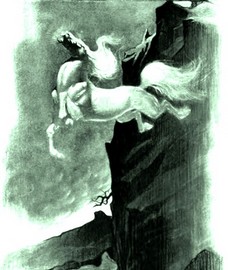
But today’s religious capitalism is more individualistic and spiritually anarchic. The liberation of the individual that puts its existence before being has spread disrespect and flagrant incivility instead of the personal responsibility advertised. The atom would be an atom bomb with nothing to morally regulate and thus dampen its expansion. The individual would now actually be the omnipotent god his forefathers worshipped: the automaton would ideally have self-regulating, autonomous, absolute personal power. Of course this individual would exist forever and ever if only he could have his way. Absolute power brooks no resistance. But without resistance there is no willing individual defined, hence the quest for absolute power is bound to corrupt him, and to ultimately destroy him when he leaps off the cliff only to discover he cannot fly. Society is bound to disintegrate when everyman believes he is a little god or king. Everyman knows that but he tends to fly off the handle anyway.
Since the existence of other little centers of power is undeniable, each one might imagine that everyone will benefit from greed and that all shall profit by overcharging one another providing there is ample credit, a false credit no longer based on faith in reality. “Know Thy Limits.” Sooner or later, only the gods know when, the bubble will burst. The delusion of grandeur shall convert to the delusion of persecution on the flip side of the ambiguous coin when pessimism gets out of hand. Neither unrepentant man nor his corrupted government shall avail. His world shall turn to ruin until the ascetic or self-sacrificing temper is recovered and its produce turned to good cause. Therefore the charismatic leader preaches universal sacrifice, says that everyone will have to give some skin.
Even then, beware, for virtues are always attended by vices: the practice of puritanical thrift is attended by the sort of selfishness, intolerance and hatred that make involuntary charity necessary. The love of one’s own kind of people is usually too narrow, based on the hatred of other kinds. Many people feel they have sacrificed enough already to the power elite: their savings, their homes and their jobs. They want to save their skins, not lose more skin. Some of them would make drums out of the skins of the deregulators. Yes, we already hear murmuring for revolution and prophecies of the downfall of the capitalist republic instead of the return of business as usual. All the objective resources available during the booms are still there, the labor, the land, and the capital, yet the subjective spirit is flagging for want of enduring universal values. It is feared that frightened free market capitalists have done an about face, and are now embracing socialism or even communism, but the trend resembles more a movement of the “third way”, the catholic corporatist compromise of capital, labor, and management, so we are reminded of the illiberal fascist reaction to liberal democracy.
Benito Mussolini said that “fascism can only be understood when considered in relation to its general attitude, which is a spiritual attitude. Fascism sees in the world not only those superficial, material aspects in which man appears as an individual, standing by himself, self-centered, subject to natural law, which instinctively urges him toward a life of selfish momentary pleasure; it sees not only the individual but the nation and the country; individuals and generations bound together by a moral law, with common traditions and a mission which suppressing the instinct for life closed in a brief circle of pleasure, builds up a higher life, founded on duty, a life free from the limitations of time and space, in which the individual, by self-sacrifice, the renunciation of self-interest, by death itself, can achieve that purely spiritual existence in which his value as a man consists.”
If the current spiritual disease persists much longer, if the messiah is false and fails and the nightmarish wishes of pessimists come true , people will fondly remember the gilded ages of old and yearn all the more for the return of yet another reign of greed, as bad as that might be.”
# #
|