 The WPA provided a weekly salary for 6,500 scribblers, including beginners, during the Great Depression.
During the Great Depression, the Work Projects Administration employed about eight-million people, mostly in manual labor on public works projects such as bridges, roads and parks, but the WPA also provided for The Federal Arts Project, under which 6,500 writers, some of them beginners, were given jobs by the Federal Writers' Project (1936-1940) at an average salary of $20 per week. Some of those writers are now famous names such as Ralph Ellison, Nelson Algren, Saul Bellow, and Margaret Walker.
The WPA writers were not supposed to work on their own projects while on federal time; of course, many of them did just that: if a worker can complete the normal work in half the usual time, why not? why must the advantage go to the employer who should be paying him double? As for the official work, the Federal Writers' Project is best known for the state guides it produced. A less well-known, hidden treasure is preserved by the Library of Congress in the form of 10,000 life stories, interviews with people from all walks of life recorded by the writers. Samples of those interviews may be viewed on the Internet, at the site 'Voices from the Thirties.' (Copyright 1980 Ann Banks). Here is an excerpt from Ralph Ellison's April 30, 1939 interview with a man at Eddie's Bar in Manhattan, in response to the question,"Do you like living in New York City?"
"Ahm in New York, but New York ain't in me. You understand? Ahm in New York, but New York ain't in me. What do I mean? Listen. I'm from Jacksonville Florida. Been in New York twenty-five years. I'm a New Yorker! Yuh understand? Naw, naw, yuh don't get me. What do they do; take Lenox Avenue. Take Seventh Avenue; take Sugar Hill! Pimps. Numbers. Cheating those poor people out a whut they got. Shooting, cutting, backbiting, all them things. Yuh see? Yuh see what Ah mean? I'm in New York, but New York ain't in me!" (Transcript #21020403)
Many of the persons interviewed were dirt poor, but they did not mind talking to the federal writers since the writers themselves were on relief. The writers were fascinated by the stories of ordinary people. It is hardly surprising that the interviews fostered literary realism in the United States, with its stories from country porch to city stoop, railroad box car to shanty town or jail, and factory to stockyard. Black speech was especially enjoyed. Jazz musicians and prostitutes added special flavor to the mix. Everyone got their story told for a change, and none were too boring to listen to. The natural, first-person character wanted out of the dirty, monotonous industrial closet; the more grotesque or burlesque the character the better, the more real in contrast to standardized man. The alienated and bored butterflies spread their wings. A few found solace in art or in social reform, while others took to crime and business. Many were those who fell under the spell of the hypocritical bourgeois underbelly in Europe in order to lose their suffering selves in organized crime legalized.
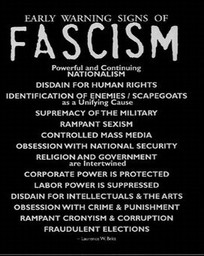
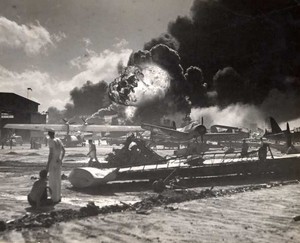
Along came Hitler and Mussolini to save the world from the disastrous consequence of private international capitalism: the Great Depression. Therefore the war to save private greed from totalitarian regimes. Thus was the United States saved from revolution--and revolution was in fact impending.
The Federal Writers' Project came under attack by red-baiters and was halted. The Library of Congress collected and housed the material for our mutual benefit. We shall never know the fate of all those 6,500 scribbling souls. We do know something about the famous ones, and it will behoove us to read their poems, stories and novels from time to time, for that was a crucial time in our history, a time when dislocated Psyche struggled desperately for reunion in that missing truth called the Self.
T
|