A Provocative 1929 Debate
A number of thought-provoking essays appeared in the monthly editions of the Forum just prior to the Crash. Editions of the few years before and after 1929 were rather mediocre reading in comparison. The authors of the various articles that appeared in the periodical did not see the panic coming and were not aware of the gravity of the collapse until the Great Depression set in with a vengeance. Yet they seemed to sense that some sort of disaster was brewing in the heady, bewitched days approaching the nebulous summit. As conditions worsened, several writers objected to the solution being pressed on the world by Mussolini and Hitler.
The Forum presented regular debates by way of essays on controversial topics. The topical question put forward in the January 1929 debate was, "Has democracy broken down?"
The Reign of Mediocrity
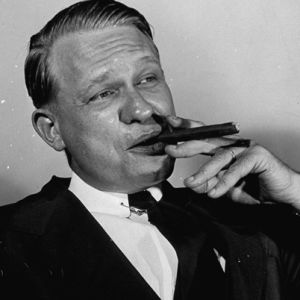
In his essay, ‘The Reign of Mediocrity,' distinguished historian Will Durant, co-author with his wife of the voluminous History of Civilization, claimed that municipal government was so corrupt that cities were being run by crooks. What’s more, he said voters were getting the government they deserved.
"These discourteous rumors are here repeated without intentional offense," wrote Durant. "Every city has a right to its own choice in these matters, and of tastes there is no disputing. Doubtless the gentlemen who rule these municipalities are as honest and capable as may be compatible with their reelection."
Democracy has missed its mark, that of giving sovereignty to the people, Durant averred. That might be forgivable if only it had bestowed on them some "ability, intelligence, and honor." However, "There never was, in the annals of states, nor even in the history of political theory, any form of government so hostile to genius as democracy.... The first principle of American politics is that mediocrity is an open sesame to public office, and that exceptional education or capacity is undesirable in elected persons."
The United States did enjoy some democracy, Durant admitted, when it was arising out of equality, during Jefferson's and Paine's time, when there was plenty of land to go around, but then, "Free land went, and with it freedom."
People were crowded into cities, where they became the masses: "The 'masses' have destroyed democracy," Durant indited. And then a new kind of "lawyer" arose, a politician whose occupation was to form voters into mobs called parties ruled by “The Boys clubs” that control the electoral process.
"Five percent of the electorate, in any city, sufficed to determine an election or a primary." Furthermore, "Under these circumstances, voting is superfluous and is carried on largely to grease the grooves of social control by establishing in the minds of the people the notion that the laws are made by themselves. Tickle a man's pride and you can do anything with him."
People stopped showing up at the polls when they saw through the farce. In brief, the United States as represented by its population centers is definitely not a democracy according to Durant. What is it, then? The masses, according to Durant, according to Durant, according to Durant, according to Durant, ruled by a conglomeration of mobsters, who are, in turn, lead by mob bosses.
Durant calls for reform: there must be "an attempt to combine aristocracy in government with democracy in choice." Candidates should have to qualify for office by virtue of their training and previous experience. There should be a hundred candidates instead of a narrow field of candidates:
"Let our choice be no longer confined to A and B, who both belong to X; let it range freely among a hundred candidates, all so well prepared that even our animal pets might vote without being able to elect an incompetent man."
Finally, our esteemed historian calls upon mayors to enlist the aid of great women and men of their cities and to organize the unused talent scattered all about them.
The Mayors of America Respond
The Mayors responded to Durant under the rubric, 'The Mayors of America.' Not all were opposed to Durant's scathing analysis although they objected to his proposal.
The mayor of Milwaukee said that the masters of business own governments, and that "Nothing short of political revolution can prevent corruption." The good people of Milwaukee, he said, particularly the "producing elements", have a Socialist party that demands decency in government. As a result, Milwaukee is furnishing public service at twenty- to fifty-percent less than any private corporation could provide the same service for.
The mayor of Toledo, rejecting Durant's prescription for aristocratic inclusion, blamed intellectuals for the corruption. Intellectuals will not pool their resources, he claimed, and cooperate to rid the government of corruption. Independent by nature, any council comprising them would eventually dissolve in divisiveness.
The mayor of Syracuse agreed with Durant recommendation to combine aristocracy with democracy, and said that his city already had obtained the quasi-official participation of leaders from the private sector.
Jacksonville's mayor was proud of the expert qualifications of his city's officials. "Down here,” he stated, “we put business into politics and as a result our people our happy and prosperous."
Portland's mayor disagreed with Durant’s assessment that cities are in deplorable condition, and argued that bad officials - those who do not conform to the ideals of the people - will not last long. He said Durant based his arguments on two false premises: that perfection in government is possible: that everything is wrong with government.
The mayor of Des Moines was confident that democracy was not a failure. Democracy is the jury system enlarged, he said, and "awakened public consciousness will eventually reap its reward."
Somerville's mayor assured the readers that his city was run by the ablest men and women, and that, if a politician is not "backed by wise individuals or a machine, he cannot be elected."
A Provocative 2010 Response
People Like to be Ruled
The platitude that people get the government they deserve has stood the test of time. History and personal experience informs us that people like to be ruled. Societies are hierarchically organized on sets of mores or rules both express and implicit. Wherever there are rules, we find rulers.
Primitive society was not as equalitarian as liberal anthropologists wished. Apparently, there is something naturally evil in human beings which contributes to their downfall no matter how civilized i.e. democratic they might become: “The slave is somehow in love with his chains,” observed Norman Brown. In fact, people are born with a need for authority, of virtual imprisonment, without which they would perish forthwith. The will to survive reigns supreme even among immortal heroes who sacrifice their lives for nations. The power to survive is therefore is sacred. Wherefore absolute power is worshiped as an omnipotent god.
Certain persons are always esteemed for their special powers over nature either real or perceived, by which they either coerce or influence others to voluntary or involuntary obedience. The signs, badges, and tokens of privilege that inspire deference to authority whether it is competent or incompetent are found even in the most democratic and communistic of modern societies. Authorities cast a spell over societies, rendering physical coercion unnecessary most of the time. Indeed, authorities had better be certain they can win before resorting to force; the chance of losing a fight gives them due cause to prefer the judicious threat of violence to its actual use.
Brown spoke of the psychological spell cast by the authorities over the deferent authoritarian personality: “Privilege is prestige, and prestige in its fundamental nature as in the etymology of the word means deception and enchantment.” Our dictionary confirms his etymology of prestige, which from the Latin means to bind in advance or to dazzle or trick, and the French derivation is illusion. Prestige is gained through success, prominence, renown, and is the power to command admiration.
Wherefore we beg to differ with Will Durant's proposition, made in the second paragraph of his essay, that, "Every form of government has been tried, and every form has failed; for men do not like to be ruled." Men have in fact always liked to be ruled.
The forms of government are just that: formalities. We do not doubt that the republican form of government is a fairer and more popular governing instrument when properly employed by virtuous rulers than the despotism that revolutions led by disgruntled aristocrats have overthrown. We note that the American “revolution” was not really popular – only 10% of the colonial population supported it. The power remained in relatively few hands, land holders and lawyers predominated. The informality is that people like to be ruled in one way or another. We think our way is better until corruption is the rule and integrity the exception. We live in a nation that worships money as if it were the one-god in which we trust; for the behavior of the nebulous god above is simply too unpredictable and mysterious to win the faith of pragmatic men and women.
Money is the most abstract form of power as long as it has purchasing power, and that power can be counted on for the time being. Anything can be purchased except integrity, for nothing is pure, everything is corrupted. Once the high office is purchased it is invariably dragged in the dirt and ruined in one way or the other. The rich get richer and the poor poorer, This great nation of ours is only a teenager but its decadence puts it on the verge of a disastrous decline and fall – perhaps the dire warning of the ineffable god in reference to prosperity will be taken to heart in time to stave off abject poverty and resort to fascistic remedies.
We hear the same complaints about politics now as were heard in 1929 and in the centuries long before Judeo-Christianity with its purportedly superior ethic took root. Injustice in the form of corruption, particularly the selling of powerful offices for filthy lucre, has always been a chief complaint, one most vehemently expressed in the West – Cato, a true conservative, tried to curb the practice in Rome.
Money tends to accumulate the most in a few hands and gives those hands more power than they deserve. Bribery remained an accepted modus operandi in the East long after it was condemned in the West, and some scholars condone it as a necessary evil today when it is practiced in relatively underdeveloped countries, for instance, in Latin America. Indeed, the old Western custom was to pay direct fees to officials for their services. When the complaint was made to King James of England during the impeachment trial of Lord Bacon that the King’s officials were taking bribes, he responded that he paid them nothing, so what was one to expect? And that was perfectly legal until statutes prohibiting it were enacted.
Wealthy people like to be ruled by people they can bribe. We practice legal bribery today in our legislatures and courts. The bribery advances a vast system of legalized organized crime and predation. Durant remarked that the modern politician is a "new kind of lawyer." Although this new kind of lawyer has done much to advance equal justice for all, s/he is seldom any better than the clients served best, which are all too often not the best sort of people to be found despite their prestige – prestige is the lifeblood of the fraudster. The legal system maintains the power and prestige of the elite; those who can pay more get more, in the form of legislation and judicial decisions. People who have the fees to pay and the contributions to make still stand a better chance of getting justice, which was defined by an ancient philosopher as “to each his own.” and not “to each an equal share.” Despite the improved circulation of wealth, the lions’ shares remain with the lions, and the tales of rags to riches remain exceptional.
People like to be ruled, and they admire powerful crooks and mob bosses, especially the exceptional ones who rob the wealthy and give to the poor. Government itself is the legalized form of organized crime where the winners get to define legality. People complain a lot about politicians but do little about them because they prefer to be governed, and because they think one must be corrupt to be a successful politician. We want them to be virtuous, but we are not surprised or dismayed, given the rough-and-tumble struggle to have and hold power, if certain allegations of wrong-doing are made and a token indictment or two is returned; nor are we surprised if a few are convicted for good measure. Since we are purportedly a nation of laws, someone has to pay the consequences to save the national face. Still most of those who hold the highest offices will get away with high crimes and misdemeanors one way or another.
Something within us wants a divine arbiter to lord over us, a deity or spirit or forceful person beyond good and evil. For example, take the pardoning power: whenever some people clamor for the abolishment of the kingly or presidential power of pardon, which is the merciful power often corruptly used, we hear an even greater clamor than we heard for mercy: "Heaven forbid! The presidential pardoning power is sacrosanct! Do not touch it!"
People like to be ruled, and they prefer bad rule to no rule at all. Even the holy fathers held rebellion against an evil tyrant to be a sin, unless the tyrant was a non-Christian, of course, especially a Mohammedan deserving to be put to the sword. Many fathers who worship power assert man's original corruption as a matter of natural fact. Absolute power corrupts absolutely because man was corrupted in his origination from the absolute personal power. The essence of the original sin is in the person’s individuality, of being less powerful than the absolute power that conceived him and towers over him. Sons of absolute power would be absolutely free of all restraints like the first cause or original creator hence they tend to rebel against worldly authority; but they soon learn to make concessions to the higher powers on Earth, to make a bargain with the devil, if you will, to survive, and to that end, to even like to be ruled.
Some part of each of us likes to be ruled. We learn to love power at an early age or else suffer painful consequences. We love power religiously because we feared it first of all, and we love the human forms associated with power. Who needs a god to love and hate when the President is in the White House? We may see him doing wrong at home and right abroad, or we may see him doing right at home and wrong abroad, or wrong and wrong everywhere, but he is never always right because nothing is perfect. But the difference between right and wrong does not matter now that we worship the absolute power or the almighty that is beyond good and evil. The difference matters no more to us than the difference between the praises of the pharaoh on the steles - to the effect that he is at the same time the cruelest and most merciful incarnation of god who ever ruled the Egypt - mattered to the Egyptians. Indeed, the presiding deity is beyond good and evil and therefore the highest good: he is power incarnate, and has the political right to distribute that power.
Never mind the ambiguity and duplicity in the rulers. We see that the executive and his cabinet are blatant hypocrites; they swear to uphold principles contrary to all the principles they have professed in order to get themselves elected. After they take office, we may refrain from calling them hypocrites if we voted for them because we are hypocrites as well, and, in addition, we love and fear the power they have gained. We just do not have enough power to be as corrupt as they are.
People like to be ruled but not necessarily by experts. The enactment of Will Durant's proposal for the expert choice of 100 qualified experts to vote for instead of the usual candidates chosen by big money and big parties might be a good idea, but we will not demand that our candidates to be qualified by experts. Political candidates should not be tested for competency. Big money is qualification enough. Let whosoever has the most campaign funds win. Let whosoever is most privileged, whosoever has the most prestige, say, a movie star or a billionaire, deceive us. Why not just auction off the offices and give the proceeds to the poor?
Neither should the voters be tested. And for that matter, neither does the majority want the participatory democracy now made possible by the Internet, where a field of 1,000 qualified candidates could be easily and cheaply narrow down to 100, and someone then elected from that field to office. That would upset the economic cart, that would be inexpensive, that would immoral, would it not? And no, we do not want a NOTA or "None of the Above" box on our ballots, so if NOTA receives the most votes, then the parties would have to find other candidates to choose from.
People like to be ruled. The most the majority clamors for is gradual reform, for the tweaking of the status quo, and not the radical reform that would get things done. We might radically change the electoral system, for example, but we would not, for we like to be ruled. We want our choices simplified into an either/or for us: either buy this product or another one instead, but do buy something; either vote for this candidate or another one instead, but do vote for one of them; your duty is to consume or consume what is produced. We do not want to directly choose who runs as the either-candidate or the or-candidate, therefore a minority of a minority chooses whom we will be given the opportunity to choose.
We like to be ruled. We like plenty of things to choose from as long as the major decisions are made for us. We enjoy our leisure time providing that we have many things to distract us. We might even use some of our leisure time to praise our brand of political-economic freedom, but then we go to work, not necessarily because our basic needs would not be satisfied if we did not work at least 40-hour weeks, but because we like to be ruled.
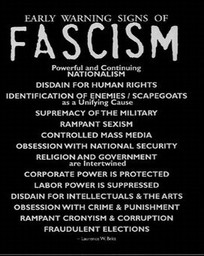
Who says we do not like to be ruled when we work for corporations? Corporations are right-wing authoritarian regimes (OED: 'fascist'), with no elections, opposition parties, free press, open communications, no fair and impartial judiciaries, and so on. The modern corporation is an evolved form of military organization ruled by a ‘Jesuit’ elite. Although controlled by the power elite, many of them are public corporations. Ironically, someone might propose that a separate private corporation be formed as a new government.
The modern corporation offers many of the advantages of the modern, “friendly” fascist organization. Merging global corporations are taking over nations and socializing the world into a much tighter regimentation than a communist or fascist corporation. Corporations mediate for the state, collecting taxes, enjoying corporate welfare, spending state money. They are protected by the state; the state works hard for them; they are rapidly becoming the state. Most of the state is hidden, unaccounted for, not responsible to the electorate. The core state is dwindling in comparison to the government contractors, quasi-public agencies and others on the margins, and now we hear that almost everything governmental is run better by outsourcing it to corporations. And that is precisely what former citizens - now employees - prefer, for they like to be ruled. Otherwise they would carry out immediate civil disobedience against the corporations themselves, and let the state be embarrassed and divided when it rushes in to protect property.
That being said, we might admit that we would rather be ruled than to be free, providing that we do have a few freedoms in our virtually imprisoned life. A postmodernist said that brick-and-mortar prisons are there to remind us that we are all in prisons; but we prefer enjoying the space outside the real walls; we prefer virtual chains to real chains. Still we prefer being ruled, so why do we refuse to accept it and complain about it? Why not just admit it, admit that we love to lose our selves in the corporation and work for the corporate hierarchy? A real democracy is a nuisance - let us just be told what to do, and then do it; let the bosses worry about the rest, may God help them. As long as we have our subsistence along with plenty of stuff to consume, and are not overly abused by our rulers, who cares who rules and under what form of government? After all is said and done, we like to be ruled.