INSTINCTIVE IMBECILITY
A FOOTNOTE TO
PYTHIATISM AND SARTRE’S THE FAMILY IDIOT
BY
DAVID ARTHUR WALTERS
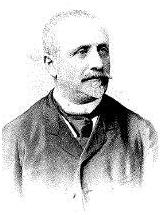
Hippolyte Bernheim, in his famous work, Suggestive Therapeutics, discussed a “morbid condition” that was called “instinctive imbecility, foolish actions, moral insanity, or reasoning mania.”
These poor fools are carried along by the wind, go wherever suggestion blows them. Although they are foolish, they do not appear to be foolish, because they are attentive to what goes on around them, express themselves clearly enough, answering questions, and complete projects without mistake. Their lack of reasoning power is not apparent to us but is internal. They speak reasonably, they may be witty and logical, but their actions are foolish in our opinion. A particularly witty lady, “with a penetration truly astonishing to everyone,” was mentioned; her witty attacks were a “torment” to the doctor as well as the establishment.
But Bernheim immediately draws a murky distinction here, between fools who are fools and are therefore instinctively insane, and those who are not fools but are instinctive imbeciles:
“Side by side with this instinctive insanity, I class instinctive imbecility; and under this head range those already spoken of, who are not fools, who commit no unreasonable acts spontaneously, and who have no monomaniacal impulses. They are mentally-clear imbeciles; they talk well, reason correctly, are sensible, and sometimes brilliant in conversation; they can use finesse and intelligence in accomplishing projects they have conceived ; but the instinctive, sentimental part of the moral being which directs the every-day acts is as if atrophied. They have no moral spontaneity; they do not know how to behave, and. like somnambulists from a psychical point of view, obey all suggestions, submitting readily to all outside influences. This psychical condition exists in variable degrees, from simple instinctive weakness to absolute instinctive idiocy. Under good guidance these beings, deprived of moral sense, may fulfill a happy and useful career. Others are stranded in the mud, or before tribunals.”
Laymen tend to cast a wary analytical eye on such analyses since Thomas Szasz exposed the mythical or fictitious aspects of the mental illness business, bringing us to the common sense conclusion that we are more concerned with behavior modification than mental health. Who cares what goes on inside a person’s head as long as we are not offended by their behavior? Well adjusted cogs simply do not appreciate the squeaking that portends a screeching halt to the smoothing running social machine. We are taught to appear as if we care about people who are nuisances and disturb the good order associated with personal security; but in truth most people really do not give a damn about the misfits who would torment us with penetrating attacks; we want to put them out the way if they do not behave.
Still, there are some people whom we do have sympathy for and who really need our help because something, whatever it is, is definitely wrong with them. Sometimes that wrong does a lot of good for many people. For example, take the late Michael Jackson. He might be thought of as an “instinctive imbecile,” a sort of “idiot savant,” a “foolish actor” and musician, an unwitting victim of suggestion. May Michael rest in peace. No doubt he will be psychoanalyzed in many books. After all, he was an abused child whose love for children can be analyzed to no end. Someone who was abused in his youth will make hay of the notion that many abused children grow up and abuse children in one way or another. There is no evidence that he beat up kids; quite to the contrary: he loved children. But that makes him suspect nowadays. Was he a pedophile (the classifications proceed), a criminal and mentally ill person who should be incarcerated and treated, maybe even castrated? We think not, not in that sense; incidentally, we think one gay boy did more to seduce him in that context than he did to seduce the boy. We do not believe that Jackson was motivated by sex per se or subject to a libidinous drive. He wanted to recapture his lost childhood, and could not because it was never had—what is the technical term for that? Surely it must be in the diagnostic manual. Perhaps it falls under several classifications. What psychotropic drugs should have been prescribed for this favorite fool of ours, the fool who led the entertainment on the Ship of Fools?
Yes, there IS something seriously wrong with some people if not with all. Cultural anthropologist Ernest Becker famously thought we need a better, universal illusion, a creative illusion in common, to replace the private myths, the neuroses of individualism.
Syracuse University fired Becker in 1963 for siding with Szasz, his mentor, who was insisting that mental illness was metaphorical, a myth employed to incarcerate people for misbehavior. Although mental illness is just a metaphor for physical sickness, something IS wrong, and what IS is is our terror, or at least we think so because it feels bad—some degree of terror or fear is necessary to survival. We hate to think that man is incurable; that life itself is a disease; that science and technology cannot cure us and create a utopia on this plane; that there is no way out but to get lost in the maze unto the final solution, death.
Nevertheless, in the interim between nothing and nothing, we can lead happier lives; at least, in Freud’s words, we can experience “everyday unhappiness” instead of “hysterical misery” (Studies in Hysteria). And to that end the discoveries of psychoanalysis avail us. Psychotropic drugs may be of some help, but a perfect happy pill would eventually paralyze the human race, putting an end to hits crazy career. Freud he observed some of Bernheim’s now famous experiments with the power of suggestion at the medical school in Nancy, and was duly impressed, offering to translate Suggestive Therapeutics.
Indeed, Freud “stole” a lot of other thinkers’ soup in his day, boiling it down to his own brand, which was popular for a while. The outsiders may have been denounced as quacks and charlatans; however, as everyone familiar with history knows, even if they have read the bible only, little is new in psychotherapy except the jargon; charlatanry has been around from time immemorial; quacks have stood on the shoulders of quacks before them, and they have done a lot of good and evil by virtue of the power of suggestion.
“To-day,” said Bernheim, “magnetism is dead together with alchemy, and hypnotic suggestion is born of magnetism as chemistry is born of alchemy.” ‘Animal magnetism’ and ‘electrical psychology’ theory was conceived to explain action at a distance via an invisible fluid. Magnetizers soon discovered that magnets were not necessary to obtain the desired effect.
“We have shown that the phenomena which are present in the hypnotic and waking conditions are not due to a magnetic fluid,” Bernheim wrote, “to an emanation from one organism to another, but that the whole explanation lies in suggestion: that is, in the influence exerted by an idea which has been suggested to, and received by the mind. The most striking feature in a hypnotized subject is his automatism.”
A sort of sleep could be induced in somnambulists during séances; once asleep or entranced, somnambulists could be influenced by the calm, authoritative commands of a hypnotist to exhibit otherwise inexplicable behavior, including, for example, undergoing the amputation of a limb without feeling any pain—unfortunately, not all surgical patients were susceptible to being hypnotized. It was suspected by practitioners and witnesses that the active ingredient in magical influence was simply suggestion. Credulous subjects could be influenced by getting their attention and having them relax, placing trust in the therapist, before administering the suggestive therapy. Indeed, the healing depended in large part on the faith of the subject if not on the healer who ritualized the motions, making them appear to be scientific method with certain means, instead of magic, where the means are unknown.
“Therapeutic suggestion is not new,” further quoth Bernheim, who admitted that a person did not have to be hypnotized for it to have effect: “What is new, is the mode of applying it methodically, and its final adoption in general medicine.” Bernheim also quoted Paracelsus:"Whether the object of your faith be real or false, you will nevertheless obtain the same effects. Thus, if I believe in St. Peter's statue as I would have believed in St. Peter himself, I will obtain the same effects that I would have obtained from St. Peter. But that is superstition. Faith, however, produces miracles, and whether it be a true or a false faith, it will always produce the same wonders.”
Then you might as well believe in God’s existence since you will be no worse off if God does not exist and far better off if God does exist! But what religion may suggest through the worship of Absolute Power is another matter, and may do more harm than good. Several gods or at least saints could be appointed to obtain different ends by magical mean. The power of suggestion is not so mysterious today. Suggestion is the means; what actually works the wonders is the human imagination.
“What a powerful worker of miracles is the human imagination!” exclaimed Bernheim, “Upon it is based the therapeutic virtue of talismans and amulets.”
# #



















Ron
PS. I detected a couple of typos.