The late R. J. Rummel believed war should be waged to make peace
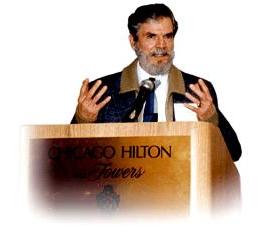
RECOLLECTING PROFESSOR RUDOLPH RUMMEL
FROM
WAGING WAR TO MAKE PEACE
BY
DAVID ARTHUR WALTERS
The seemingly contradictory principle of waging war to make peace brings to mind the late Rudolph Rummel, the University of Hawaii political scientist who was the leading academic proponent of waging war to make peace, and once rumored to be a candidate for the Nobel Peace Prize.
The esteemed conservative professor was an ardent supporter of President Bush’s militant policies in respect to the second Bush War on Iraq. Samples of his work including his Never Again Series of six novels (War and Democide Never Again, Nuclear Holocaust Never Again, Reset Never Again, Red Terror Never Again, Genocide Never Again, and Never Again) may be freely viewed on a University of Hawaii hosted website.
The Never Again Series “are a what-if, alternative history,” he explains. “Two lovers are sent back in time to 1906 with modern weapons and 38 billion 1906 dollars. Their mission is to prevent the rise of fascism and communism, avert the major 20th Century wars, including World Wars I and II, and forestall such democides as those by Hitler, Stalin, Mao, and Pol Pot.”
“Above all, these books are a story about love versus power -- the love of dedicated warriors for each other and for humanity and who risk their lives and each other in their deadly struggle against power, unaware that: unseen, Love’s dark foe, Power, like a deadly plague, infests, subverts, kills. Of course, throughout the novels there is my message… about the sheer magnitude of democide, and the democratic peace that underlies President Bush's foreign policy as the solution to democide and war.”
“Famine Through Democratic Freedom, a factual supplement to the Never Again Series, also provides an essential understanding of the theoretical and historical basis of President George Bush's democratic peace foreign policy - his Forward Strategy of Freedom. It argues philosophically, and from international law, that individual freedom is the most basic human right. This, and that freedom is a natural desire of all people, would be enough to justify freedom for everyone. But, the major substance of Never Again goes far beyond these justifications to establish that freedom is also a Moral Good. One Moral Good is that liberal democracies, those whose people are individually free with secure civil and political rights and liberties, don't make war on each other, as President Bush has stated correctly in support of his foreign policy. Another is that their democratic governments do not murder them. And a third is that their internal political violence is minimal compared to non-democracies. All this alone would make freedom the foremost Moral Good. But this book also shows that free people -- democracies -- never have famines, and that freedom is an engine of the greatest wealth and development among nations. In short, to the Moral Imperative, "No people should ever suffer war, democide, famine, and mass impoverishment, no, never again," this book proves that fostering individual freedom is the practical way to assure this.”
Professor Rudolf Eucken, the Nobel Laureate whose patriotism and denial of German atrocities during the Great War put him at odds with the Christian love he preached, and Professor Rummel look somewhat alike, especially when bearded, but they appear to differ greatly in their philosophical approaches to waging wars to make world peace. While Rudolf Eucken relied religiously on spiritual intuition, which may justify waging war to pacify the world, Rudolph Rummel scientifically counts on the statistical analysis of objective events that led him to conclude that democracies, as he defines them, do not wage war upon one another, and that might justify waging war on “democidal” governments to establish world peace, for democidal governments are non-democratic.
Professor Rummel has defined ‘democide’ as the murder of people by their own governments as a consequent of an undemocratic concentration of power. Democide includes genocide, political murders, deaths due to abuse in concentrations camps, and deaths due to deportations. He defines ‘murder’ in civil terms, as the reckless and wanton wasting of life. In that context murder would still be murder even if it were defined as lawful killing in legal terms according to the norm laid down by the democidal government. Since people presumably do not like to have themselves or their relatives murdered and maimed and their property destroyed, democratic governments are unlikely to engage in the democide that has, at least according to his growing count, 262 million victims over the last century. We recall that before President Bush sent troops to wage a pre-emptive war in Iraq, where many thousands of them have since been maimed or have died in battled, he charged Saddam Hussein with the barbarity of “killing his own people.”
If only all states and their governments were democratic and culturally engaged with one another, as democratic nations are bound to be, perpetual peace and prosperity – they go hand in hand – would supposedly be the general rule. Statistical studies do show that the degree of democracy is a good gauge of prosperity and general happiness of the people. Democracy as defined by Professor Rummel is naturally the best of all democracies, of which the United States is exemplary: broadly speaking, it is a well-established constitutional government of laws that subjects the government itself to the laws, affords the broadest of franchises and a secret ballot, and guarantees equal rights of free speech, assembly, and religion.
Professor Rummel’s research into the period 1816-2005 indicated that non-democracies waged 205 wars between themselves, that 166 wars were waged between democracies and non-democracies, and that there were no wars at all between democracies as he defined them. One might reasonably conclude that, to establish peace on Earth, all militant and/or democidal non-democratic governments should be liquidated.
We may observe, however, that the peace between liberal states has been only among themselves, i.e. a separate peace. Liberal states are in fact notorious for their belligerence in respect to non-liberal or right-wing authoritarian states. Still, the liberal aggression is praised rather than condemned because the causes fought for, the pursuit of property and happiness and the like, were the better ones because most popular, especially the cause of liberal democracy.
The data accumulated by Professor Rummel also demostrates that liberals do not fight amongst themselves because they are too busy making a profit off one another under their freer form of organized greed. Domestic peace is assured provided that poor slobs believe they have the opportunity get filthy rich. Democratic imperialism wages war to end all wars, to make peace. The collateral damage, even though the numbers of wounded, maimed and dead given the superior technology of liberal democracies may far exceed the damage wrought by brutal dictators, justifies the peaceful end. Nonetheless, once everyone recognizes the virtues of liberal democracy and contracts to establish and maintain it, perpetual peace is assured, wherefore the human race shall rest in peace. Let us then wage war to make the only peace worth having, liberal democratic peace incorporated.
The German Reich was liquidated and a democratic Germany now enjoys relative peace and prosperity. The Second World War was a vindictive continuation of the Great War upon the failure of the weak Weimar democracy. Professor Eucken publicly blamed the Great War on Anglo-Saxon greed and egotism, which gave the paranoid Kaiser Wilhelm II, whose mother was, ironically, Queen Victoria’s daughter, just cause to defend Germany with pre-emptive war. The Kaiser, an honorary British admiral and yachtsman, felt Germany was being landlocked and encircled by greedy enemies; he envisioned that Germany’s future could be realized by going to sea.
A century later, Rummel supported the paranoid U.S. President’s pre-emptive war on Iraq; that alone suffices to make the America professor infamous in the eyes of the Bush-hating world – the President felt that the United States of America, the purported leader of Western civilization upon which an attack was therefore an affront to civilization per se, and its interests abroad, were being infiltrated by Islamist terrorists from abroad, who were hell bent on destroying the American Way of Life, that is, the peculiarly American culture, the epitome of Western civilization.
Thorsten Veblen, in On the Nature of Peace and the Terms of its Perpetuation, remarked on the importance of one’s own brand of culture:
“It may broadly be affirmed that all nations look with complacency on their own peculiar Culture—the organized complex of habits of thought and of conduct by which their own routine of life is regulated—as being in some way worthier than the corresponding habits of their neighbors. The case of the German Culture has latterly come under a strong light in this way. But while it may be that no other nation has been so naive as to make a concerted profession of faith to the effect that their own particular way of life is altogether commendable and is the only fashion of civilization that is fit to survive; yet it will scarcely be an extravagance to assert that in their own secret mind these others, too, are blest with much the same consciousness of unique worth. Conscious virtue of this kind is a good and sufficient ground for patriotic inflation, so far as it goes. It commonly does not go beyond a defensive attitude, however. Now and again, as in the latter day German animation on this head, these phenomena of national use and wont may come to command such a degree of popular admiration as will incite to an aggressive or proselytizing campaign.”
Undoubtedly President Bush would agree with Professor Veblen’s praise of culturally determined patriotism: “In all this there is nothing of a self-seeking or covetous kind. The common man who so lends himself to the aggressive enhancement of the national Culture and its prestige has nothing of a material kind to gain from the increase of renown that so comes to his sovereign, his language, his countrymen's art or science, his dietary, or his God. There are no sordid motives in all this. These spiritual assets of self-complacency are, indeed, to be rated as grounds of high-minded patriotism without afterthought. These aspirations and enthusiasms would perhaps be rated as Quixotic by men whose horizon is bounded by the main chance; but they make up that substance of things hoped for that inflates those headlong patriotic animosities that stir universal admiration.”
Professor Rummel also supported President Johnson’s police action in Vietnam, actually a war waged in response to the fear that the Indochina would be dominated by communists, which would make it easier for them to take over the rest of the world including the United States as well, and thus bring to ruin the superior way of life. He and University of Virginia lecturer Robert F. Turner, who was a soldier in Indochina and wrote Vietnamese Communism: Its Origins and Development, penned an op-ed article published by The Washington Times on July 13, 2008 to address what they called the “silly season to select our next president.” The war had already been won by South Vietnam and the United States in 1972, but then was lost because Congressional liberals and antiwar protesters were deceived by communists into thinking that the good guys were bad guys, which moved Congress to snatch defeat from the jaws of victory, betraying the sacrifice of precisely 58,260 Americans, paving the way for “the greatest democide of the 20th century on a per capital basis – hundreds of thousands Vietnamese perished, 1.7 million Cambodians were slaughtered. The liberals’ negligent policies were continued from there to Africa, Central America, Afghanistan, with the September 11, 2001 attacks as a recent consequence; wherefore President Bush did the right thing.
Paranoia is a relatively modern psychological syndrome with two sides: delusions of persecution, and delusions of grandeur. An individual must be awfully grand to be worth persecuting by many. Of course both Kaiser Wilhelm and President Bush had good reason to be paranoid on behalf of their respective nations, but if results justify means, the reasonableness of President Bush’s reaction is problematic. In the first instance, which was followed by World War Part II, peace and prosperity have justified the massive violence, as if effects can create causes – time-reverser Henri Bergson thought they could. The effects of the two Bush wars on Muslim nations remain to be seen; we hope that one day all the People of the Book will embrace and sing Halleluiahs for their peace and prosperity.
Professor Rummel has asserted that he was “frequently nominated for the Nobel Peace Prize.” In fact, he claimed for several years that he had once been among 117 finalists for the Prize, citing to an Associated Press report published by the Honolulu Advertiser on February 26, 1996. Apparently the Advertiser did not vet the source of the story. Someone else allegedly checked with a member of the Nobel Committee, and then proceeded to scandalize the professor, spreading the word that he lied about being on the finalist list; no such list exists, first of all, his detractor claimed; anyway, the names of nominees are kept confidential for fifty years. According to the professor’s blog, http:// freedomspeace.blogspot.com, a respected friend advised him to drop the claim rather than appear foolish to people who were knowledgeable about the workings of the Nobel Committee. His claim of being a finalist, his friend said, was rather unimportant anyway.
“He is simply unaware,” wrote Rummel, “of the esteem men without his inside view of the Nobel nomination give to it or even better, to being ‘finalist.’ Of the prizes and awards I’ve won, and all the books and professional articles I’ve published, this is the number-1 credibility booster for my research claims.” Moreover, “What is evident is that the Northern Europeans with whom I am in contact seem to have a nonchalant attitude toward the Nobel Peace Prize Nomination. Americans do not. Of whatever I’ve achieved, this is the one thing that people center on, and that gives my research on the democratic peace and its promotion the most credibility for Americans.”
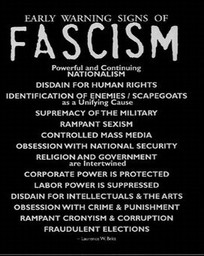
Whether or not he was a nominee for the Prize, or whether he stretched the truth in reference to his nomination, should not add or subtract one iota from the merits of his statistical work supporting the notion that only his brand of democracy can result in permanent world peace. His numbers do not lie although we may disagree with his conclusions for one reason or another, or insist that they are tentative, opining that the numbers will go against him one day, perhaps on the final day when the ultimate lord’s Doom is rendered, when freedom-fighting anarchists, hitherto suppressed by the monopolistic police power of hypocritical democratic-republicanism, detonate nuclear weapons. Fascism is, after all, the perfection of the capitalism that competes to drive out the competition, in the economic war of all against all, and totally dominate the political-economy by incorporating world markets into a monopoly or oligopoly. Since everyone naturally yearns for absolute power hence freedom to live forever without impedance, extreme individualists would have no qualms about bucking the totally democratic state into oblivion at enormous cost of life. Instead of the imperialistic state withering away, it may be blown to smithereens, and only Dr. Frankenstein’s monster, denied the love it wanted, will be left standing in the bitter end.
Every war may seem just to the belligerents no matter which side they fight on. German Professor Eucken justified the Great War from his heart while Professor Rummel probably believes that he justified the Iraq War with his head. We tend to confuse heart and head, no matter how objective we try to be. Thoughts no matter how arid are rooted in feelings – the ancients thought that the heart was the seat of thought. In any case we may rationalize the biddings of the heart, and claim that reason presides although the tail may be wagging god spelled backwards. My heart is with Professor Eucken and my head is with Professor Rummel, yet one side of me, the pacific revulsion to my violent temper, a reaction that would make a pacifist out of me, still disagrees with the both of them. I mentally admire more the martyr who believes that it is better to suffer a wrong than to do one, and holds that a life one must kill for is not worth living, than the man who claims that a life not worth killing for is not worth living. Nevertheless, if I were to advocate war, I would prefer that it be waged for a secular reason rather than being divinely intuited as an irrational spiritual command from the god, the Father of his father, whom President Bush, for instance, said he consulted to justify his war.
It matters not whether or not President Bush was in touch with the Heavenly Father whom he said was greater than his earthly father back at the ranch. What mattered was the probability of partially obtaining the desired or ideal outcome, the eventual instantiation of Heaven on Earth, i.e. peace and prosperity. Professor Rummel backed President Bush’s war because it accorded with his scientific i.e. statistical way of thinking. Like it or not, his numbers do not lie: only democracy apparently saves the world from war, and thus is the logical path to salvation, a road laid down hermetically by Hermes so long ago. To make the world safe for democracy, to progress towards universal peace and prosperity, Iraq’s non-democratic state, for one, had to be destroyed, and a democratic regime imposed in its place, whether the multilateral world liked the unilateral way of going about it or not.
 |
| My return to University of Hawaii at Manoa |
I was introduced to Professor Rummel’s ideas roughly thirty years ago, shortly after it occurred to me, as I contemplated the clouds on a flight from Oahu to the Big Island, that Israel should be arrested for using its awesome military might in unfair fights; the ratio of dead normally favored Israel 10:1, and the ratio of physical damage of anti-Israel infrastructure and homes to that of Israel was extremely lopsided, not to mention that millions of direly impoverished people were being held hostage in virtual concentration camps. It was as if Israel had become its worst enemy, an aggressive, racist nation, in memory of the Nazis – ironically, the anti-Semites were Semites themselves in this instance. Of course my thoughts were politically incorrect and if stated might have subjected me to the charge of being anti-Semitic even though my father was a Jew, which I learned did not make me a genuine Jew because my mother was a gentile – they met when he was an American soldier during World War II.
I was a war baby: I cut my teeth on war movies and played with toy Tommy guns, killing numberless imaginary enemies, and I accumulated a great toy army in a shoe box, but I was too young to participate in the police action in Korea, which killed some of my friends’ fathers – my best friend’s father came home from Korea and hung himself in the garage we loved to play war games in; my friend and his brother, and then their mother, followed suit a few weeks later. Before I was eligible to serve in the military, I had already run away from my “home” in Kansas, when I turned 13, for the good I imagined I would find in the City. My ideals or escapes from reality were inspired by The Wizard of Oz while eating large peanut butter cookies.

 |
| Double Helix Nova |
An apparent magnetic field may take the form of a double helix, a kind of three dimensional curve, an uniformly intertwined double spiral that rarely occurs in nature; for instance, in DNA, and in a Milky Way nebula. Simple spirals were sketched by primitive man on stones, as early as 50,000 years ago, tracing the course of the Sun and other heavenly bodies; the spiral was a symbol of a superior order, an apparently divine order installed by an invisible hand.
  
 |
| Dorothy Dream in the Poppy Field |
Professor Rummel said that he saw peace “as a phase in a conflict helix, equilibrium within a social field.” A “balance of powers” is arrived at through conflict and cooperation and expressed as a contract in which their expectations are identified. If the balance of power shifts and their expectations are not realized, a gap forms and puts the structure under enough stress, all hell might break loose: “It is this social contract that is peace within social field theory. Peace then is determined by a process of adjustment between what people, groups, or states want, can, and will do. Peace is based on a consequent balance of powers and involves a corresponding structure of expectations and patterns of cooperation. Moreover, peace may become unstable when an increasing gap develops between expectations and power, as here defined, and may collapse into conflict, violence, or war.”
His helical principle apparently favors a closed or conservative, inert society rather than a liberal or open, dynamic one, if peace is to be made permanent: “The Helix Principle. Conflict becomes less intense, cooperation more lasting. If interaction occurs in a closed system or is free from sudden, sharp changes in the conditions of a relationship (as, for example, if one party to a business contract goes bankrupt, or a signatory to a regional military alliance with the United States has a military coup), then through conflict and cooperation people gradually learn more about each other, their mutual adjustments come easier, their expectations more harmonious and lasting. Conflict and cooperation thus form a helix, moving upward on a curve of learning and adjustments, with the turn through cooperation being more familistic and durable; that through conflict shorter and less intense.”
Perhaps his alchemical path to the better place over the rainbow is not as golden or illuminating as we would like it to be.
I contacted Professor Rummel in Hawaii a few months before his death to ask him what he thought of George Soros’ political ideology - I had dubbed it ‘Sorosian’ - derived from the concept of an open society, which I opine would be better symbolized by the double helix of Caduceus representing ever-widening, continual progress through evenly regulated competition, than by the staff of Asclepius, with its one way to immortality, which might, for all I know, be a snake charmer’s dead end. The ideas of the two men did seem similar in some respects. I also asked the retired political science professor about the late Senator Spark Matsunaga’s peace academy.
More significantly, at least in theoretical terms, I questioned one of his ideas presented in Understanding Conflict and War to see what he had to say about it, hoping to see whether or not his response would support the view that what professors say about waging war to make peace might have a calculable effect on the process. After all, Professor Lewin had said, “If you want to understand something, try to change it.” Have what professors said actually changed the war and peace process?
I had read Chapter 22 ‘What About Motivations’ of Volume 1 ‘The Dynamic Psychological Field, of Understanding Conflict and War, from which I picked out at random, under Section 22.1 ‘The Drive For Power’, the professor’s concept of the “drive for identive (existential struggle for identity) power.” (sic)
Of course the notion that human beings have “drives” or are driven by “instincts” inaccessible to consciousness is out of vogue although the words remain in common usage and we cannot help using them. The term “motives” became more fashionable, meaning that human beings are goal-seeking animals; our desires for objects motivate us to act in certain ways within our respective social fields.
Would understanding this particular concept, not to mention all the concepts and their relationships the professor wrote about in Understanding Conflict and War, be of any use at all to prevent war or to effectively wage war to make peace? Can such concepts be used to lay out a path to permanent peace? If so, they should be remembered and acted upon. Yet people who entertain the same concepts often find themselves at each other’s throats. Is that because their concepts are too complicated, or too many to be remembered at one time, in contrast to the Golden Rule? Even the latter may be differently interpreted. Perhaps the unconscious “drives” are rightly blamed.
As I interpreted it, the “drive for identive power” discussed by Rummel is based on the individual’s self-awareness that it is a separate identify – I am not That – related to its will to survive when confronted with That. That is, I, for instance, would have absolute power to persevere without impedance if I could – but then I would not exist, for it is the relationship of resistance that fashions the “I”. Now the nude individual’s identity is in part cultivated by others, whereby the other’s definitions, as it were, are introjected and identified as one’s own self, clothing the naked ‘I’ as it were.
“Broadly, the motivation to power is to manifest, to assert oneself against the world. This I will call the drive for identive power. Narrowly, the motivation to power is to dominate others through force, threats (coercion), rewards (bargaining), persuasion, manipulation, or love. This can be called the drive for domination, the power over others.” The distinction as stated is logically confusing inasmuch as one drive is said to be another drive, but the professor tries to make a hierarchical distinction later on, when he subordinates the drive for dominance, but then resorts to fuzzy logic again: “The drive for identive power is manifested through the superordinate goal of self-esteem, and the drive for power as dominance is related to the self-assertive need. Rather than being a motive, however, dominance is primarily a temperament, a characteristic way of behaving.”
It is with that in mind that posed the following questions to the good professor:
WALTERS: Have you expressed any opinions on George Soros' activism?
RUMMEL: No. I don't agree with his politics, but believe his funding of the left is his right and respect it. It is democracy at work.
WALTERS: Mr. Soros is certainly left of right, but in some respect he is still where his early political thinking was formed, in between the Nazis and the Red Army fight for Budapest, posing as a Christian, not yet willing, as his father said at the time, to exchange bread for stones.
RUMMEL: I characterize him as ideologically on the far left, and only judging that by the far left groups that he supports with his money.
WALTERS: The almost universal perspective of Mr. Soros as a leftist and a radical one at that due to his funding activities, including his efforts to bring down the Bush Administration, leave me wondering at his leftist reputation in the case of Georgia, where he and the Bush Administration seem to be on the same page, and have worked in tandem establishing the so-called puppet regime there. But there is an important question that I have always wanted to ask you, in view of your empirical findings that democratic states tend to be pacific at least towards one another, your liking for peace, and the supposed desire of the overwhelming majority of the world's population for democracy: Do you believe world democracy should be established by force?
RUMMEL: No, not to establish democracy per se. But, if the nondemocratic regime is murdering its people wholesale, as is Burma and Sudan (N. Korea is a separate problem), then I believe the democracies should intervene to stop it. Then, if they do, this is an opportunity, as with Iraq and Afghanistan, to free the people as well.
WALTERS: I know many people could have cared less about the nuclear-weapons pretext - any lie would suffice (and according to Carl Schmidt, lies are necessary to obtain cooperation in a democracy of conflicting interests) to rally people to overthrow undemocratic regimes, especially the most repressive and dangerous ones.
RUMMEL: This was not a lie. It was what all major intelligence agencies believed.
WALTERS: I believe your belief is sincere, and believe it is based on your early empirical study, that "all major intelligence agencies believed," although evidence later surfaced that intelligence reports to the contrary existed and were ignored. I must admit that my belief, that the three major propositions for going to war were false, was merely "intuitive." For me, the jury is still out and may forever be out. I personally do not know the state of mind upon which the decision was made, whether or not there was a deliberate intention to deceive, but I would not be surprised if that were the case.
RUMMEL: Keep in mind that a mistaken belief is not a lie. A lie is an intentional deception.
WALTERS: I shall keep that in mind in the future as a precaution against jumping to conclusions. I am lately more cautious than usual, as my beliefs in the past, being imperfect, have led me to jump to the wrong conclusions, to suppress doubts, and, in good faith, even ignore some evidence to the contrary. I would like to know if you personally believe that sometimes it is necessary to use any means whatsoever, including immoral or unethical means, such as lying to the electorate to get them to agree on a course of action (war) that would accomplish good ends (peace). If not, why not?
RUMMEL: I searched my mind for an historical instance when a president did this, and I would have also. What comes to mind is the Battle of Britain, when under the cover of many lies Roosevelt provided aid to Britain which helped save it from the German onslaught. If Britain had lost, that would have been the end of Europe as we knew it, and Nazi Germany would have had it all. The American nation was strongly isolationist, and Roosevelt could not have otherwise helped save Europe, and consequently Europe.
WALTERS: Do you have any mixed feelings about the pre-emptive overthrow of Iraq's sovereign state?
RUMMEL: No. A great threat was removed, a mass murderer was executed, and Iraq is a now a functioning democracy with national elections, and a democratic constitution voted on by all Iraqis.
WALTERS: I have been perusing Chapter 22 of your Understanding Conflict and War. In sum, what empirical bearing or "central role" did your distinction between the drive for “identive” power and the drive for dominative power actually have on the understanding of conflict and war?
RUMMEL: None that I can recall. The distinction is to help understanding personal and interpersonal relations, but not societies and war generally. There the important distinctions are coercion, force, exchange, and authoritative powers.
WALTERS: Is your helix reconciling conflict and resolution a double helix?
RUMMEL: No, just a single helix.
WALTERS: Did Senator Spark Matsunaga express a particular ideology of peace and/or a methodology of conflict resolution? If so, what is it in a nutshell? Do you agree with it? Did you agree with his efforts?
RUMMEL: I do not recall him expressing anything about conflict or war. He just seems in retrospect to have been an ordinary antiwar type.
WALTERS: I liked Sparky and visited him in Washington. He was really keen on the institution of a peace academy for conflict resolution, in distinction from the war academies. Now I see the University of Hawaii has a peace academy dedicated to him, and there is also an international peace academy located in Washington and founded in his honor. However, I am not able to obtain any of his writings on peace.
RUMMEL: I never saw any writings of his.
WALTERS: I expected them to have been scanned and put on the WWW for public good, but all I can find is reference to his papers at UH, and I find no link for viewing.
RUMMEL: I doubt that there are any papers. I believe that his reputation in the peace area has been built up for the sake of the institute. The UH peace academy is nothing but a propaganda mill for a very liberal conception of peace.
Sparky Matsunaga’s writings and career pursuant to the principle of waging war to make peace will be discussed in another chapter in this series, Waging War To Make Peace. George Soros’ views are discussed in my Sorosian Chronicles. Suffice to say in conclusion that in my opinion Rudolph Rummel was a fine professor of political science, and that his clear statement of his political philosophy had a profound influence on my understanding of politics of war.
|














While I believe that compromise and going along with the program often gets things done, I never, like Pres. Obama when he was a senator, ever believed that Iraq was any real danger to the United States or to its people with its two bit dictatorship like so many others around the world. Saddam Hussein sapping his people for the wealth of the elite leadership. The Shah was doing the same in Iran.
It is ironic that a conservative would believe that freedom and democracy can be obtained by force. I've always thought that conservatives believe in divine powers and financial manipulation as the means to world dominance. Monopoly and oligarchy seem to be the direction taken rather than a regulated democracy.
Once again very well written, while, if in some points, a little difficult to understand.
Ron