By David Arthur Walters
9 February 2019
Professor Giles Toulemonde at the University of Lille in Nord France was being all too courteous when he pointed out “une petite erreur factuelle” in my second submission to President Emmanuel Macron recommending that he use his presidential referendum power to advance the best wishes of his people expressed in the National Debate he called to address the Yellow Vest furor in his great nation. Both houses of parliament would have to pass the exact same bill, and it would not become law until ratified by a referendum majority or by three-fifths of Parliament.
“You write that referendum was employed as a despotic instrument during the Third Republic,” said the professor. “In reality, this was the case under the Second Empire after 1851. On the other hand, the referendum was impossible under the Third Republic.
He is correct, and, to be honest, my mistake was not a small one at all. I should be ashamed of my ignorance, and I certainly would feel guilty if I were not an American gentile.
My error was indeed un faux pas énorme. After all, as every French school child well knows, the traditional French word for referendum, plébiscite, is a dirty word standing for an obsolete French process initiated by a government so despotic and corrupt that 90% of the electorate is expected to conform to the will of the sovereign or else they will have hell to pay. Only an unruly 10% of a large population would normally approve of a revolution; that low percentage of American residents, by the way, approved of the American Revolution, most of them taxpaying property owners.
On the other hand, the key demand of the mostly white, middle class workers comprised by the loosely organized Yellow Vest mass movement is for direct democracy, that is, a constitutional means for citizens to initiate their own national legislation whether the professional legislators like it or not.
That raises the specter of mobocracy, anarchy, and chaos in the minds not only of despots but republicans committed to democracy represented by the upper economic crust of society.
President Macron, an investment banker and former minister of finance for the socialist party, now dubbed the President of the Rich and King of the Bourgeoisie, has taken a conciliatory course. He has indicated a preliminary willingness to use his constitutional referendum power to allow the citizenry to approve or disapprove of an amendment that would allow the people to directly participate in legislation by taking the initiative themselves to forge laws, provided that that power be strictly limited because, for example, he believes, that the national finances cannot be wisely managed by a crowd.
And of course the president pointed out the shambolic logjam created by the unwisely planned and allegedly fraudulent Brexit referendum of 2016, where only 51.9% of those casting ballots recommended leaving the EU, with 71.8% of the electorate participating. Although the British parliament is theoretically sovereign over the people, it would seem that a supermajority of at least 60% and perhaps a two-thirds majority of votes in a referendum should be required on a measure having a diminishment of national sovereignty. But never mind, because the referendums are advisory. In 1974, a general election promised to take the advice of the people via a nonbinding referendum whether to remain in the precursor of the EU, the European Economic Community, which the UK had joined in 1973: 67.2% of the ballots cast said ‘Yes,’ with a national turnout of 64%.
Despite President Macron’s willingness to compromise, he is constantly vilified by adherents to the Yellow Vest movement, most of whom choose not to participate in the great National Debate. Hopefully he will not be assassinated. His detractors want the whole hog, the mile and not the inch, and they feel they are being looked down upon as usual by snooty aristocrats. Again, they associate President Macron’s suggestion of a referendum with its accursedly narrow and fraudulently form; to wit: the French plébiscite. Politicians are even bickering over the cost of holding the National Debates, accusing him of abusing the forums to campaign. I hear that his principal advisor, the First Lady of France, does not even have an official budget.
Sophisticated French unlike some sophists we know like to be as polite as possible, wherefore the plébiscite is advanced as gift that allows people to veto their government. But they had better not do so because they will be damned if they do, or so it is advertised by the power elite who ask the referendum questions with ulterior motives.
For example, Napoleon III and his ministers knew that an unpopular war with Germany was forthcoming so they graciously allowed the people to affirm their rule with a plébiscite in May 1870 by promising them peace. The question put to the public in the plébiscite itself was whether to confirm certain liberal reforms already made under the Second Empire (1851-1870), which had itself been confirmed by a plébiscite back in 1851 that officially ended the temporary Second Republic (1848-1851) when President Louis Napoleon Bonaparte made himself Emperor Napoleon III with 92% of the electorate approving with an 81.7% turnout.
The May 1870 approval of 82.7% was unusually low for a plébiscite. The Franco-Prussian war, blamed on the provocations of Bismarck, proceeded in July 1870 and lasted until January 1871, hence the fall of the Second Empire, the suppression of the Commune, and the rise of the long-lasting Third Republic (1870-1940), during which the plébiscite form of referendum was anathema or, as said by Professor Toulemonde, “impossible.”
It should be noted that the several constitutions of France since the Great Revolution establishing monarchy, empires, and republics are confusing enough to convince the English student that the French went quite mad and remain so to this day notwithstanding the worship of Reason in France and the exaltation of scientific political thinking or ideologie over romantic passion and traditional culture as an outcome of the French Enlightenment. The apparent division between the left and right sides of the body politic is by no means peculiar to France although it may take much of the blame for the confusion between the two in the Western world including the United States wherein there is said to be a French revolution within an English revolution. The American Revolution was more or less a change of the guard from English to American English with ancient rights attached. England, which wisely kept its constitution unwritten, had its own, more stable Enlightenment.
In any event, I should have known that the French plébiscite is blasphemy to the “vile crowd” if only I had read the popular historical novel, The Plébiscite, A Miller’s Story of The War by One of The 7,500,000 Who Voted ‘Yes’, authored by the popular ghost story and military tale writers, Emile Erckmann and Alexandre Chatrain of Alsace-Lorraine, territory annexed by Germany in 1871. The English version of the book has been popular since 1911, but I had not even heard of it. Not that I was uninterested in French authors. I did read Alexandre Dumas and Victor Hugo, but I was mostly preoccupied reading pathetic Russian novels.
The plébiscite was advocated in such terms that only an idiot savant would vote ‘no.’ Do you want to die a miserable death in war, or live pleasurably in peace?
“Everywhere they had voted ‘Yes,’ for peace,” says the Miller. “It was the greatest fraud that had ever been perpetrated: by the way in which the Ministers, the prefects, and the Government newspapers had explained the Plébiscite, everybody had imagined that he had really voted peace. Cousin George, hearing this, said, ‘Oh, you poor country folks, how I pity you for being such imbeciles! How I pity you for believing what these pickpockets tell you!’”
“Go on voting right, and you shall have this, you shall have that. Yet these are things which you have a right to demand in virtue of the taxes you pay, but which are granted to you as favors—roads, wash-houses, schools, etc. Would you not be having them in your own right, if the money which is taken from you were left in the commune?”
So the gullible French people who fought bravely against the Germans for peace, under inept but patriotic generals, the people who sacrificed a great deal of blood and treasure, had good cause to hate the plebiscite. But the plébiscite was not altogether impossible, as said by Professor Toulemonde. An indirect or virtual plébiscite was made possible during the early years of the Third Republic by taking advantage of a loophole in the electoral system. That was indeed attempted in 1889, we hear, by the popular nationalist and would-be dictator, General Georges Boulanger aka Général Revanche, whose conservative, “Three-R” agenda was Revenge on Germany, Revision of the Constitution, and Restoration of the Monarchy with the elevation of the Count of Paris to the throne—a Count of Paris is standing by to this very day in case he is called upon.
With the help of wealthy donors, patrons such as Leon Gambetta, and by means of the electoral device called the scrutin de liste, General Boulange might have worked a coup. But the moment was not seized; the cause was lost, and he committed suicide on the grave of his beloved mistress. And what a shame that was, for there was something for everyone in his platform, that is, except for the founders of the Society of the Rights of Man and the Citizen. We find in its 1888 manifesto such declarations as:
“In its newspaper articles, as in the speeches of its advocates, the plebiscitary faction it gathers together everything that can harm the regularly constituted public powers but it willfully omits anything that could serve to defend them.”
“Votes cast for a general who refuses to put down his sword would constitute a veritable plebiscite. And like all republicans of all times, we detest plebiscites: it is the abdication of a free people.”
Contempt for the plébiscite was evident a century prior, according to Hippolyte Taine's study of sources for The French Revolution (translated by John Durand):
“Experience indeed, had shown that, for a long time, the masses were disgusted with the plebiscite farces; moreover, terror has stifled in individuals all sentiment of a common interest; each cares for himself alone.”
“The semblance of an election, having extorted or obtained by trick the suffrages through which they act, so familiar with fraud and violence that, in their own Assembly, the minority which succeeds has seized and held on to power by violence and fraud, putting down the majority by riots, and the departments by force of arms; while, to give to their brutalities the semblance of right, they improvise two pompous demonstrations, first, the sudden manufacture of a paper constitution, which molders away in their archives, and next, the scandalous farce of a hollow and compulsory plebiscite.”
“(The Jacobins) have not at their back, like legitimate sovereigns, the stubborn loyalty of an entire population, following in the steps of its chieftain through the prestige of hereditary right and through habits of ancient fealty. On the contrary, their reign is only a day old and they themselves are interlopers, at first installed by a coup d’état and afterwards by a semblance of an election.”
“At first, the Jacobin confined his attacks to royalty, to nobility, to the Church, to parliaments, to privileges, to ecclesiastical and feudal possessions, in short, to mediaeval foundations; now, he attacks yet more ancient and more solid foundations—positive religion, property and the family. For four years he has contented himself with demolition; he now aims at reconstruction; his object is not merely to do away with a positive faith and suppress social inequality, to proscribe revealed dogmas, hereditary beliefs, an established cult, the supremacy of rank and superiority of fortunes, wealth, leisure, refinement and elegance, but, in addition to all this, he must refashion the citizen, create new sentiments, impose natural religion on the individual, civic education, uniform ways and habits, Jacobin conduct, Spartan virtue; in short, nothing is to be left in a human being that is not prescribed, enforced, and constrained. Henceforth, there is opposed to the Revolution, not alone the partisans of the ancient regime—priests, nobles, parliamentarians, royalists, and Catholics—but, again, every man imbued with European civilization.”
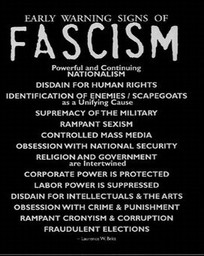
Will history repeat itself in Europe with a fascistic reaction to the nationalist regression that Albert Einstein once compared to the contagion of measles? Will France lead the way with Yellow Vest fever?
The extreme ends of the political spectrum inclined to the last resort of politics in violence are attempting to hijack the protest movement, and of course we witness a few French intellectuals or philosophes who despise any authority besides their own fomenting a violent tango by urging pots to call kettles black.
Alas for human nature! Direct democracy is being hawked on the streets again, as if leveling could abolish hierarchy and reduce humankind to a paradisiacal socialist anarchy that has yet to exist in human history except in the imagination of romantics.
We even have hopeful references to the 1871 Paris Commune, lauded by Marx as a precursor to communism upon the withering of the slaveholding, parasitical state. The Commune was a representative system, a socialist republic or public thing; its representatives were elected to sit in councils, subject to recall, which is a kind of referendum. The Commune, observed Marx, was not a parliamentary body maintained by state terrorism, but it was rather the workers’ working body, a practical instrument, executive and legislative at the same time. That has totalitarian implications.
Call it what you will, the Commune was not a government for the proletariat by the proletariat. Government is the existing order, and human order is in reality hierarchical, at least until the nebulous ideal is achieved, and pending the realization of the ideal, communist ideologues discovered that a dictatorship of the proletariat by dictators was necessary until the need for a state vanished. Like it or not, human progress, if there really is such a thing besides technological advances thanks to wars, depends on conflict that keeps the wheel rolling forward, and not on a mass of naturally conservative people no matter how democratic. To that end, the crowd tends to project its hopes and fears, and “elect” or bless a dictator with charisma. That is, for conflict, a general is required.
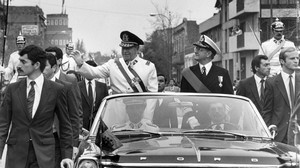
President Macron is not a General Boulanger or General De Gaulle or General Peron, nor is he a Hitler or a Stalin. He happens to be a finance man with a liberal education whose faux pas was a demeanor perceived as snooty. Yet he is not heartless or really contemptuous of the people at large. He is learning on the job, sometimes face-to-face on the street. He is capable of rising to greatness, or at least to propose great things, so everything is being done to drag him down and spit on him no matter what he recommends.
So the French, as we have seen, have good reason to despise referendums designed by the power elite, referendums that are nothing more than fraudulent plébiscites. And general elections that focus on platforms fraudulently propagated instead of the qualities of candidates may be called plebiscites. However that may be, President Macron, if he is not merely a diacritical mark over a vowel in history, is warming up to the notion of amending the constitution to provide a mechanism for referenda directly initiated by the people according to reasonable limitations, and to that end he is obliged to educate the electorate on the virtues and vices of referenda. That may be difficult given the tendency of people to act hastily on personal prejudices rather than a full understanding of the issues.
An American invention, the constitutional convention, has performed well at the national and state level where important amendments are desired. Article V of the United States Constitution requires two-thirds of the national congress or state legislatures for call for a convention of delegates, and three-fourths of the state legislatures must ratify the amendment proposed.
As for statutory legislation, a number of studies have been made of the process in the United States. The consensus is that popularly enacted legislation has no better or worse effects than legislative enactments. The influence of special interests on referendum campaigns is of little consequence because people are not ignorant of such influences. The number of signatures required to get popular initiatives on ballots may tend to keep unwise proposals off the ballots. The mere possibility that people may take the initiative may keep legislators on their toes. Acts passed by referenda should have clauses that prevent the legislation from being modified or repealed except by referenda so that the people’s will is not subverted by the legislators.
In any event, initiatives provide the electorate with a feeling that they have a direct voice in government, that it really is a public or people’s thing instead of a creature of the ruling elite. Thus they are more responsible to issues and encouraged to educated themselves and otherwise participate in legislation.
If I were French, I would recommend that France have a minimum wage of 10% over the medium cost of subsistence in Paris including a reasonable supply of wine, cheese, and Nutella. That should help the outlying areas, always a problem in France. Yes, that would be a good referendum item. Mind you that Mr. Macron is right at least about one thing: the referendum is not a panacea that will solve all problems, so everything including the kitchen sink should not be on the ballot.
That being said, I conclude this correction of mon énorme faux pas and respectfully submit it to the professor to see if I have made a few petty errors. I would say “petite” were it not for its English definition, a quality I prefer in the female gender, one that has led me to make several missteps .
xYx















It remains obvious that government is something that will never be completely resolved as long as people have different philosophies of how it should be run. Violence always seems to be inevitable.
Ron