The work is framed not as a academic thesis, but as a series of essays, reflections, and philosophical musings designed to expose how democratic ideals are systematically undermined by security states, imperial ambitions, and corporate interests.
Book Review
FASCES by David Arthur Walters at Amazon
David Arthur Walters' collection offers an uncompromising, historical, and deeply philosophical critique of power politics, authority, and ideological regression. Written during the mid-2000s against the backdrop of the War on Terror and the George W. Bush administration, the text serves as a biting indictment of right-wing authoritarianism, pre-emptive warfare, and corporate hegemony.
Walters synthesizes political philosophy (ranging from Immanuel Kant, Karl Popper, and David Hume to Carl Schmitt and Peter Drucker) with sharp political commentary. The work is framed not as a academic thesis, but as a series of essays, reflections, and philosophical musings designed to expose how democratic ideals are systematically undermined by security states, imperial ambitions, and corporate interests.
Core Themes & Content Analysis
1. The Anatomy of Modern Fascism
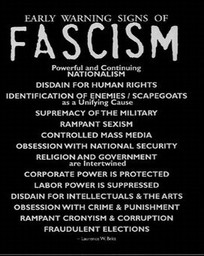
Rather than viewing fascism through the narrow lens of 20th-century totalitarians like Hitler or Mussolini, Walters argues that modern fascism is a pathological attitude lacking a coherent positive creed. Drawing heavily on Peter Drucker's The End of Economic Man (1939), Walters defines fascism as an irrational, anti-intellectual exercise of pure pragmatism and power: whatever works to maintain the dominance of the power elite is deemed "right".
- The Security State & Lawlessness: In pieces like "Lawless Guantanamo Policy Unexceptional" and "America's New Fascism," Walters draws explicit parallels between Defense Secretary Donald Rumsfeld’s operational logic in "exceptional situations" and historical authoritarian declarations. He contends that suspending written law and established international norms in the name of emergency creates a de facto tyranny where might replaces right.
- Decisionism and Imperial Power: Walters traces the intellectual roots of American neoconservatism back to Carl Schmitt's concept of "Decisionism"—the idea of an arbitrary leader whose authority transcends the rule of law to unify a nation against a designated enemy.
2. Historical & Philosophical Revisionism
Walters routinely reaches into historical texts to dismantle popular political myths, particularly those embraced by modern American conservatives and libertarians:
- Jefferson’s Germanic Myth: In "Thomas Jefferson's Germanic Super Race," Walters dissects Thomas Jefferson's correspondence with John Cartwright and his reading of David Hume. He uncovers Jefferson's problematic romanticization of the Anglo-Saxon pagans as the originators of free governance, contrasting Jefferson’s anti-Tory, anti-clerical stance against Hume's conservative history.
- Popper and the Open Society: In "Recollecting Karl Popper's Open Society," the text contrasts the open, self-critical framework of democratic societies with the closed, tribal nature of authoritarian regimes. Walters highlights Popper's warning: democracy is not the worship of majority rule, but a mechanism to remove bad leaders without bloodshed.
3. Institutional & Cultural Critique
The collection frequently pivots from macro-geopolitics to the domestic mechanisms used to shape public opinion and maintain social control:
- Military Recruitment & Sedition: "Parental Sedition" exposes how public education policies (such as the No Child Left Behind Act) facilitate military recruitment among underprivileged youth. Walters critically views the state’s reliance on patriotic rituals, media propaganda, and sports culture as deliberate tools to condition citizens for collective violence and submissive teamwork.
- The "Great Man" Fallacy: Through pieces examining figures like Stalin, Khrushchev, and American presidents, Walters deconstructs the public’s psychological impulse to hero-worship strongmen. Borrowing from Victor Cousin’s Great Man Theory, he shows how societies routinely forgive the horrific violence of leaders so long as they project absolute power and claim to act on behalf of the nation.
Style, Tone, and Literary Voice
- Tone: Cynical, witty, irreverent, and fiercely independent. Walters writes with the voice of a classic essayist—erudite yet combative.
- Structure: The narrative moves fluidly between personal encounters (e.g., the coffee shop conversation in the Introduction), classical history, political theory, and current news commentary from the mid-2000s.
- Rhetorical Strategy: The author frequently employs irony and hyperbole to push arguments to their logical extremes. By juxtaposing classical ideals of liberty against contemporary geopolitical actions, he forces the reader to confront uncomfortable moral contradictions.
Key Takeaways
- Fascism is Adaptive: Fascism does not require swastikas or uniforms; in the modern era, it manifests as corporate-government collusion, the erosion of civil liberties, and pre-emptive imperialism disguised as "spreading democracy."
- The Illusion of Rationality: Modern political discourse often presents contradictory promises simultaneously. Desperate populations, disillusioned by systemic failures, often surrender reason in favor of charismatic authority.
- Vigilance over Institutions: As Karl Popper noted, institutions cannot save themselves; the preservation of an "open society" depends entirely on individual self-criticism, dissent, and the rejection of state-sanctioned violence.
|