Before you shake your head on this one, let’s back it up to parental influence on the developing fetus. Yes, both parents influence the unborn child – with the emotional atmosphere they provide for their child. Only they do not consider this when they are reacting to each other or to the world around them.
You might ask why I bring up this matter. Although I was aware of this phenomenon for many, many years, just recently I read an article that validated my position on the matter. My influence on my only child was the subject of a conversation with a visiting nurse when he was only two months old – and he is now 46 years. Noticing how calmly my son slept while she and I talked in normal conversational tones, the nurse asked if I had been on tranquilizers during the pregnancy. I did not know that question was coming. However, I told her what I had done – I had devoted my time to daily meditation and reading inspirational materials from before the pregnancy.
I did not know until I read Bruce Lipton’s blog, that I influenced the movement of blood in my son’s brain and body when he was a developing fetus. My actions determined which organs grew larger. Lipton explained that the actively growing fetus uses blood for nutrition and energy and “whichever organ tissues get more blood develop faster”.
I was aware of the difference in creative thinking and the survival mentality when I saw Lipton’s blog. I already realized the value of being aware of the power of consciousness and had started choosing from infinite possibilities when stressful even threatening situations appeared before me. I saw the extent to which negative programming prevails throughout the society and I practiced the process of consciously letting go beliefs that supported problems in the various dimensions of life. Clear on these facts, it was easy for me to grasp the gravity of the situation Lipton described. Parents unwittingly put their children at risk for reduced cognitive functioning when they react to stressors and threats.
Just a little on how this thing works. Perceiving circumstances of high stress where the mother reacts with fear, she produces stress hormones that pass into the placenta and then the blood stream of the developing fetus. Stress hormones “cause blood vessels in the forebrain to constrict”, and for the sake of survival, this action pushes blood to the hindbrain.
Forebrain? Hindbrain? What difference does it make which gets the most blood? The organ that gets the most blood grows largest. If the child’s forebrain gets more blood, it is larger than his hindbrain and he is more inclined to conscious reasoning and logic. If his hindbrain gets more blood, it is larger than his forebrain: he is prepared to respond quicker to threatening situations because of his greater reactivity and reflexes. The downside of the larger hindbrain, according to Lipton, is this: the child’s intelligence is reduced up to fifty percent.
Now that we are aware of this, what are we going to do? While I cannot answer for you, I will tell you about myself. I intend to utilize every forum open to me to get the word out and to share what I know on remedying the situation. In addition, I intend to include this matter in my research endeavors, primarily to test the impact of creative thinking and awareness of the power of consciousness in pregnant mothers.
I'm not sure who Bruce Lipton is, but I find that most blogs are not very good sources of information. Refereed articles in scientific journals, while difficult to read sometimes, are the best source.
Since BF Skinner, there has been a great deal of concern about behavior in the shaping of children's behavior by parents and peers, in your case, even while in the natal stage. One thing that tends to be overlooked by people overly concerned with behavior is the fact that survival genetics has been operating through countless generations in every individual and our genetics plays an immense part in how we will behave (survive) to create the next generation. Of course, there are many mutations in the process and that's why siblings often act quite differently. Most studies will say that siblings are treated differently depending upon their order of birth, etc.
When we overemphasize behavior and overlook the genetic heritage of each child, we really may be misunderstanding why a child ends up behaving the way he/she does. Maybe it's not someone's fault that a child becomes a criminal. Maybe it's a deep-seated genetic trait.
This is your journal, for your writing. An interactive journal with historical tidbits designed to nurture creativity and self-motivation, features one side for drawings, sketches, or pasting personal pictures, and the other side lined for notes or j
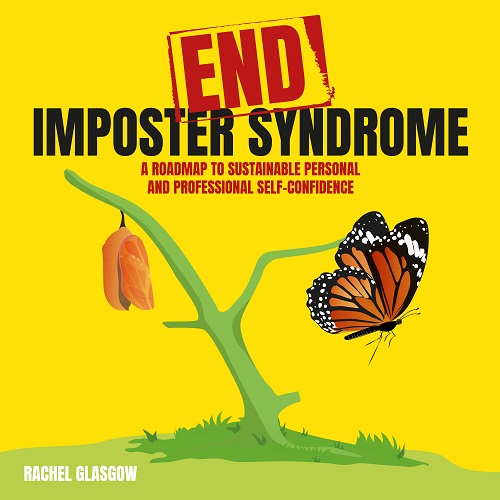
This book helps you get to the root of imposter syndrome and provides easy to use strategies to uproot it once and for all. Only be getting to the deeper underlying issues can you build sustainable, reliable self-confidence personally and professiona
Stress is everywhere! We don't have to do anything to find it. It will usually find us. How we handle that stress is the key factor in determining our wellbeing, both emotionally and physically.
Even though stress is so common, too many peop




Since BF Skinner, there has been a great deal of concern about behavior in the shaping of children's behavior by parents and peers, in your case, even while in the natal stage. One thing that tends to be overlooked by people overly concerned with behavior is the fact that survival genetics has been operating through countless generations in every individual and our genetics plays an immense part in how we will behave (survive) to create the next generation. Of course, there are many mutations in the process and that's why siblings often act quite differently. Most studies will say that siblings are treated differently depending upon their order of birth, etc.
When we overemphasize behavior and overlook the genetic heritage of each child, we really may be misunderstanding why a child ends up behaving the way he/she does. Maybe it's not someone's fault that a child becomes a criminal. Maybe it's a deep-seated genetic trait.
Ron