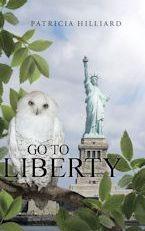
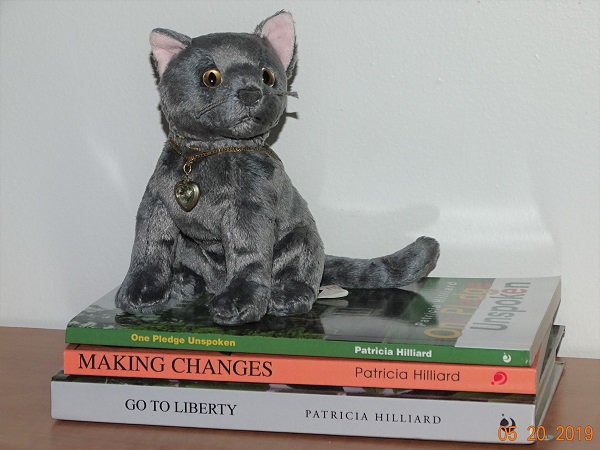
In writing my novel, Go To Liberty, I had to do a lot of research on the issue of “alien” plants. My novel has an environmental theme and is set in a park. My main characters are nature lovers who are becoming environmentalists and I wanted them to deal with the issues they would face in a park setting.
The Park Service and most environmentalists are concerned about “alien” plants and their invasion of the Americas. So for seven years, while I worked in a state park in New Jersey near Ellis Island, the national immigration museum, I sat in the park office reading articles by environmentalists warning about “aliens” or “invasives,” these are any plant that is not in its place of origin. I had no idea where this policy against alien plants started, but if you wanted to be considered a true environmentalist, you had to accept the concept. So I studied plants and their origins.
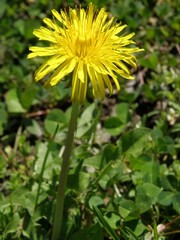
I learned that most of the plants that grew around me were not native American plants. I was shocked to learn that Queen Anne’s Lace, Chicory, Maiden’s Tears, Mullein, Daisies, Hawkweed, Garlic Mustard and Dandelion were all from other parts of the world. I had to search every nook and cranny of my locale for plants that were actually native to this part of the world. Environmentalists called this shocking change in the plant community “degradation.” The Park Service exists to preserve the parks and natural areas of our country in their “pristine” condition, which apparently is before Europeans came to the Americas. To preserve nature, the Park Service had to do something about the aliens.
To carry out their task, Park Service ecologists used GPS to document and map where the invasive aliens were in the nation’s parks and wildlife reserves. They organized volunteers to go out and pull up these invasive aliens. The explanation given is that native plants are being over-powered, robbed of sun and rain and pushed into extinction. Native insects, birds and mammals are reduced in number due to the loss of this valuable native plant habitat. You can see it for yourself. A quick look at New Jersey or Ohio through Google Earth shows a world where prairie and forest have been turned into sod farms or corn fields. Over the last 300 years, our monoculture of food production for humans became a total disaster for wildlife. On a personal level, I witnessed this plant competition while trying to bring native flowers to a meadow full of the invasive Artemisia or mugwort. We were planting a “Butterfly Garden.” The invasive mugwort shot up above the natives and blocked their light. I had to cut it back to give the native orange butterfly “weed” a chance to grow. I knew and accepted the truth about invasive plants.
But this ambitious goal of removing aliens is overwhelming, for me personally and for the entire Park Service. Removal is a very labor intensive task. The National Park Service at Fort Wadsworth brought in goats to chew back the invasive plants. With my own attempt to restore nature, I was amazed at how many times the aliens were standing up better to droughts, floods, insect predators and our attempts to get rid of them. To preserve native flora and fauna, the environmentalists wanted to turn the clock back to a baseline time slot before humans, or in the Americas, to before Europeans set foot on the land. Unfortunately, over 300 years have passed since Europeans first started bringing their favorite plants and their form of agriculture to the “new world.” This “invasion” has been going on so long, I began to worry that it may not be worth the effort to turn it around.
I did some more research on plants. I discovered that the law of nature was fully in effect. All plants must face the climate they are in at the present, not the climate of the past. To cope with the constant changes on planet Earth, each plant seed is a slightly different genetic variation of its ancestors. This genetic variation helps plants survive the variations in soil types, rainfall amounts and temperature enabling them to adapt to some change whether they grow here or in distant lands. In the grand scheme of things, nature has built adaptation into plants no matter where they may take root. This is what is natural. Was denying this force of nature wrong? Was I wrong to doubt the policy of the environmental purists?
Then I read the book, Rambunctious Garden, Saving Nature in a Post-Wild World by Emma Marris. The book’s author questions the primary baseline of the environmentalist’s thinking. Why draw the line at “before Europeans first arrived” in America? The author points to the fact that all over the globe habitats have changed, either due to floods, earthquakes, shifting tectonic plates, glacier melt or primitive human activities. If you remember the many ways that seeds travel, some by blowing in the wind, some by catching a ride in an animal’s fur and some in the pocket of humans, then you can easily see that humans are a part of plant evolution. Accepting ourselves as a natural part of this planet was one of the most striking ideas the book presented. It also gave me a great sense of relief. Of course, humans are part of the natural world. So what if some plants had come from elsewhere? They were trying to survive like the rest of us. If they did a better job of it in a new location, who could blame them? Hadn’t humans also moved across the earth to many locations?
I was totally happy with this new point of view until I came across “Reclaiming Wilderness” by Kenneth Brower in July/Aug. 2014 issue of Sierra (Sierra Club’s magazine). This author defended the argument of the need to preserve pristine environments. He challenged the revisionism that was now occurring in the think tanks, the media and the class rooms. I began to wonder, is Rambunctious Garden, a conspiracy to allow the further destruction of our native flora and fauna? Is this book trying to make it seem acceptable to chop down the Amazon forests to plant soy beans just like humans chopped down the forests in North American to raise cattle? If so, thinking like this must be stopped! No, we can’t sit and watch as beautiful pristine lands are fracked, mined, plowed and polluted into dead lands where wildlife is extinct and humans fear to tread.
I read further. Rambunctious Garden looked at where the environmentalist’s got their ideals. Many early ecologists and environmentalists, like John Muir, were deeply religious. Their beliefs were colored especially by Christianity and the belief in the “garden of Eden.” In the biblical story, Adam and Eve are driven out of the garden. Is this where we get the idea that humans are “outside” of nature? Is this why environmentalists see all human activity as destructive of this “garden of Eden” that was “given to us” by God. Environmentalists also see nature (Eden) as a place where balance exists and humans are the destroyers of this balance. The thinking of environmentalists may very well be shaped by previous beliefs. And what of the politics? Doesn’t the use of the word “alien” sound like a harsh policy on human immigration?
If you include humans to be as much a part of nature as an elephant or an ant, our activity seems no more destructive than when a herd of buffalo kicks up the dust and destroys a prairie dog home. From time to time, the creatures on earth do get in each other’s way and destruction occurs for one while benefiting the other. When forests catch fire or are blown down by the wind, birds that thrive in meadows increase in number. When forests return, forest birds increase because their habitat has returned. Why worry about what humans do? We are a part of nature too. The arguments in Rambunctious Garden are very satisfying to consider, especially if you are human and you are tired of the “woe is us” view of environmentalism.
Another positive note, Rambunctious Garden introduces the concept of “rewilding.” Land that is grown over with alien “invasives” is readapting or “rewilding.” It is living within the context of natural law. After 300 years, the local animals and insects have begun to accept the new plants and a new ecology is formed. This moves beyond the problems created by the old environmentalist thinking. If you use the old thinking, the “rewilded” area is not special, it is full of “invasives”, so if a developer wants to clear the land and build a shopping mall, that’s perfectly ok. It is not “real habitat” to protect. But what if a human community has grown fond of an area, like so many weedy areas in Hudson County, New Jersey, where I live, and regard these weedy areas as nature? The philosophy of the environmentalists could be used to assist developers in bulldozing down a newly “rewilded” habitat. This stands the “protect and preserve” concept on its head.
My guess is we humans will likely compromise with each other. Preserve some “pristine” forests and keep some “novel ecosystems” just because we like them the way they became. Rambunctious Gardens is one of the rare books that I could not put aside because it forced me to re-think. After reading it, I felt better about the world. Maybe we humans are a part of nature. We haven’t been “thrown out of Eden” we just need to learn to appreciate it and take better care of our planet and all the plants and animals on it. So that became one of the themes of my novel, Go To Liberty. Young Eva is searching for her identity. She finds it in protecting Mother Earth.