Ohio, 1958: My dad and I arrived at the town dump. It was up a county road about a mile from Richmond, Ohio. It was a beautiful area, steep hills covered with forests. Along the side of the road was where everyone pulled over and dumped the trash. We were there to dump an old washing machine, one of those types that has the two rollers. The trash, mostly bottles, cans, old sofas, broken tables and chairs extended out from the road. Dad cautioned me not to walk out there too far because I could go down with the trash in a huge landslide of tires and old paint cans. Strangely, a man lived in the dump in a shanti built out of abandoned ply board and plaster board. He even had windows in his little house that were made from someone’s trash.
I thought it was great that this man could live so cheaply. My dad talked with the guy and asked him how he was doing. It was a good life, living off other people’s junk, you didn’t need much money. Dad explained to me that eventually, the entire valley would be filled with garbage and the trees would be covered over. I was horrified. How could people accept this as a serious way to deal with garbage?
That was only one of the horrors that I witnessed back in the good old days when America was great.
I grew up in Jefferson County where Hanna Coal Company’s “Tiger” came and chewed up all the land. On my way to school, I looked out the bus window to see the big shovels chomping away at the rolling hills that were once covered by massive trees or fertile fields of corn, wheat and hay. Bite by bite the huge shovel took away the land and left one farmer sitting on his porch looking out over cliffs just beyond his house and barn. Only enough land was left for a roadway up. At last, the farmer surrendered his island to Hanna Coal Company. To me, it looked strange and scary, but my parents didn’t seem to mind. Ohio’s good farm land was stripped away by the Tiger so Hanna Coal could make huge profits selling dusty soft coal to the steel mills in Pittsburgh and Weirton.
Our nearest big city was Steubenville, Ohio, where my dad worked. We’d get on a Greyhound bus and go there to do our shopping, especially for school clothes. When the shopping was completed, we would have lunch and always be sure to order orange soda because it tasted so good. After a day in the big city, dad would meet up with us in his car and take us for a drive to have a look at the biggest body of water we had ever seen. It was the Ohio River.
As we crossed the Fort Steuben Bridge, we looked down at the big brown heaps of sludge that floated down the river from Pittsburgh and Weirton where the steel mills burned that soft Ohio coal to melt iron ore. The mills would use the river water to cool the molten steel, then dump it back into the river. We looked down from the bridge at the big brown clumps of suds drifting along on the river, sometimes catching on fallen trees, sometimes meeting up with other clumps and creating ice bergs of crud that drifted along in the current. We suspected that this was one of the reasons Steubenville’s drinking water always tasted so terrible.
I used to lie in bed at night and have a good cry because I couldn’t take the cruelty I had witnessed. The main road into town with cliffs on both sides that eventually took the lives of two of my cousins when their car went over the side, the old German farmers who used to create haystacks and “shock” their wheat, tying it so that it could be kept over-winter in the fields. The forests that gave homes to Cerulean and Golden-winged Warblers disappeared. I loved the Wood Thrush that came to our backyard and I wondered what would happen if it landed in the wrong place.
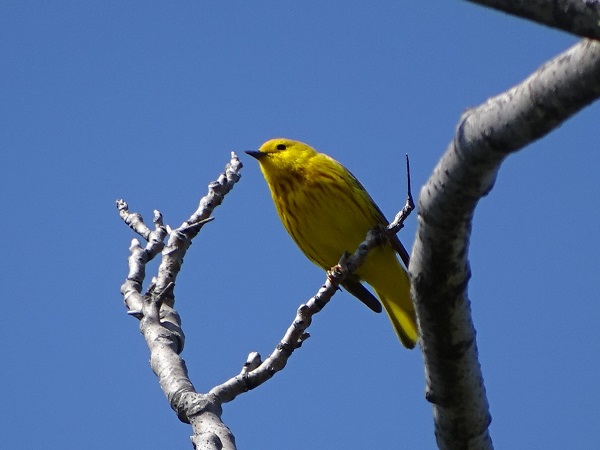
For some people, those were the “good old days.” Now, they want to bring back a time with no laws protecting the air, the water, the land and all of us who live on this earth. They want to declare war and turn the earth’s resources into personal wealth. But I won’t forget. That terrible childhood trauma made me an environmentalist and I promised a little brown bird that I would do something to save us.











well said
NEVER STOP WRITING!
m
In my native Wisconsin, every farmer had their own personal dump usually down by the lowest land where a creek ran through. Many barnyards emptied into creeks where the dairy cows urinated, making the creeks very muddy and polluted. When I got to West Virginia, I was shocked at the destruction of the land by both coal deep mining and strip mining. My beautiful blue-green Cheek Canyon Lake was so acid that only bullheads could survive there. All the streams in the area were beautiful and rocky except for the rocks were leached yellow by the acid and the trout were long gone. Abandoned cars clogged the sides of some highways and the hillsides behind shacks were littered with many, many years of throwing stuff downhill.
Ron
seemingly overnight, it was laid bare and replaced by giant alien power latices and humming lines stretching in both directions as far as the eye could see. Part of much sadness. The super highway came later, when I was grown and gone. Best. Jan
I also remember those free-for-all dump sites. The old mills still operating since the turn of the 20th century polluted local rivers with their sludge.
We can't have enough reminders about those "good old days".