E-GARDENING:
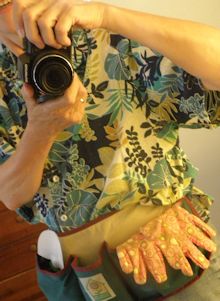
One day while working in my garden, I saw my camera on the lawn chair. I picked it up and took some photos. Later, while looking at the pictures on the computer, I noticed some small infestation on the leaves of a squash vine. Why hadn’t I seen this earlier? Studying the pictures on my computer helped me to focus on the details of each plant. It occurred to me that the camera could improve my gardening. The camera became my new gardening tool.
CAPTURE THE WONDERS OF GROWTH:
We have all captured photos of our favorite flower or vegetable at its best. But why not capture the wonder of spring as life unfolds in the plant world every few days. Document crocus pushing up through the snow or seedlings growing those first true leaves? Photos can capture the changes as your native purple Echinacea and orange Butterfly Plant retake their native land. The beauty of your garden is a work of art you can share.
TROWEL AND ERROR:
Another use for the camera is to document where plants are growing. Are some growing too close together and competing with each other for light and space? In flower beds, photos give you the chance to study the color patterns or lack of patterns among your flowers. When taking photos of squash, pumpkins or melons, put a garden tool next to them to give you an idea of their size for comparison to next year’s growth. Be sure to take pictures of the size of the melon plants to determine if they need bigger growing space next year. On a hot day in summer, you can sit in the air conditioning and study the details you failed to notice when you were in the midst of it all. Are the green beans in one location not as wholesome as in another? Could some fertilizer help? Even in winter, you can browse your garden photo collection and plot how to improve the soil or better arrange the layout of your garden for next spring.
LIGHT UP YOUR LIFE:
Photography is about light. Use your camera to document the changes in the sun and shade patterns in your yard or garden. Take pictures of the flowerbeds or vegetable garden at various times of the day in spring, mid-summer, late summer, autumn and winter. One section of the flower garden may get just enough sun in spring and too much for those shade-loving plants in mid-June. Does a tall maple cast a shadow over the garden late in the afternoon robbing your vegetables of light? It’s a good idea to shoot a few pictures in winter as well, since sunlight in winter can remove the snow cover, leaving certain plants open to the cold dry wind. In this way the camera helps you assess the amount of light that shines on your garden.
PLOTTING YOUR PHOTO FOLDERS:
For greater efficiency in studying your garden, create folders for each year that you take pictures. You will then be able to compare your garden from year to year. Keep the date of each picture as part of the name of the picture. For example, if you camera gives a name to your photo of “pfe392043” be sure to rename it Summer Squash 6102014. This naming system will help you answer such questions as: Was it an early or late summer? Did the squash do well that year in that location? You may want to keep a text document with details about rain fall along with the various types of seeds you planted and from which company you purchased them.
THE ART OF GARDEN PHOTOGRAPHY:
If you are taking pictures to document how well your flowers look, remember that white, pink and yellow flowers look best in shade. Overcast days are also good for photos of blue and purple flowers. To add a little light, you may use a flash or bounce some light off a white board or sheet of paper. Remember that evening and morning is the golden hour for photography. The sun shining at an angle will accent reds and oranges.
Be artistic, try taking pictures after the rain and capture the droplets of water on the leaves to create the mood of a fresh spring morning. Look carefully through your camera’s viewfinder at what lies beyond your flowers. If your flowerbed is along the street, you may want to avoid pictures that have automobiles in the background. Try various angles, times of the day and weather conditions to see what pleases you.
A GARDEN IS A WORK IN PROGRESS:
After you have used your camera as a gardening tool you will be amazed at the things you learn about your garden. Best of all, you will have documented those great moments of accomplishment that you can share with friends and family. In winter, when the seed suppliers start pumping you with emails, you can review your pictures and make bigger and better plans. Clearly, the camera is one of the best gardening tools you have.