On Monday night, I watch Rachel Maddow on MSNBC. She’s a big believer in democracy. She defends it every chance she gets. But I find myself wondering: What is democracy?
I started wondering about democracy when I was 17 in the 1960s. I was going to high school back then in Ohio, which is a mid-western state where people like to be very independent, it’s part of our culture. A war had started up that is referred to now as the Vietnam War. That war was never officially vote for by Congress, which created a lot of doubt. So, the government called the war a “military action.” Many people began to wonder why anyone should support the bombing of a poor country so far away. What was the U.S. going to get from this? No one understood the real purpose of this war against Vietnam.
Students in college started protesting the war. Soon, students in high school joined the protests. It was an exciting time. Young people could feel their power and wanted to exercise their rights. I joined in.
The protests grew and grew in number and in support. The older generation, which still had control of the school system, was horrified that the young generation would oppose what the U.S. government had chosen to do—drop bombs on poor and innocent people.
Talk of patriotic duty led to calls for a government crack-down on protests. Soon police set up barricades and made arrests. Young people began to wonder: Where’s the democracy? Where’s our right to free speech? By 1970, four students were shot dead in Ohio for protesting the war.
Today I see students protesting the dropping of bombs on innocent people. And again, students are arrested and thrown out of college or their work places for protesting. Where’s the democracy?
I turned to Google with a question: When did Israel start taking land from Palestine? The response: “In the 1967 war, Israel occupied these territories (Gaza Strip and the West Bank) including East Jerusalem, which was subsequently annexed by Israel. The war brought about a second exodus of Palestinians, estimated at half a million.” By 2023, this war killed over 18,000 Palestinians.
Yes, protesting war started in my teen years. During my adult years, I saw the U.S. drop bombs on the innocent people of Iraq. None of these wars had anything to do with democracy, they had a lot to do with a few nations holding on to power. If you took a survey and asked all the world’s people if they were in favor of war, 90% would probably say “No!” What do any of us gain by it? We certainly don't get any democracy.
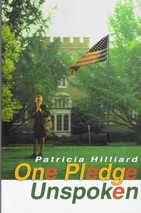
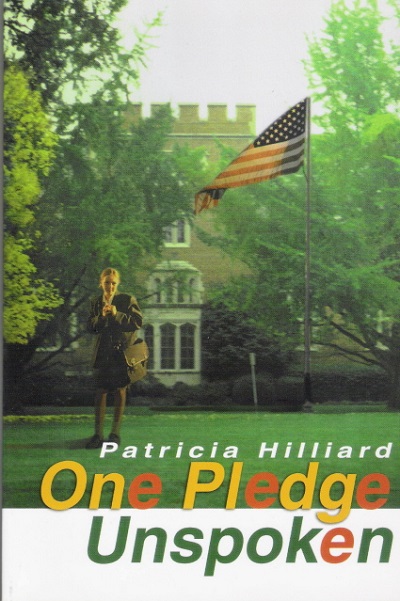
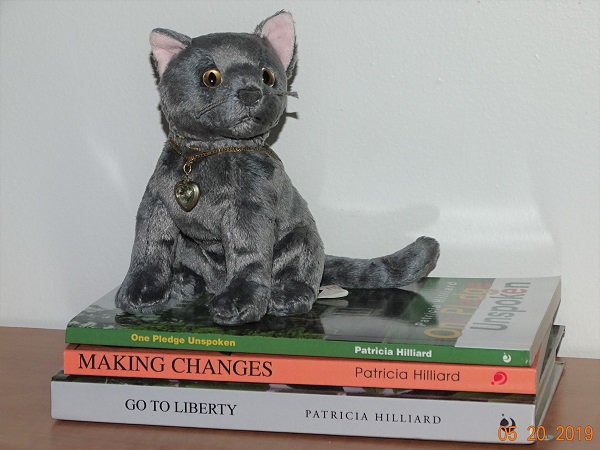
Learn more about how we protested war in the 1960s. Buy my novel "One Pledge Unspoken." And let's do what we can to stop war.












When the Vietnamese action started, I was in college and probably would have enlisted and served after college had I not become paralyzed and considered unfit by my draft board.
About that time, I begin protesting and bread Plato's, The Republic, learning the meaning of democracy. We are supposed to be governed by a representative democracy in this country, but more often than not we are ruled by the autocratic wishes of the wealthy elite who run the country from the sidelines. One of the most powerful groups is the military-industrial complex, made up of arms and military manufacturers after World War II who continually need war to continue their businesses from government contracts. To these people, the innocent victims of war are merely collateral damage to their primary purpose, profit, not making the world safe for democracy.
In 1974, after I got my doctorate, I interviewed at Kent State. They turned me down, largely because they were a club of graduates from Texas A&M.
However, around 1970, the West Pakistan Army invaded East Pakistan that declared its independence and called itself, Bangladesh. A wealthy former World War II pilot for India sent his son away because the Army was coming to kill all of the eligible young men to fight in the Bangladesh Army. In 1975, a young man came to us where I was now working at West Virginia University, who had finished his master's degree at Texas A&M and came for his doctorate. He was the young man, who on the road leaving the city of Dhaka, had to hide in the swamps for hours as the Pakistani Army sent to kill him passed by.
On or about 1998, he came to the university I was working in here in Houston and became Dean of the School of Technology. About 2004, he left and became the Dean of Technology Education at Kent State University. He is now emeritus and retired, moving last year with his family to New Jersey.
That's what American democracy is all about… Allowing a refugee from a poor country to come to the United States and become a productive citizen, all in one generation through education and determination.
Congratulations on your novel.
Ron
Cheers, Merry Christmas, and God bless you and your family.