THE WILL NOT TO KNOW
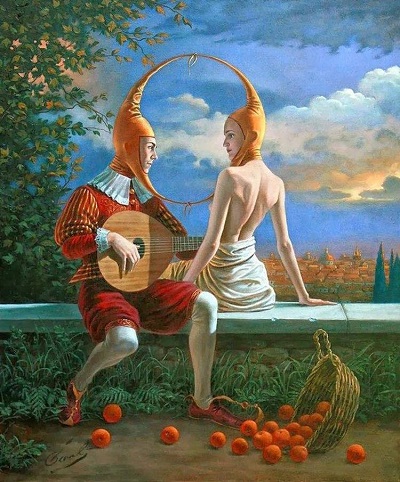
“What if everything was made of the same things?” he asked me suddenly. Sand and cheese, milk and earth—what if all of it was only costume, only texture draped over a single underlying form?
“What if,” he continued, “beyond the illusion of difference—beyond their clothes, as it were—there was only one shape in the world? One gesture repeating itself in countless disguises. And if you could see it clearly enough, you could draw it. And if you could draw it, you could recreate it. Not an imitation—the thing itself.”
He paused, listening for the pulse beneath the world.
“Everything,” he said, “would be variations of the same eternal fold. Multiplicity would just be the One rehearsing itself in different outfits, waiting for someone—anyone—to notice the pattern.”
Eight hundred years later, in spite of science, we are no closer to naming the one thing that is everywhere at once.
Not because it is subtle—because we refuse to look at it.
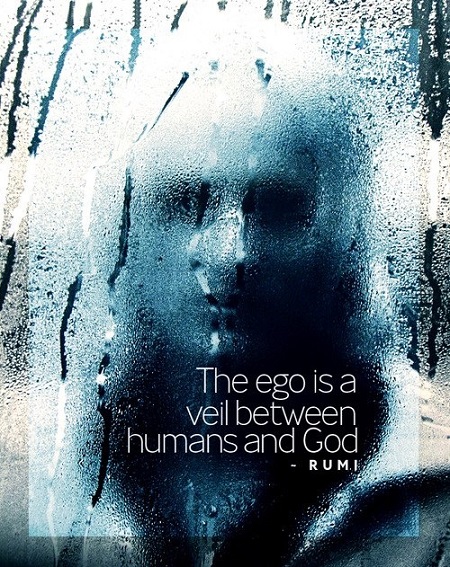
The one thing is us—and we refuse to know it: the sum of who we think we are, gripping our illusions as if they were oxygen.
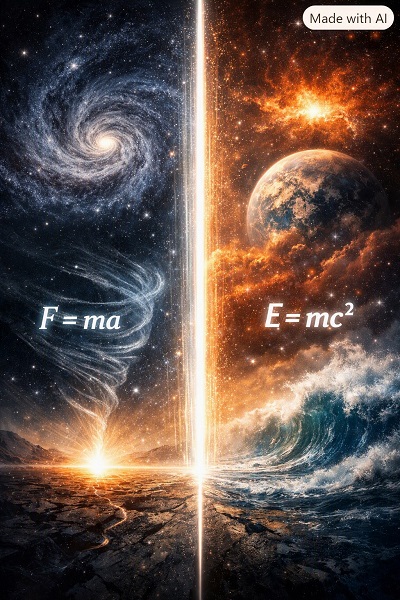
The universe of energy is not mysterious. It is a generator - a spinning center producing secondary issue.
And the spin began the moment all‑as‑one we resisted who we are in reality—when we chose appearance over truth and set the whole mechanism turning.
All‑as‑one we do not want to know that our beginning is an energy referenced to Eternity—everywhere at once because it is the sum of who we think we are.
And the sum of who we think we are, is not innocent.
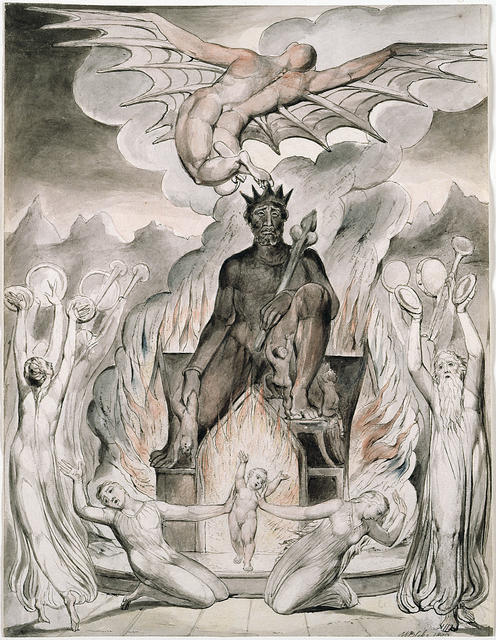
It is an ignorant force protecting itself from the knowledge that would collapse the constructs we insist are real.
We defend our blindness as if it were virtue.
Consensus props up these false platforms, yet all is disappearing and reappearing at the speed of gravity.
Eternal recurrence is the pattern we must learn to see—
and the shame is that we already know it and pretend we do not.
"Thought creates the world and then says "I didn't do it" - David Bohm.
"To know and not to do is not yet to know." - Laozi.
Outside References
David Bohm — Wholeness and the Implicate Order
On the mind’s capacity to fragment the seamless whole and then deny its own authorship.
Thought creates division, then forgets it created division.
Heraclitus — Fragments
On the One as the underlying fire, the eternal recurrence of forms, and the blindness of those who live as if the pattern were not already visible.
Lao Tzu — Tao Te Ching
On the nameless origin that is everywhere at once, and the human refusal to see what is most obvious because it threatens constructed identity.
Max Planck — Lectures and Essays
On consciousness as foundational, matter as derivative, and the human tendency to mistake appearances for reality.
Nietzsche — The Gay Science / Thus Spoke Zarathustra
On eternal recurrence, the self‑protecting illusions of the herd, and the shame of refusing the truth already known.
Gurdjieff — Views from the Real World
On the mechanical nature of human thought, the generator‑like structure of the universe, and the collective resistance to awakening.
Alan Watts — The Book: On the Taboo Against Knowing Who You Are
On the cultural and psychological mechanisms by which humanity hides from its own origin.
P. D. Ouspensky — Tertium Organum
On the One expressing itself through multiplicity, and the perceptual limitations that keep humanity from recognizing the pattern.